Who are these formats for?

Busy pairs with access to a microwave on campus

If you have a short break, check how to prepare the meal, how long it takes at the available power setting and whether you need a particular container. Being able to cook it from frozen is useful if the product you choose offers this option.

Students keeping an eye on portion sizes

To compare a meal for two, a larger pack and two separate portions, check the stated serving sizes and how much each of you will eat. Leftovers are only useful if you can store them safely.

Pairs with different tastes or dietary requirements

Two individual meals let you choose different recipes. Check the ingredients and allergens for each product; the nutritional information can also help you compare similar meals.

What should you check before buying?

Choosing between a meal for two, two individual portions and a larger pack depends mainly on whether you can heat it up on site, how you’ll share lunch and how you’ll store it.

Meal labelled for two

Choose this if: you can follow the heating instructions and serve both portions during your break.

Bear in mind: you’ll both be eating the same recipe.

Two individual meals

Choose this if: you each prefer a different recipe or need to check different ingredients.

Bear in mind: you’ll need to carry and heat two meals.

Larger pack to share

Choose this if: you can divide up the meal and keep it cold until you’re ready to prepare it.

Bear in mind: there may be more than the two of you can eat.

What to consider What to check Consumers concerned
Heating during your break Preparation method, stated power setting and cooking time; equipment actually available to you. If your break is short, you need to be able to prepare lunch using the equipment on campus. Around 31% of consumers put this need first.
Portions to share Number of portions stated and the amount per portion, if provided. When eating with someone, I want to know how much each of us can serve so we don’t end up with unexpected leftovers; around 25% of consumers put this ahead of other considerations.
How much you’ll actually eat Net weight, stated number of portions and whether any leftovers can be stored. When every purchase counts, avoiding food waste becomes a priority. This is the top consideration for around 25% of consumers.
Ingredients and allergens Ingredients, allergens and nutritional values per 100 g; portion size. If we have different dietary requirements, I need to check the recipe before sharing a meal. Around 19% of consumers make this their priority.

Mistakes to avoid

  • Assuming the pack weight means there are two portions

    Carrefour, Auchan and Picard stock individual meals, products labelled for two and larger formats. The same weight doesn’t necessarily mean there’s one portion for each person.

    First, check the number of portions shown on the pack, then consider how much you plan to serve.

    A pack that’s too large could leave you with leftovers you can’t store.

  • Choosing a quick meal without checking how to prepare it

    Cooking times and instructions vary by product. For example, Picard says its two-portion beef bourguignon takes 6 minutes at 900 W, using a suitable container and with a hole made in the pouch.

    Check the instructions for the meal you choose and the power of the microwave you’ll have access to.

  • Looking only at the Nutri-Score

    If displayed, the Nutri-Score is no substitute for checking the ingredients and allergens. The CLCV also highlights differences in composition between meals in the same category.

    To compare similar recipes, check the nutritional values per 100 g, then take into account how much you’ll eat.

  • Forgetting to keep it cold in transit

    A meal bought before classes needs to be stored appropriately until you prepare it. Anses recommends picking up frozen food at the end of your shop and using an insulated bag for the journey.

    Plan how you’ll transport and store it before buying; don’t leave it at room temperature for a long time.

Retailers to compare formats

Carrefour

Its frozen ready-meal range includes both individual portions and meals to share.

  • A range of pack sizes lets you compare how much there is to share.
  • Check the number of portions stated: weight alone doesn’t confirm that a meal is suitable for two.

E.Leclerc

E.Leclerc DRIVE lets you order frozen food, including ready meals, for collection or delivery.

  • You can arrange your order before a day of classes.
  • Check the pack size, instructions and collection or delivery options near you.

Auchan

Its range includes individual meals, family-size formats and quick-cook options.

  • These categories make it easy to compare two separate portions with one meal to share.
  • Check the number of portions and reheating instructions for the product you choose.

Lidl

Lidl offers frozen ready meals, with availability that may vary over time.

  • Its offers may include different types of ready meals.
  • Before planning this lunch, check what’s available in store and whether the product is actually designed to be shared.

Aldi

Aldi’s prepared meals include several food categories.

  • It’s another retailer to include when comparing formats on your food shop.
  • Look in the frozen food aisle and check the product category: a tinned or ambient meal isn’t a frozen meal.

Picard

Picard has a category of frozen meals labelled as suitable for two people.

  • Some product pages specify the portions and preparation method; the beef bourguignon listing states that it serves two and can be cooked from frozen.
  • The instructions for this product don’t apply to every meal in the category.

A Joybuy product for your lunch

This 500 g pack of soup could make a warming lunch. Before choosing it for two, check how many portions it contains and whether you can prepare it during your break.
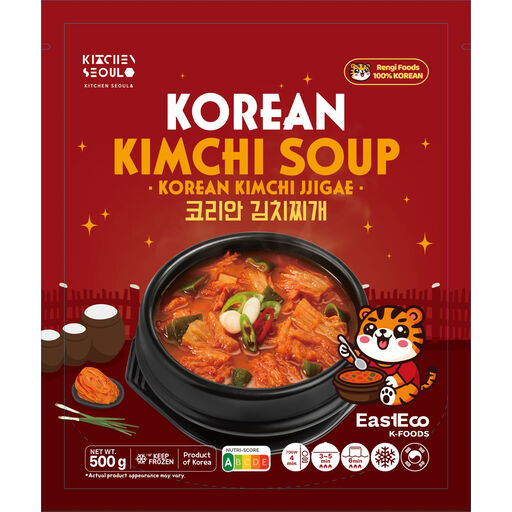
EastEco Rengi's Korean kimchi soup (Jijigae), 500 g pack

EastEco Rengi's Korean Kimchi Soup (Jijigae), 500 g

If you’re sharing this warming lunch, check how many portions you can serve from the 500 g pack. Before taking it to uni, also check the reheating instructions and what equipment you’ll need.

View on Joybuy

Frequently asked questions

How can you tell if a frozen meal is enough for two?

Check the number of portions stated, then look at the net weight and the amount per portion, if provided. A 500 g or 600 g pack won’t automatically make two meals: retailers distinguish between individual portions, meals for two and family-size formats.

Can you take a frozen meal to uni and heat it up later?

Yes, provided you can keep it stored appropriately during your journey and while you wait, then follow the preparation instructions. Anses recommends buying frozen food at the end of your shop and using an insulated bag for the journey; also check what storage facilities are available on campus.

What should you check on the label before sharing a meal?

Check the ingredients and allergens for both of you, then look at the number of portions and the preparation instructions. To compare similar meals, the DGCCRF says nutritional information is given per 100 g or 100 ml; use these figures to work out how much each of you will consume.

Is the Nutri-Score enough to choose between two meals?

No. If it appears on the packaging, use it alongside the ingredients list, allergens and nutritional values per 100 g, and remember to consider the portion you’ll serve. The CLCV highlights differences in composition even between meals in the same category.