Older people with a stable weight who want a lighter portion
If you’re choosing a convenient individual meal, check the calories in the whole tray as well as its protein content, rather than looking only at the figures per 100 g.


A lower-calorie frozen meal may be an option for an older person whose weight and appetite are stable, but calories alone aren’t enough to tell you whether a meal is right for them. Manger Bouger advises against choosing reduced-calorie products in cases of undernutrition. If someone’s appetite is falling or they’re losing weight unintentionally, seek medical advice rather than trying to cut calories. In all cases, compare the portion actually eaten, its protein and salt content, and how easy it is to prepare.
If you’re choosing a convenient individual meal, check the calories in the whole tray as well as its protein content, rather than looking only at the figures per 100 g.
Finding a reduced-calorie meal shouldn’t be a priority if meals are becoming insufficient. Manger Bouger highlights the risk of undernutrition and advises against reduced-calorie products in this situation. Talk to a healthcare professional about any unintentional weight loss.
Compare the salt per portion and read the preparation instructions for the product you choose. If the person has been given specific dietary advice, follow the guidance of the professional overseeing their care.
When choosing a frozen meal for an older person, start with their appetite and any changes in their weight. Then compare the nutritional information for the amount they’ll actually eat.
| Criteria | What to check | Who should pay particular attention? |
|---|---|---|
| Calories per portion | Compare the kcal per 100 g with the amount actually eaten, or check the value per portion if it’s provided. | If my weight is stable and I want to keep track of how much I eat, I need to know what’s in the whole tray. Around 23% of consumers would make this a priority. |
| Nutritional intake and protein | Check the energy and protein per portion. If appetite is falling or weight is dropping unintentionally, seek medical advice. | If I have a small appetite, I’m first looking for a meal I can manage without reducing my intake further. Around 39% of consumers would prioritise maintaining their intake. |
| Salt | Check the salt content for the portion eaten and take any individual dietary advice into account. | If I need to monitor my salt intake, the amount on my plate matters more than the name of the dish. Around 23% of consumers would make this their top priority. |
| Preparation and portion size | Check how to heat the meal, how many portions it contains and whether the texture is suitable for the person. | If preparing or finishing a large meal is difficult, I’m looking for a suitable portion size and simple preparation steps. Around 15% of consumers would put ease of preparation first. |
When appetite is falling or weight is dropping, reducing food intake further may make it harder to eat enough. Manger Bouger advises against reduced-calorie products in cases of undernutrition.
Don’t make calories your main consideration if someone is losing weight unintentionally or often leaving meals unfinished. Seek medical advice.
Two trays of different weights won’t necessarily contain the same number of calories when served.
Use the value per portion if it’s shown on the packaging. Otherwise, work out the calories for the amount the person will eat using the value per 100 g.
The Nutri-Score doesn’t tell you on its own how much protein or salt is in the portion actually eaten, or whether it meets someone’s individual dietary needs.
When comparing meals, also check the nutritional values per portion, the ingredients, allergens and preparation instructions.
A family-size meal means working out how much to serve and following the product’s storage instructions.
If the person eats alone and can’t easily divide up the meal, consider an individual portion instead. Follow the packaging instructions for storing any leftovers.
Its nutrition information and frozen meal product pages make it easy to compare recipes and individual portions.
The retailer lists categories for individual and sharing-size frozen meals.
The Marque Repère frozen food range includes a Nutri-Score filter.
The range includes individual frozen ready meals as well as family-size options.
Its frozen food range includes a ready meals category.
Its frozen food range includes ready meals and vegetables.
These frozen vegetables can be served as side dishes when you’re putting a meal together rather than buying an individual ready meal. They don’t make a complete meal on their own, so choose the other components to suit the person’s needs.
 Image unavailable
Consider these as a side dish if you’re planning to serve the meal with a source of protein. The bag contains 750 g of frozen green beans. Adjust the amount served to suit the meal and check the cooking instructions on the packaging.
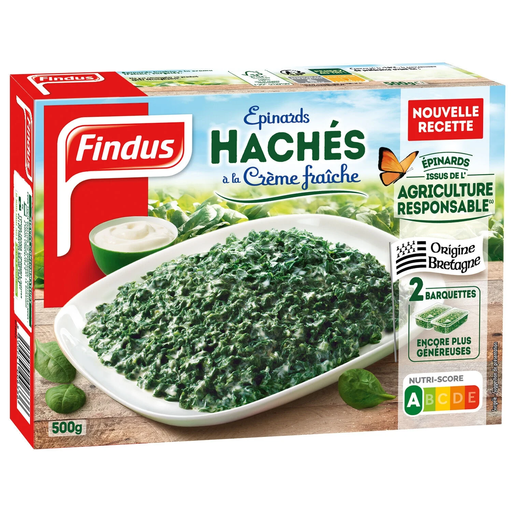 Image unavailable
This frozen spinach can be served as part of a meal with several components. The bag weighs 500 g. Before serving, check the ingredients and allergens in this creamed recipe, along with the portion and preparation instructions.
No. You need to take their appetite, any changes in their weight and the rest of their diet into account. Manger Bouger advises against reduced-calorie products in cases of undernutrition. If the person is eating less or losing weight unintentionally, seek medical advice before trying to reduce their calorie intake.
If the whole tray is eaten, multiply the kcal per 100 g by the tray’s weight in grams, then divide by 100. For example, a Picard product page lists 79 kcal per 100 g and a weight of 350 g, which works out at around 277 kcal for the whole tray. Also compare the protein and salt content of this portion.
No. Compare the salt content of the portion eaten, without assuming that the same restriction is right for every older person. If a healthcare professional has given specific advice, use it to guide your choice.
Compare the nutritional information and ingredients for the specific product. E.Leclerc says that the Nutri-Score may not be displayed. Even when it is, you still need to know the portion size to understand how much is being eaten.
Follow the storage and preparation instructions on the packaging, as these apply to the product you’ve chosen. Work out how much to serve before preparing a family-size meal, and follow the instructions for leftovers and thawing.