Campers comparing calories per meal
A set portion makes comparisons easier, as long as you check the kcal for the amount you’ll actually eat rather than relying on the Nutri-Score alone.


When camping, first check that you can transport and keep frozen food cold, then prepare it with the equipment available. If you can, an individual meal lets you choose a set portion; frozen vegetables you can add to give you more freedom to put a meal together. In either case, compare the kcal for the amount you’ll eat: the Nutri-Score doesn’t tell you the calorie content of a portion.
A set portion makes comparisons easier, as long as you check the kcal for the amount you’ll actually eat rather than relying on the Nutri-Score alone.
A frozen meal or ingredient is only an option if you can transport and store it cold, and prepare it appropriately during your trip. The Anses recommends using an insulated bag and keeping the journey time to a minimum, among other things.
Frozen vegetables can be a starting point you add to. You’ll need to plan the other ingredients and how to prepare them, then check the nutritional information for the meal you’ve put together.
Start by checking that you can transport and prepare the food. Then compare the portion you’ll eat, whether it’s an individual tray or a meal made with vegetables.
| What to check | Check | Who this matters to |
|---|---|---|
| Calories in the meal | The kcal for the amount you’ll eat and per 100 g; the portion weight. | If I’m eating the whole tray, I want to know the calories in the entire tray, not just per 100 g. Around 27% of consumers reportedly prioritise the calories in their portion. |
| Keeping it cold and preparing it | Storage instructions, transport time and the cooking method given on the pack. | If I don’t have suitable equipment at the campsite, I need to know whether I can store and prepare the product safely. Keeping food cold and cooking it would be priorities for around 33% of consumers. |
| What goes into the meal | Nutritional information, particularly protein, fibre, salt and fat, as well as any ingredients to add. | If I’m starting with a portion of vegetables, I also want to know what I’ll add to the meal. Around 20% of consumers would prioritise what goes into it over the kcal figure alone. |
| Pack size and leftovers | The number of portions, how much you need to prepare and whether you can keep any leftovers chilled. | For a short trip, I’m looking for an amount I can prepare and eat without leaving leftovers that are difficult to store. Pack size would be the main consideration for around 20% of consumers. |
According to Manger Bouger, the Nutri-Score is calculated per 100 g or 100 ml. It lets you compare products on that basis, but a whole tray contains a different amount.
Check the kcal for the portion you plan to eat, then use the Nutri-Score to compare like-for-like products.
Choosing a recipe doesn’t solve the problem of transporting it. The Anses advises buying frozen food at the end of your shop, using an insulated bag and not refreezing food that has thawed.
Before you buy, plan your journey, how you’ll store the food when you arrive and when you’ll prepare it.
Carrefour and Auchan, for example, distinguish between individual portions and sharing or family-size meals in their frozen food ranges. A larger pack could leave you with food to store after your meal.
Check the number of portions and choose an amount you can prepare and eat during your trip.
The nutritional information for a side dish won’t reflect the whole meal once you add other ingredients and cooking fats.
Plan what you’ll serve with the vegetables and compare the nutritional information for the products you’ll actually use.
These retailers offer different types of frozen food. Check the details for the specific recipe before choosing something for your camping trip.
Picard groups some frozen products under a Nutrition category, including products from its ‘plus d’équilibre’ range.
In its prepared frozen food range, Auchan distinguishes between individual meals, family meals and quick-cook meals, among other options.
Carrefour separates its frozen ready meals into individual, sharing and vegetable-based options, among other categories.
E.Leclerc DRIVE features ready meals and other frozen products in its catalogue.
ALDI offers frozen vegetables, including vegetable mixes for frying and ratatouille, as well as other ready meals.
This product is suited to putting a meal together with frozen vegetables, rather than choosing a complete individual meal. Check that you can keep it cold and follow the preparation instructions during your trip.
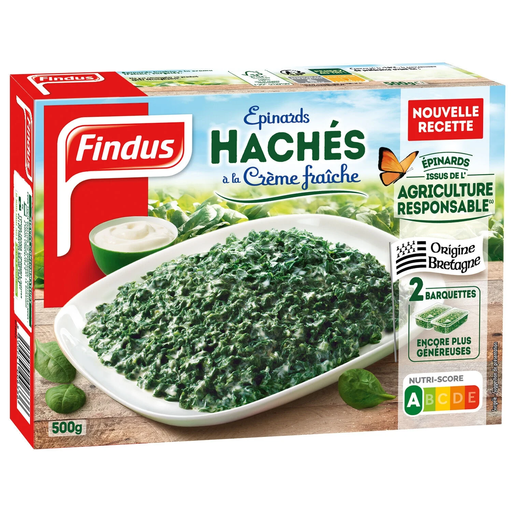 Image unavailable
Consider it as part of a meal you prepare at the campsite if you can keep it chilled and cook it according to the instructions on the pack. Check the nutritional information for the amount you serve, as well as for any other ingredients you plan to include.
No. According to Manger Bouger, the Nutri-Score is calculated per 100 g or 100 ml so you can compare products on the same basis; it doesn’t tell you the kcal in the portion you’ll eat. Check the serving size and the nutritional information for that amount.
Buy it at the end of your shop and transport it in an insulated bag, keeping the journey time to a minimum, as recommended by the Anses. Before you set off, plan where you’ll store it when you arrive. Don’t refreeze food that has thawed.
They can be the starting point for a meal you put together, but they may not make a complete meal on their own. Plan the other ingredients, then check the quantities and nutritional information for the meal as a whole.
No. To compare the calories in two meals, start with the kcal per 100 g and work out how many are in the amount you plan to eat. That’s why it’s also important to check the weight and number of portions on the pack.