People keeping an eye on their snack’s energy content
You want to know how much energy you’ll get from what you actually eat: the weight of your portion matters just as much as the kcal listed per 100 g.


When choosing frozen food for a late-night snack, compare the energy content of the amount you plan to eat, rather than looking only at the figures per 100 g. Then check the ingredients, pack size and cooking instructions. A single-portion tray makes it easier to judge how much you’re having, while you’ll need to portion out a large bag of vegetables yourself. If a Nutri-Score is displayed, remember that it doesn’t replace these checks.
You want to know how much energy you’ll get from what you actually eat: the weight of your portion matters just as much as the kcal listed per 100 g.
A very small portion won’t always meet your needs. You want to check the ingredients and serving size before choosing, without assuming that a particular recipe will keep you full.
You want an easy-to-serve amount and a preparation method that fits the time you have, while still following the storage and cooking instructions.
Start by deciding how much you’ll eat, then check whether the recipe and preparation method suit your late-night snack.
| What to check | Look for | Who this matters to |
|---|---|---|
| Energy per portion | The kcal per 100 g, the amount you’ll eat and the number of portions listed. | If I’m only eating part of the tray, I want to know the energy content of that amount, not the whole pack. Around 36% of consumers put this calculation first. |
| Ingredients | The ingredients list, as well as the saturated fat and salt values. | If a small snack doesn’t satisfy me, I’d rather check the recipe and portion size before deciding what to serve. This would be a priority for around 29% of consumers. |
| Pack size and preparation | The weight, number of portions, cooking method and cooking time. | At night, I want to be able to prepare a set amount without having to cook for ages. Around 21% of consumers would put convenience first. |
| Storage and cooking | The condition of the packaging and the storage and preparation instructions. | When I’m preparing frozen food late at night, I mainly want to be able to follow the manufacturer’s instructions. This would be the main concern for around 14% of consumers. |
Two products with the same value per 100 g won’t provide the same amount of energy if you eat different quantities.
Multiply the value per 100 g by the weight you plan to eat, then divide by 100. Also check how many portions the packaging says it contains.
Santé publique France describes the Nutri-Score as a tool for comparing nutritional quality; on its own, it doesn’t tell you the energy content of the amount you’re serving.
Use the score to compare similar products when it appears on the packaging, then check the nutrition information and the weight of your portion.
A large pack isn’t necessarily suitable for a single snack. You’ll also need to consider the instructions for storing any food left over.
Decide how much you want and check the storage instructions before preparing the pack.
According to ANSES, keeping food at a low temperature slows the growth of micro-organisms, so maintaining the cold chain and preparing food correctly are still important.
Put the product in the freezer as soon as you get home and follow the cooking method and timings on the packaging, particularly if it needs to be cooked from frozen.
These retailers offer different recipes and pack sizes to explore. Always compare the specific product you’re planning to eat.
Frozen meal product pages can help you check a recipe’s ingredients and pack size.
Its range lets you compare frozen foods, including by Nutri-Score where one is displayed.
Its range separates individual ready meals from family-size packs.
Its frozen ready-meal range can be a useful starting point for comparing products available locally.
The retailer offers frozen products and ready meals to compare by recipe.
Product pages for individual meals may list the weight, nutrition information and preparation instructions.
These three frozen plant-based products can be portioned out separately from the pack. To choose one for a snack, decide how much you’ll serve and check the nutrition information and preparation instructions for the specific product. They may not be complete individual meals.
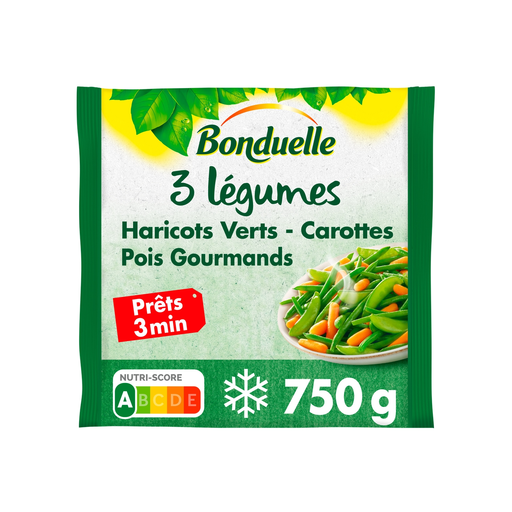 Image unavailable
This vegetable mix is a good option if you want to decide how much to serve for your snack.
The pack contains 750 g, so don’t confuse its total weight with the weight of your portion.
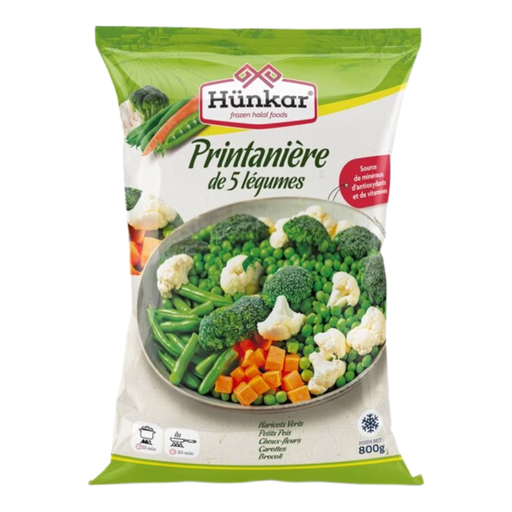 Image unavailable
This vegetable dish could be an option if you plan to take out a set amount for a snack.
The pack contains 800 g. Check the cooking instructions before relying on it for a quick meal.
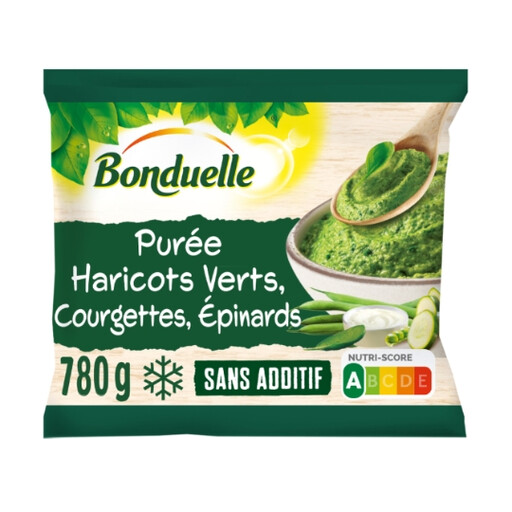 Image unavailable
This vegetable purée can be portioned out if you’d prefer a smooth texture for your snack.
The pack contains 780 g. Check the amount you’ll serve and the preparation instructions for this product.
Compare the kcal in the amount you’ll eat, not just the kcal per 100 g. Check the value per 100 g and the weight of your portion, then see whether the tray contains one portion or several.
No. The Nutri-Score doesn’t tell you the energy content of the portion you’ll serve. Santé publique France describes it as a tool for comparing nutritional quality; you should also check the weight you’ll eat, the kcal and the ingredients.
Yes, if the product’s instructions say it can be cooked from frozen. Follow the cooking method and timings on the packaging: some meals need to be cooked in the oven, which may not be practical for a quick snack.
Maintain the cold chain and follow the product’s storage and cooking instructions. ANSES notes that keeping food at a low temperature slows the growth of micro-organisms.
No. Santé publique France says that displaying it is voluntary for businesses. If it isn’t shown, use the nutrition information and ingredients list to compare products.