
Livraison le jour même ou le lendemain

Qualité garantie

Débloquez vos offres de bienvenue: Livraison GRATUITE | Jusqu'à -80 % | 30 jours d'essai gratuits à JoyPlus
Téléchargez l'application
Buying frozen halal beef means you always have convenient portions on hand for burgers, barbecues, stews, or a last-minute meal. But it's not always easy to make sense of the packaging. Labels like "extra tender", "traditional" or "authentic" aren't enough to judge the composition, the actual beef content, or what the product is really meant for.
Three common pitfalls keep cropping up:
To compare two products, start by checking the percentage of beef listed in the ingredients. A product made from 100% beef will have a completely different texture to a patty containing 80% beef, water and various other ingredients.
In the selection available, the differences are quite clear:
Also remember to check for allergens: soya, wheat, milk, eggs, celery, mustard or sesame, depending on the product. The "halal" label must appear on the packaging and be confirmed on the product page of your chosen item.
The format directly affects the price per portion and how easy it is to prepare.
The number of pieces, their individual weight and their shape matter just as much as the total weight. Pre-shaped portions save you time, while loose mince gives you more freedom in the kitchen.
Keep the meat at –18 °C or below, until the date shown on the packaging. Once thawed, the product must not be refrozen. For minced meats, meatballs, köfte and Middle Eastern specialities, cooking all the way through is recommended.
After delivery, transport frozen products quickly and put them straight into the freezer. If the packaging is badly damaged or open, or if the product looks partially thawed, check the delivery conditions before eating it.
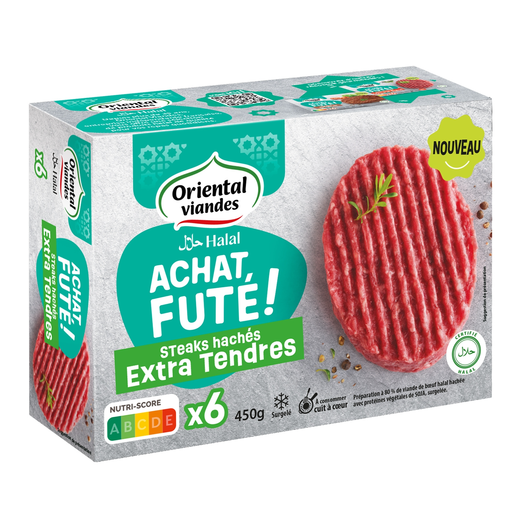
Why this suits this profile: The six 75 g portions are easy to divide up for making burgers or a quick pan-fried meal.
The individual weight and number of pieces are clearly stated, so you won't overestimate the number of portions.
80% halal beef of EU origin, 450 g format, and can be cooked in a pan, on a griddle or on the barbecue.
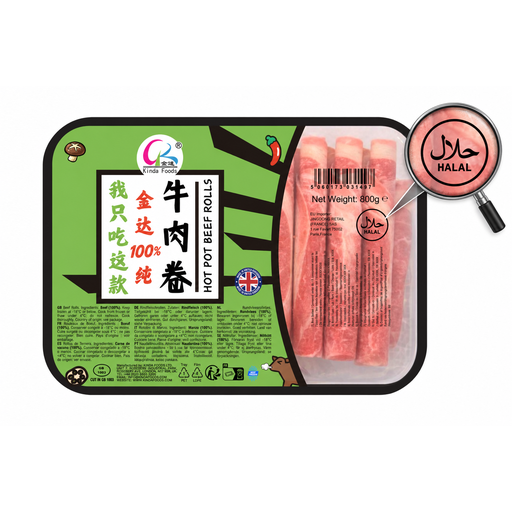
Why this suits this profile: The thin, even slices are ideal for anyone looking for a carefully prepared product for hot pot or pan-frying.
The stated composition is 100% beef, with no declared allergens, and storage at –18 °C or below.
Beef of British origin, individually frozen thin slices and a generous 800 g format.
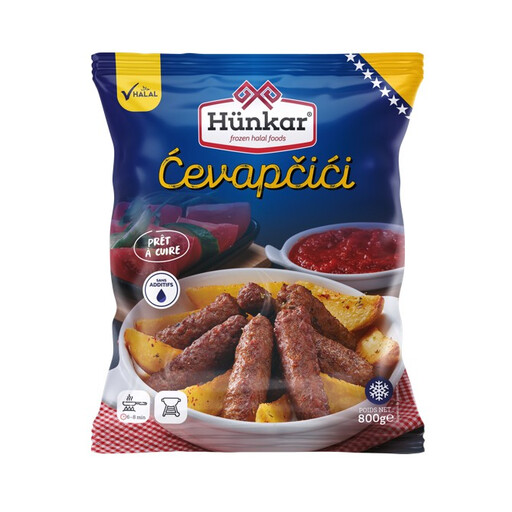
Why this suits this profile: These small meat rolls are designed for barbecues, large gatherings and Balkan-style sides.
The ready-to-grill shape and the 800 g pack reduce handling and make it easy to work out quantities.
The composition states 69% beef, with soya protein, beef fat, breadcrumbs and spices.
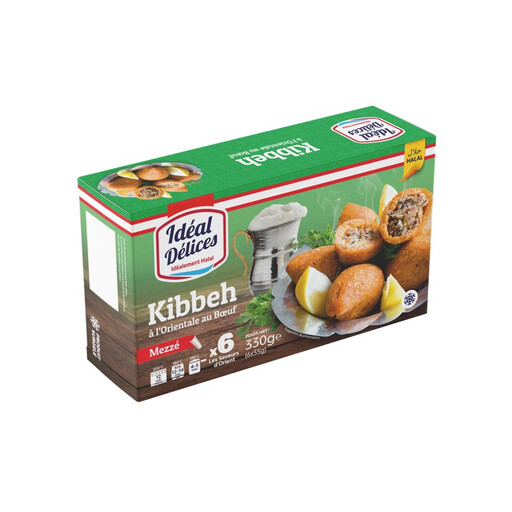
Why this suits this profile: Kibbeh offers a change from the usual patties and lets you serve a Middle Eastern speciality as a starter or main course.
The presence of bulgur wheat, beef and onions is clearly detailed – so this isn't just a simple beef patty.
A 330 g format, a durum wheat shell and a spiced beef and onion filling, to be kept in the freezer.
We've rounded up the products that meet these strict selection criteria and European food safety standards, in a full list updated in real time.
Place them in a freezer set to –18 °C or below, and respect the date shown on the packaging. Once thawed, do not refreeze. Follow the manufacturer's instructions and cook minced products all the way through.
These specialities are all made from seasoned minced meat, but their shape, recipe and culinary origins differ. Köfte and keftas are often shaped into balls or cylinders. Ćevapčići are small rolls associated with Balkan cuisines. The exact composition depends on the brand.
For burgers, go for pre-portioned patties. For a family barbecue, köfte, kebabs and ćevapčići are easy to cook in batches. If you prefer to control the shape and seasoning yourself, halal minced beef in a large format will give you more versatility.