
Livraison le jour même ou le lendemain

Qualité garantie

Débloquez vos offres de bienvenue: Livraison GRATUITE | Jusqu'à -80 % | 30 jours d'essai gratuits à JoyPlus
Téléchargez l'application
Frozen fries are the ultimate convenience food for a fun, hassle-free meal. But when you're faced with overflowing freezer aisles, choosing the right bag can be a daunting task. Between tempting marketing claims and colourful packaging, it's easy to end up with a product that suits neither your taste nor your favourite cooking method. To avoid the disappointment of a soggy fry forever, here are the pitfalls to watch out for before you check out.
To sort through the options, ignore the marketing jargon and focus on the criteria that truly matter for the quality and final result of your fries.
Forget the slogans and focus on these three key points. They will help you find the perfect frozen fries for you.
The shape of the fry isn't just an aesthetic detail: it dictates the final texture and cooking time.
A quick look at the ingredients list is often very revealing. There are two main families of frozen fries:
Don't just go by the cooking method highlighted on the front of the package. Many products are more versatile than they appear. A "special for oven" fry will often yield excellent results in an Air Fryer, and vice versa. Even classic fries meant for deep-frying can be baked in the oven, although the result will logically be less crispy without a coating. The best habit to get into: check the back of the package, which often lists all possible cooking methods.
To guide you, we've selected products that meet specific needs, based on the objective criteria we've just detailed.
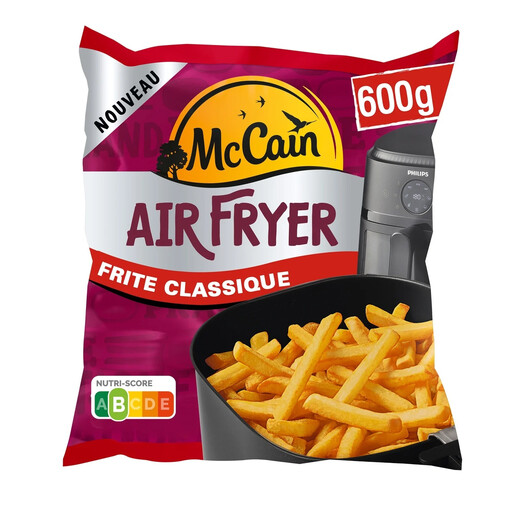
The Premise: Specially formulated for the rapid cooking and powerful ventilation of an Air Fryer, these fries promise maximum crispiness with minimal fat.
Here, the "for Air Fryer" claim is justified: the presence of rice flour in the recipe creates a technical coating that ensures crispiness without needing an oil bath.
A texture optimised for non-fried cooking and express preparation.
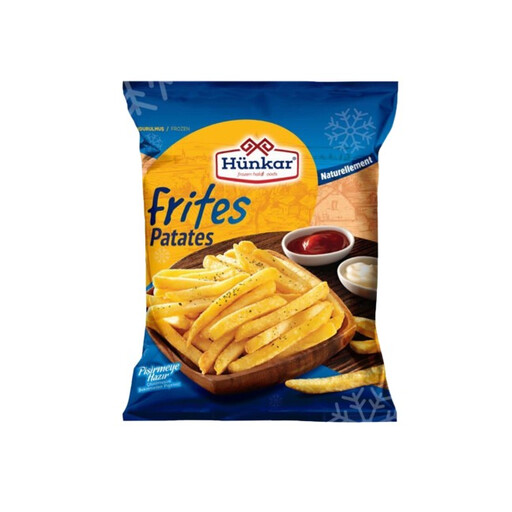
The Premise: To get that authentic chip-shop taste, there's nothing like a thin (shoestring) cut and a minimalist recipe (potatoes, oil). The perfect combination for the deep fryer.
No frills and no promises of versatility. This product gets straight to the point: a thin cut (7/7 mm) and a simple recipe, optimised for one thing only: deep-frying. You can't go wrong.
Ultra-fast cooking (just 6 minutes) and maximum crispiness thanks to the shoestring cut.
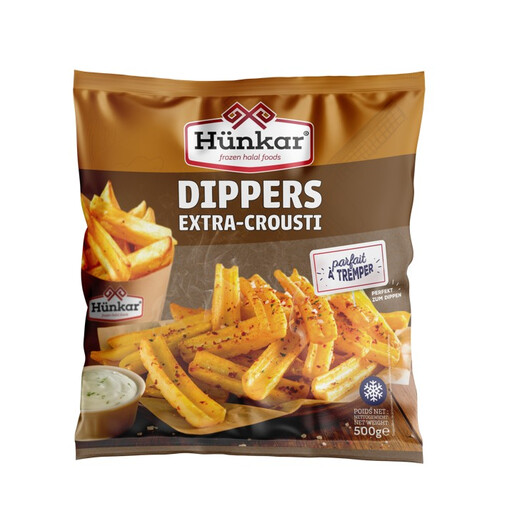
The Premise: Their unique scoop shape is no accident: it's designed to generously scoop up sauces. A choice that's as fun as it is practical for appetizers or to accompany a chili con carne.
Here, the promise isn't based on a vague name but on a functional shape. The product serves a specific purpose ("dipping") that straight fries don't handle as easily.
Great cooking versatility (oven, Air Fryer, deep fryer) and a perfect shape for dipping to your heart's content.
Discover our full selection of products that meet our quality criteria and current regulations.
Almost all the difference lies in the coating. Oven-baked fries are coated with a thin layer (starch, flour, etc.) that allows them to brown and crisp up without being submerged in oil. Conversely, fries for deep-frying have a minimalist recipe because the oil bath does all the work.
Yes, but don't expect a miracle. Without a coating, the fries are likely to remain a bit pale and soft. The trick to get the best possible result: spread them out in a single layer, place them in a very hot oven (200-220?°C or 400-425?°F), and flip them halfway through cooking. A drizzle of oil before you start can also help.
The number one secret: never overcrowd the basket. The hot air must be able to circulate freely around each fry to cook it properly. Don't hesitate to cook in several batches. Most importantly, shake the basket halfway through for even cooking. Ultimately, choosing fries specifically designed for the Air Fryer, with their special coating, remains the best guarantee for an optimal result.