
Livraison le jour même ou le lendemain

Qualité garantie

Débloquez vos offres de bienvenue: Livraison GRATUITE | Jusqu'à -80 % | 30 jours d'essai gratuits à JoyPlus
Téléchargez l'application
Standing in the frozen food aisle, choosing a simple bag of fries can quickly become overwhelming. Shoestring, thick-cut, oven-ready, or deep-fryer specific… the options are endless. To help you sort through the choices and find the fries that will elevate your meals, we've broken down the criteria that truly matter. Our goal: to give you everything you need to make the right choice based on your taste, your equipment, and your cravings.
Before you grab a bag, here are the key points that will help you decode the labels and choose the product that's right for you.
The shape of the fry determines its mouthfeel. Here, it's all a matter of preference!
Your equipment is a decisive factor. The majority of frozen fries are designed for a specific cooking method.
A quick look at the ingredients list is also very revealing. While most fries consist of just potatoes and vegetable oil, some varieties include a coating (made from wheat flour, rice flour, or starch). Its purpose? To add extra crispiness and ensure the fries hold their shape better during cooking, for crispy fries that stay that way even after a few minutes.
To help you choose, here are a few products that stand out from the crowd, each catering to different tastes and uses.
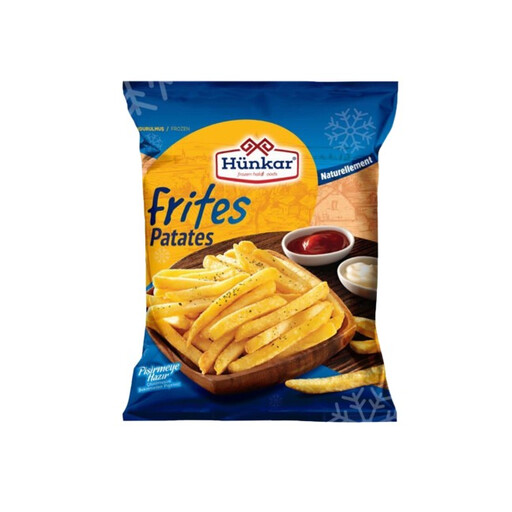
Why this product stands out? These shoestring fries win you over with their extra-thin cut (7?mm) and simple recipe: potato, vegetable oil, and a hint of dextrose for a perfectly golden finish. They are specially designed for express cooking in the deep fryer.
Key features:
Who is it for? For die-hard fans of thin, crispy fries who swear by their deep fryer and want them ready fast.
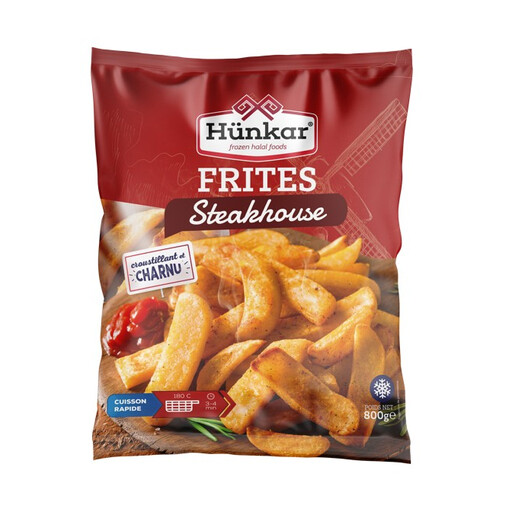
Why this product stands out? With their wide and generous cut, these steakhouse fries are all about a soft, fluffy texture. Fluffy on the inside while remaining golden on the outside, they cook in record time, a real asset for impromptu dinners.
Key features:
Who is it for? For lovers of thick, fluffy fries who want a substantial side dish that's ready in the blink of an eye in the deep fryer.
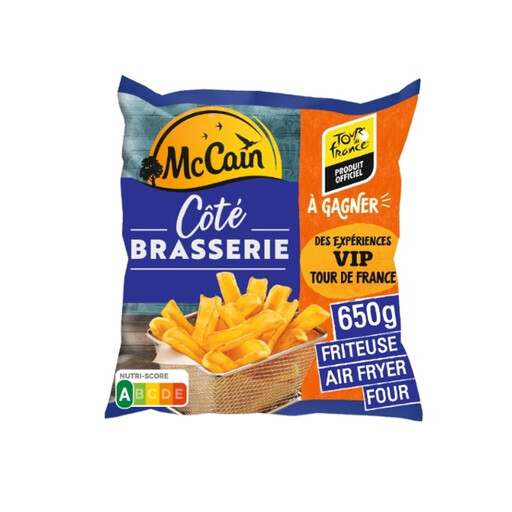
Why this product stands out? These fries are distinguished by their original, slightly curved shape and, above all, their special coating, the secret to their incomparable crispiness. Their key advantage: unbeatable versatility, for cooking oven fries or deep-frying.
Key features:
Who is it for? For those who want maximum flexibility and guaranteed crispiness, with or without a deep fryer.
While the plain fry is a timeless classic, why not mix things up with bolder flavours? For an appetiser or a meal that's out of the ordinary, pre-seasoned fries with spices or herbs are a perfect alternative.
? Discover our full range of seasoned crispy fries to add a touch of originality to your dishes.
For successful oven-baking of frozen fries, the secret lies in a few key tips. Always preheat your oven to the temperature recommended on the bag (usually around 200-220?°C). Spread the fries in a single layer on a baking sheet lined with parchment paper, making sure they don't overlap. This allows the hot air to circulate perfectly. Remember to flip them halfway through cooking so they are golden and crispy on all sides.
Absolutely not! You should never thaw frozen fries. They are specifically designed to go directly from the freezer to the heat. Thawing them would make them waterlogged, which would ruin their crispiness and could cause dangerous splatters of hot oil in a deep fryer.
Fries for the deep fryer are most often simply cut and pre-cooked potatoes. Oven fries, on the other hand, are usually coated with a thin film of oil, sometimes supplemented with a starch-based mixture. It's this coating that allows them to brown and become crispy without being submerged in oil, thus mimicking the effect of deep-frying. Trying to bake fries meant for a deep fryer in the oven often results in a drier, less satisfying outcome.