Hosts putting together a festive meal
If you’ve already planned a main course, a vegetable dish can make a handy side. Compare the values per 100 g with the amount you plan to serve, and remember to consider the rest of the meal too.


If you’re putting together your own Christmas meal, choose a frozen vegetable side and consider it alongside the rest of the plate. If you’d rather have a meal that’s ready to heat, look at complete meals instead. In either case, compare the nutritional values per 100 g, then work them out for the amount you’ll serve. The dish’s name and Nutri-Score alone won’t tell you how many calories are in your portion.
If you’ve already planned a main course, a vegetable dish can make a handy side. Compare the values per 100 g with the amount you plan to serve, and remember to consider the rest of the meal too.
A frozen meal that’s ready to heat can make serving simpler. Before choosing one, check the portion size, nutritional information, ingredients and listed allergens.
A sharing-size bag could work well for a meal with several guests. Check its weight, the stated number of portions and how much freezer space you have.
Choose this if: you want to decide for yourself what goes on the plate and how much to serve with the main course.
Bear in mind: vegetables on their own may not make up a complete meal.
Choose this if: you’re looking for a meal that’s ready to heat, rather than a side to add to your menu.
Check: convenience doesn’t tell you the nutritional values for the portion you’ll eat.
| Criteria | What to check | What matters to shoppers |
|---|---|---|
| Calories and portion size | Compare the kcal per 100 g of products intended for the same purpose, then work out the values for the amount planned per person. | I want to know the calories in what I’ll actually serve, not just the figure shown per 100 g; around 36% of consumers make this their top priority. |
| Other nutritional values | Check the sugars, salt and saturated fatty acids per 100 g too; look at the Nutri-Score if one is shown. | If several recipes appeal to me, I want to look beyond calories before making a choice; around 29% of consumers put this first. |
| Ingredients and allergens | Check the ingredients list and any allergens highlighted on the product you buy. | When I’m serving a dish to several guests, I need to be able to check what’s in it before it reaches the table; around 21% of consumers prioritise this. |
| Pack size and planning | Check the bag’s weight, the stated number of portions and the storage instructions. | When preparing several plates, I’m mainly looking for a pack size that suits the number of guests and is easy to store until the meal; around 14% of consumers make this their priority. |
The kcal per 100 g won’t necessarily match the values for the portion you serve. A vegetable side should also be considered as part of the whole meal.
Compare products intended for the same purpose, then work out the values for the amount you plan to serve on each plate.
Two vegetable recipes can differ in their ingredients and other nutritional values. According to Santé publique France, displaying the Nutri-Score is voluntary; it doesn’t replace checking the nutrition table.
In particular, check the salt, sugars and saturated fatty acids per 100 g, even if the packaging displays a Nutri-Score.
A recipe’s name doesn’t tell you whether it contains a particular ingredient or allergen. The DGCCRF reminds consumers that allergens must be highlighted on food labels.
Check the ingredients list and allergen information on the bag you’ll be serving to your guests.
A long journey after shopping can make it harder to keep frozen food at the right temperature, especially if you’re visiting several shops.
ANSES advises buying frozen products at the end of your shop. Plan how you’ll transport them and follow the storage instructions on each pack.
A frozen food specialist to consider for cooked vegetable sides.
A retailer where it’s worth comparing how a product fits into your menu before comparing recipes.
A retailer to consider for own-brand vegetable sides.
A retailer to consider for a cooked side in a sharing-size pack.
A retailer to consider for frozen vegetables and sides to add to your menu.
These plain vegetables and creamed vegetable dishes are sides to help you put together a Christmas meal. They aren’t a substitute for choosing a complete meal; compare their portion sizes and labels in the context of your menu.
 Image unavailable
Green beans to serve as a side as part of a meal. 750 g bag; check the portion size and cooking instructions on the pack.
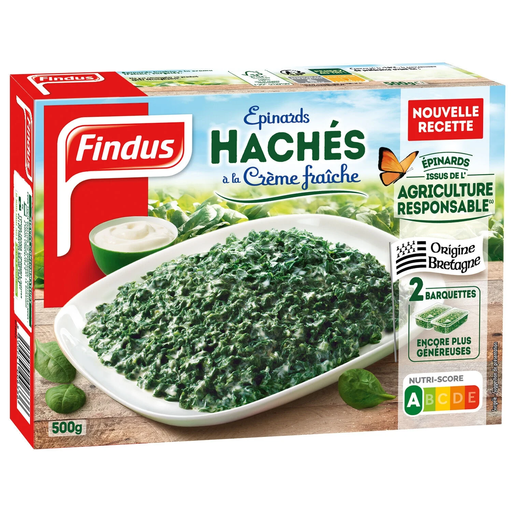 Image unavailable
A creamed spinach dish to serve alongside the main course. 500 g bag; check the nutritional values, portion size and allergens on the label.
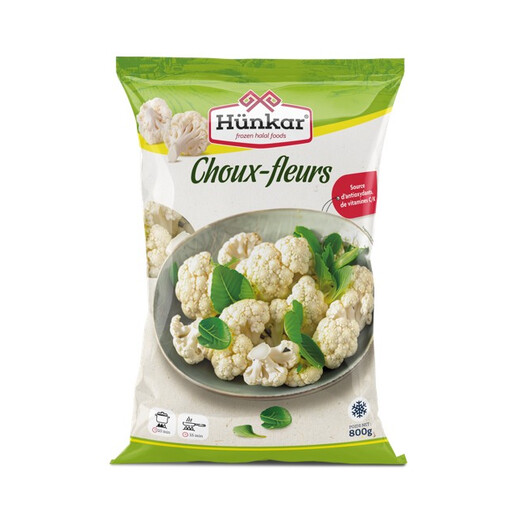 Image unavailable
Cauliflower to add as a side to your festive menu. 800 g bag; decide how much to serve and check the preparation instructions on the pack.
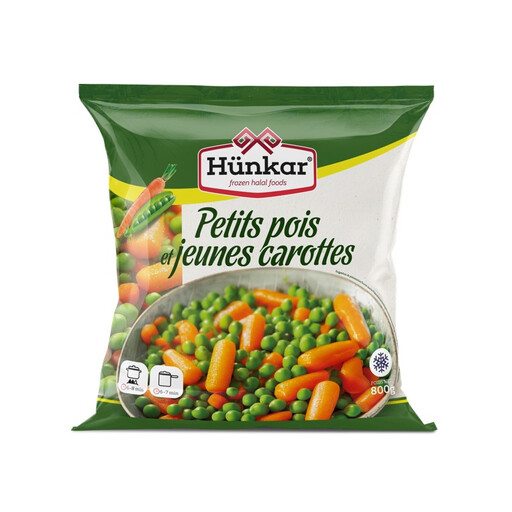 Image unavailable
A mix of peas and baby carrots to serve alongside a meal. 800 g bag; work out the values per 100 g for the portion you plan to serve.
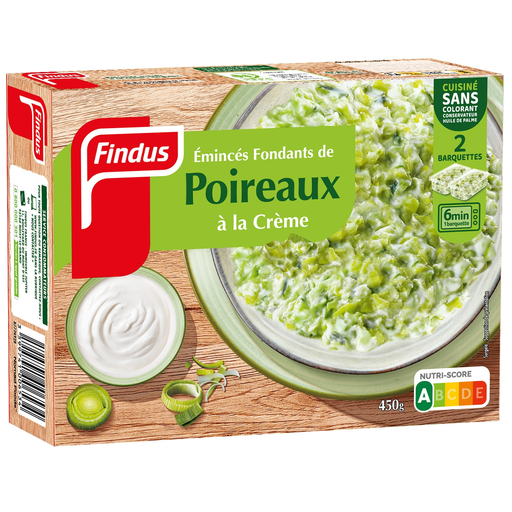 Image unavailable
A creamed leek dish to serve as a side. 450 g bag; check the planned portion size, nutritional values and allergens on the pack.
Start with the values per 100 g, then work them out for the amount you’ll serve. Also consider their different roles in the meal: calories alone aren’t enough to compare a side with a complete meal.
No. The Nutri-Score doesn’t tell you how many calories are in the portion you’ll eat. According to Santé publique France, displaying it is voluntary; check the nutrition table and portion size too.
Read the ingredients list and check the allergens highlighted on the product packaging, as the DGCCRF advises. Check each dish you serve, including vegetable sides.
Pick it up at the end of your shop, following ANSES advice on maintaining the cold chain. Plan how you’ll transport it, then follow the storage instructions on the packaging.