People preparing several meals
If you portion out your meals in advance, a bag of vegetables to add to gives you the freedom to choose how much to serve and what else goes on each plate.


To prepare several meals, choose frozen vegetables to add to if you want to put each plate together yourself, soup if you’re looking for a starter or a base to portion out, or an individual meal if you’d prefer a portion that’s already defined. Compare the energy content per 100 g of products intended for the same use, then check the amount you’ll serve: a low figure per 100 g doesn’t tell you everything about the whole meal.
If you portion out your meals in advance, a bag of vegetables to add to gives you the freedom to choose how much to serve and what else goes on each plate.
An individual meal saves you having to put a meal together from several products. Its weight and nutritional information let you see what the whole portion provides, rather than just looking at 100 g.
You can choose a vegetable base to add to, or look at an individual meal described as plant-based. Check the ingredients for the specific product: the name of a recipe alone doesn’t confirm that it’s suitable for your diet.
Choose this if: you want to split a bag between several plates and put the rest of the meal together yourself.
Bear in mind: vegetables on their own don’t necessarily make a complete meal; a seasoned vegetable mix may also contain other ingredients, such as the butter and soya in Carrefour Extra’s vegetable mix.
Choose this if: you want to portion out a starter or a meal base between several servings.
Bear in mind: Auchan’s five-vegetable soup contains 0.7 g of protein per 100 g; if it’s intended to be a meal, think about what else you’ll serve with it.
Choose this if: you’d rather heat up a defined portion than assemble several components.
Check: the weight and ingredients of the whole portion; a plant-based version or an energy figure in kcal per 100 g won’t answer both questions on its own.
For batch cooking, first decide what role the frozen food will play in your meal. The criteria below are aimed at shoppers who put each of these needs first.
| Criterion | What to check | Which shoppers? |
|---|---|---|
| Energy per portion | Compare kcal per 100 g for products intended for the same use, then calculate the amount for the serving you’ll have. | If I’m splitting a bag or serving a whole tray, I want to know the energy content of my meal, not just that of 100 g. Around 40% of shoppers put this portion calculation first. |
| What makes up the meal | Check the portion size and protein content; for soup or vegetables on their own, work out what else will make up the meal. | When I prepare lunch in advance, I don’t want to mistake a starter for the meal I’ve planned. Around 30% of shoppers prioritise the make-up of the meal. |
| Portioning | Check the net weight, the number of portions stated and the preparation instructions. | When I’m cooking for several days, I look for a pack size I can divide up according to the meals I’ve planned. Portion planning is the main consideration for around 20% of shoppers. |
| Ingredients to avoid | Read the ingredients, allergens and any ‘may contain’ information for the product you choose. | If I avoid animal-derived ingredients or certain allergens, the dish name alone isn’t enough to help me decide. Around 10% of shoppers prioritise ingredient suitability. |
According to Manger Bouger, this is a useful basis for comparing nutritional information, but it doesn’t necessarily match the amount you’ll eat. A soup you portion out, an individual bowl and a tray don’t all have the same serving weight.
Work out the energy content of the portion you plan to have, and compare products that will play the same role in the meal.
Auchan’s five-vegetable soup contains 0.7 g of protein per 100 g. Carrefour Extra’s vegetable mix is also a base to consider as part of the whole meal.
If the product is to be your lunch or dinner, decide in advance what else you’ll serve with it.
A claim such as ‘no preservatives’ tells you neither the energy content of the portion nor how much salt it contains. The Institut national de la consommation, reporting on the CLCV survey of 150 fresh and frozen ready meals, highlights nutritional differences within the same category of dishes.
Check the nutritional information, ingredients and allergens for each product. Use the Nutri-Score to help compare similar products, but don’t rely on it as your only criterion.
When you’re buying portions for several meals, how you transport and store them matters just as much as how you divide up the bag. The DGCCRF recommends keeping transport time to a minimum and using an insulated bag where possible.
Put frozen food away promptly and follow the storage, defrosting and preparation instructions on each pack.
A retailer where you can browse both frozen ready meals and vegetables to add to.
Notre Jardin frozen vegetables can be used as components to portion out between several meals.
The retailer has individual and family-size meals, while its soups also come in a format you can portion out.
Its frozen food categories include ready meals, listed separately from pizzas and snacks.
Plain vegetables and frozen mixes can be used to put meals together in advance.
Individual meals let you look at ready-portioned options, including plant-based recipes.
These products are frozen vegetables to portion out or add to meals when batch cooking. Their pack sizes make it easier to plan several portions, but they aren’t a complete meal on their own.
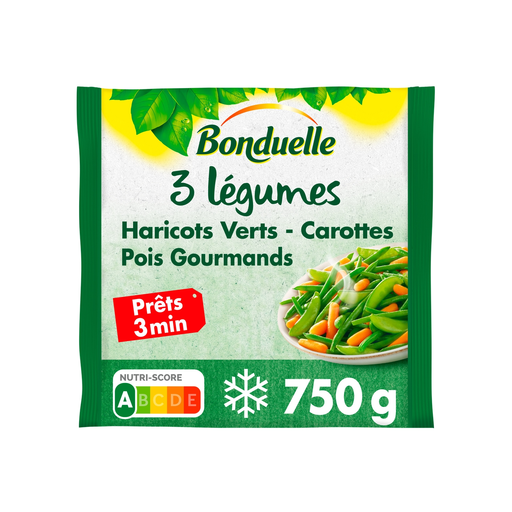 Image unavailable
This mix can be served as a side and portioned out between several plates. The bag contains 750 g; plan the other parts of the meal separately, according to what you want to serve.
 Image unavailable
These green beans are a handy component for several meals prepared in advance. The bag contains 750 g; you’ll need to plan the other parts of each meal separately.
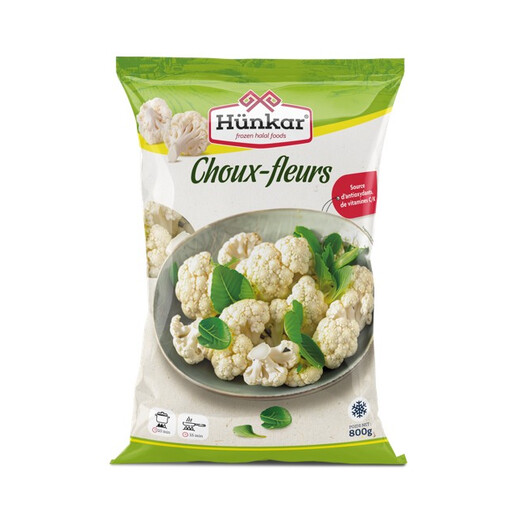 Image unavailable
This cauliflower can be portioned out as a vegetable base for several meals. The bag contains 800 g; adjust the amount you prepare to suit your portions and follow the pack instructions.
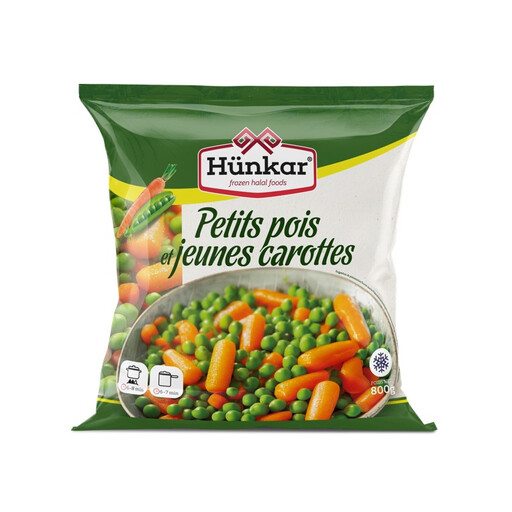 Image unavailable
This vegetable mix can be served with meals prepared in advance. The 800 g bag can be divided up according to your preferred portion sizes; check the pack for preparation instructions.
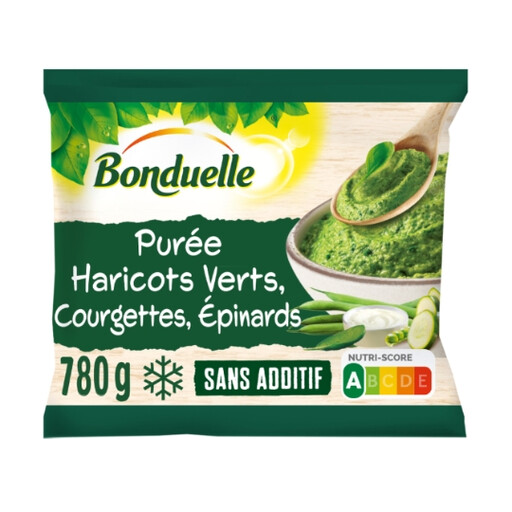 Image unavailable
This purée can be portioned out as a side, but it isn’t a complete meal on its own. The bag contains 780 g. The recipe contains cream and butter (both made from milk) and may contain celery. Once defrosted, the instructions say to store it in the fridge and use within 24 hours.
First compare their figures per 100 g if they play the same role in the meal, then work out the figures for the amount you plan to serve. According to Manger Bouger, the Nutri-Score is calculated per 100 g or 100 ml; this common measure doesn’t mean that a bowl and a whole tray contain the same amount of energy.
No. The Nutri-Score doesn’t replace checking the portion and ingredients. Use it to compare similar products, then check the serving weight and any allergens that matter to you.
No. As Manger Bouger explains, displaying the Nutri-Score is voluntary in France. If it isn’t shown, check the nutritional information and ingredients list to compare products.
Keep transport time to a minimum and use an insulated bag where possible, in line with the DGCCRF’s advice. Put the food away promptly, then follow the storage and preparation instructions on each pack.
Follow the instructions for the product you’ve bought rather than assuming that all meals can be stored in the same way. The product information for the Picard and Carrefour items mentioned in this research says not to refreeze food once defrosted.