To choose a frozen meal for a lighter Easter lunch, compare the energy per 100 g, then work it out for the amount you’ll actually serve. A vegetable side gives you the flexibility to put your plate together, but it may not be enough to make a meal on its own. A single portion makes serving straightforward, while a larger pack means dividing the dish between your guests. Check the other nutritional information and the ingredients for the specific product you choose, too.
Who are these options for?
Guests keeping an eye on portion sizes
If you want to compare the energy content of different meals, start with the figures per 100 g, then factor in your portion and the rest of the menu. The French Directorate-General for Competition Policy, Consumer Affairs and Fraud Control (DGCCRF) states that nutrition information is given per 100 g or 100 ml.
Hosts serving several people
For a shared lunch, choosing between individual trays and a family-sized dish depends in part on the number of guests and how easy it is to divide the portions. For example, Carrefour lists a 900 g frozen meal, while Auchan separates individual meals and family-sized packs in its range.
Guests who need to check ingredients
If an ingredient or allergen is a concern, the dish name alone won’t tell you enough. Check the ingredients list and any ‘may contain’ information on the label of the product you buy. For example, a Carrefour chilli product page lists several possible traces; this doesn’t necessarily apply to other recipes.
What should you look for?
First decide whether the frozen food will be a side to complement or a complete meal to serve as it is. Then compare the nutritional values on the same basis and relate them to the portions you plan to serve for lunch.
Vegetables or a side to build your meal around
Choose this if: you’d like to decide separately what else to serve at lunch. Picard, for example, presents its frozen ratatouille as a side dish.
Bear in mind: a vegetable base may not make a complete meal on its own. The ingredients in vegetable mixes, mashes and gratins vary from recipe to recipe.
Individual meal
Choose this if: you want to serve each guest a portion that’s already defined.
Check: the tray size and recipe still matter, even if the packaging displays a Nutri-Score.
Family-sized meal
Choose this if: you’d rather serve several guests yourself from the same dish.
Bear in mind: the pack weight doesn’t determine how much each person will get.
| What to consider |
What to check |
Who is it for? |
| Energy in your portion |
Compare the kcal per 100 g on the same basis, then check the weight you plan to serve. |
If I want to keep an eye on the energy in my lunch, the figure per 100 g isn’t enough without knowing my portion size; around 36% of consumers put this need first. |
| What makes up the meal |
Check whether the product is a side or a prepared meal, then read its ingredients and protein content per 100 g. |
A ratatouille can be the base of my meal without making up the whole lunch: around 29% of consumers prioritise the meal’s composition above all else. |
| Serving portions |
Check the net weight, the number of servings shown and how much you’ll be able to share between your guests. |
When I’m hosting, I want to serve everyone the amount I’ve planned without making mealtimes complicated; for around 21% of consumers, portioning and serving come first. |
| Allergens and storage |
Check the allergens and ‘may contain’ information for the exact product, along with its cooking and storage instructions. |
If I need to take an allergen into account or store a portion, I check the label before preparing the meal; around 14% of consumers prioritise these precautions. |
Pitfalls to avoid
-
Assuming the lowest-energy side dish makes a complete meal
Picard presents its frozen ratatouille as a side dish. Its values per 100 g therefore don’t tell you everything about the lunch you’ll serve with it.
Decide what will make up the whole meal, and factor in any sauces, bread or dessert when comparing your options.
-
Looking only at the Nutri-Score
The Nutri-Score doesn’t tell you how much energy there is in the portion you’ll serve. If two packs are different sizes, you’ll need to check their weights, too.
Check the nutrition information per 100 g, including energy, fat, sugars, protein and salt, then work out the figures for the portion you’re planning.
-
Confusing the weight of a family-sized dish with a serving size
A 900 g or 1 kg dish can be shared in different ways. The amount on each plate depends on how you serve it, not just the pack size.
Decide how many guests you’re serving and how you’d like to divide the dish before choosing a larger pack.
-
Overlooking the label and defrosting instructions
Allergens and possible traces depend on the recipe. The French Ministry of Agriculture also states that refreezing a defrosted product encourages bacteria to multiply.
Check the label on the product you buy, follow its preparation instructions and don’t refreeze a defrosted product.
Retailers to compare pack sizes
Picard
Picard offers prepared meals with a Nutri-Score of A or B, as well as frozen side dishes.
- Its cooked ratatouille is listed as serving four, at 46 kcal per 100 g: an example of a portionable side dish worth considering.
- The Nutri-Score of a meal or the energy content of this ratatouille doesn’t tell you everything about the complete lunch.
Carrefour
Carrefour offers, among other things, frozen meals in sharing sizes.
- The product page for a Carrefour Sensation chilli lists a 900 g pack and 122 kcal per 100 g, which are useful for working out how much to serve.
- This figure applies to this chilli, not all Carrefour meals. Its product page also lists possible allergen traces that you should check.
Auchan
Auchan’s ranges distinguish between frozen vegetables, individual prepared meals and family-sized meals.
- This makes it easier to look for either ingredients to put together or a meal that’s already prepared.
- To compare two specific recipes, check their nutrition information and weight on the product page or packaging.
E.Leclerc
The E.Leclerc catalogue includes family-sized prepared meals from its Marque Repère range.
- 1 kg products are an option if you’re planning to serve several guests from the same dish.
- The pack weight doesn’t tell you the size of each portion or the nutritional values of the recipe you choose.
A frozen vegetable option on Joybuy
This 800 g vegetable dish is a side you can divide between guests at lunch. Check how much you’ll serve and how it fits into your menu.
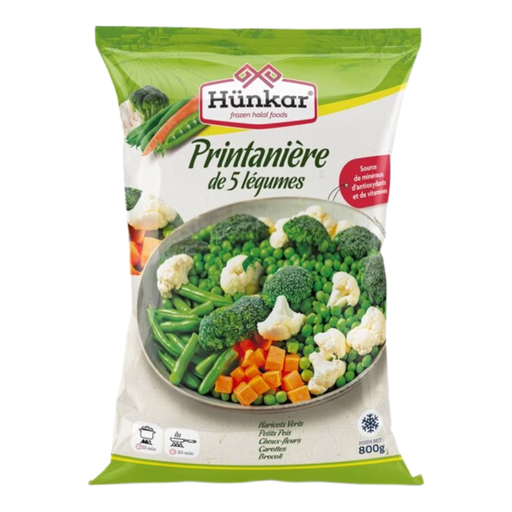 Image unavailable
HÜNKAR Spring Vegetable Dish 800g
A frozen vegetable dish to consider as part of a lunch you put together yourself. The pack contains 800 g. Choose how much to serve based on the number of guests, and check the label for ingredients and preparation instructions.
View on Joybuy
Frequently asked questions
Does a Nutri-Score of A or B mean a frozen meal is low in calories?
No. The Nutri-Score doesn’t replace the meal’s energy value or the need to work out the portion you’ll serve. The DGCCRF states that nutrition information is given per 100 g or 100 ml. Use this basis to compare recipes, then check their weight.
Can frozen ratatouille make up a whole lunch?
Not necessarily: Picard presents its cooked ratatouille as a side dish. If you choose it for Easter lunch, decide what else will make up the meal rather than relying only on its kcal per 100 g.
How do you compare a family-sized meal with an individual tray?
Compare their nutritional values per 100 g, then consider how much each guest will get. For a larger dish, divide its weight according to how you plan to serve it; the pack size isn’t the same as an individual portion.
Can you refreeze a frozen meal after defrosting it?
Don’t refreeze a defrosted product: the French Ministry of Agriculture states that this encourages bacteria to multiply. Also follow the storage and preparation instructions on the packaging.
Where can you check the allergens in a frozen meal?
Check the ingredients, allergens and ‘may contain’ information on the label of the product you buy. Information varies from one recipe to another: for example, the product page for a Carrefour chilli lists possible traces that shouldn’t be assumed to apply to other meals.


