People keeping an eye on fat
If fat content is your main priority, start with the figure per 100 g for the specific product. The name ‘sorbet’ or a fruity look is no substitute for checking the figures.


When choosing frozen desserts for the week, compare fat and sugar per 100 g before picking a format that suits the number of portions you have in mind. Under EU Regulation (EC) No 1924/2006, the claim ‘low fat’ can only be used for solid foods containing no more than 3 g of fat per 100 g. A low-fat sorbet isn’t necessarily low in sugar: E.Leclerc states that its ESKISS lime sorbet contains 0 g of fat and 22 g of sugars per 100 g.
If fat content is your main priority, start with the figure per 100 g for the specific product. The name ‘sorbet’ or a fruity look is no substitute for checking the figures.
A tub to serve and individual portions need different kinds of planning. Check the net weight, number of pieces, listed allergens and how much freezer space you have.
A low fat figure doesn’t tell you anything about sugar on its own. The E.Leclerc and Auchan listings for several sorbets show why it’s worth checking both lines in the nutrition table.
Start with the nutrition information for the exact product. Then consider the number of portions and storage instructions when planning your weekly shop.
| Criteria | What to check | Who it matters to |
|---|---|---|
| Fat | Check the figure per 100 g. For a solid food carrying the ‘low fat’ claim, EU Regulation (EC) No 1924/2006 sets a maximum of 3 g per 100 g. | If I’m mainly looking for a verifiable fat content, I don’t want to rely on the dessert’s name alone. Around 42% of consumers make this their top priority. |
| Sugars and energy | Compare sugars and energy on the same per-100 g basis as fat, wherever the nutrition tables allow. | A sorbet might appeal to me because of its fat content, but I also want to know how much sugar it contains before choosing it. Around 33% of consumers put this comparison first. |
| Format and storage | Check the net weight, number of pieces and storage instructions for the product you’re buying. | To spread desserts across the week, I mainly need a suitable format and enough space in the freezer. This is the top priority for around 25% of consumers. |
According to E.Leclerc, ESKISS lime sorbet contains 0 g of fat and 22 g of sugars per 100 g. Auchan states that Les Glaces de l’Ardèche raspberry sorbet contains 0 g of fat and 21.1 g of sugars per 100 g.
Check the ‘fat’, ‘sugars’ and ‘energy’ lines in the same nutrition table.
EU Regulation (EC) No 1924/2006 sets a specific threshold for the ‘low fat’ claim on solid foods. The flavour or category doesn’t prove that a product meets it.
If this is an important criterion for you, check the figure per 100 g for the product you’ve chosen and don’t rely on marketing claims.
The frozen dessert ranges at Carrefour, E.Leclerc and Picard include tubs and individual formats in different weights. A larger pack won’t necessarily give you the number of desserts you need.
Compare the net weight and number of pieces, then choose a format you can serve and store throughout the week.
Instructions vary by product. The Joybuy listing for POP FRUIT watermelon sorbet sticks says to store at −18 °C or below and not to refreeze after defrosting.
Pick up frozen products towards the end of your shop and follow the instructions on the packaging you buy.
Its frozen dessert range includes yule logs, mochi and bite-sized ice cream treats.
The retailer offers Marque Repère tubs of ice cream and sorbet, including the ESKISS range.
Its range includes ice lollies, tubs, sorbets and frozen desserts.
The retailer provides information about its food products.
ALDI offers ice cream and sorbets in its MUCCI range.
Its frozen dessert selection includes pastries, layered desserts and frozen treats.
This selection includes sorbets, ice lollies and fruity treats to freeze. Their formats can help you plan desserts for the week; compare nutrition information on the same basis before making a decision about fat and sugars.
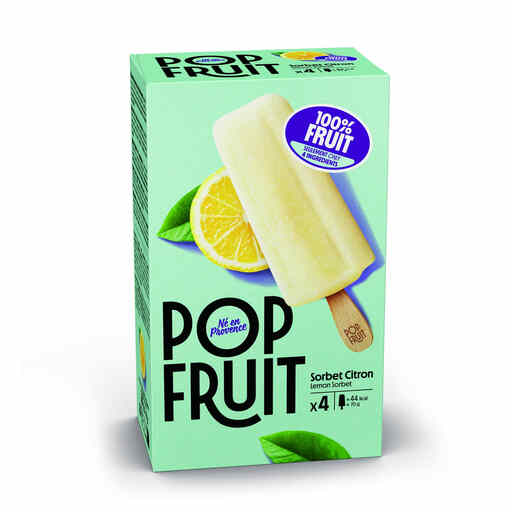 Image unavailable
An individual format to consider if you’d like to plan four separate desserts for the week.
Compare fat and sugars per 100 g, and check the allergens and storage instructions on the packaging.
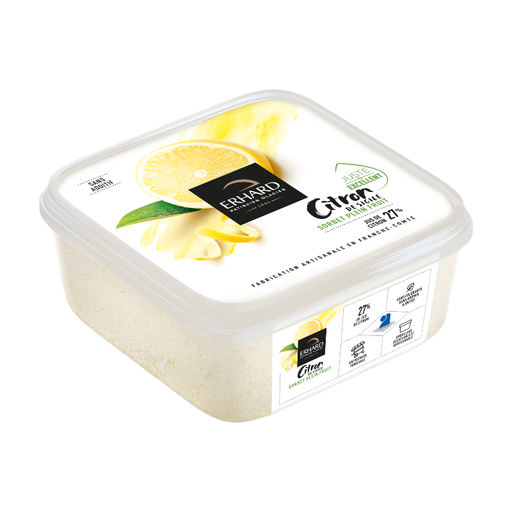 Image unavailable
This 488 g format is suitable for a dessert you can portion according to how much you’d like to serve.
Check fat and sugars per 100 g before comparing it with other sorbets, and check the listed allergens too.
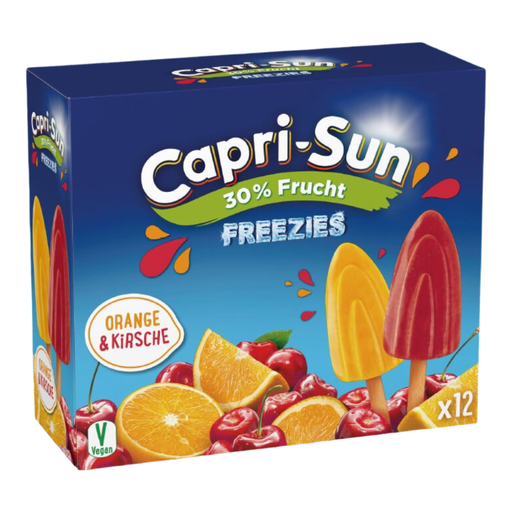 Image unavailable
The 12 ice pops give you individual portions to freeze.
If you’re comparing this product with a dessert whose nutrition information is given per 100 g, don’t directly compare it with figures expressed per 100 ml. Follow the freezing instructions on the packaging.
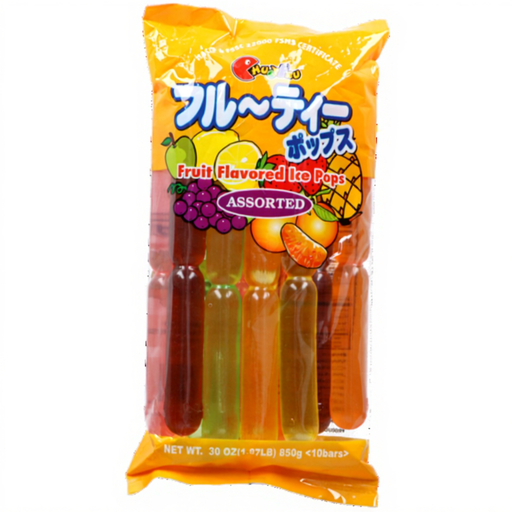 Image unavailable
These fruity bars need to be frozen before eating, so make sure you have space in the freezer before adding them to your shop.
Check the fat and sugar figures on the packaging if you’d like to compare them with sorbets.
For a solid food, this claim requires the product to contain no more than 3 g of fat per 100 g, under EU Regulation (EC) No 1924/2006. It doesn’t tell you how much sugar the product contains or how much energy it provides.
No. Sugar content depends on the specific recipe. E.Leclerc states that its ESKISS lime sorbet contains 22 g of sugars per 100 g, despite containing 0 g of fat per 100 g.
Compare their nutrition information on the same basis, starting with fat, sugars and energy. The Directorate-General for Competition Policy, Consumer Affairs and Fraud Control (DGCCRF) states that the nutrition declaration for prepacked foods is given per 100 g or 100 ml. These two units aren’t interchangeable without appropriate information.
Keep them out of the freezer for as little time as possible and follow the instructions for the product you’ve bought. For example, the Joybuy listing for POP FRUIT watermelon sorbet sticks says to store at −18 °C or below and not to refreeze after defrosting.
Yes. Check the ingredients and any ‘may contain’ information for the exact product. The E.Leclerc listing for ESKISS lime sorbet mentions possible traces of peanuts, tree nuts, milk and soya. This information doesn’t automatically apply to other sorbets.