A couple keeping an eye on fat
For dinner for two, the fat content per 100 g makes it easier to compare desserts before choosing a flavour or presentation. The word ‘sorbet’ is no substitute for checking the product’s nutrition information.


To keep fat content in check at a wedding anniversary dinner, choose a dessert that meets your per-100 g target, then make sure the pack size suits the number of guests. Under European Union Regulation (EC) No 1924/2006, the claim ‘low fat’ requires a maximum of 3 g of fat per 100 g for solid foods. A sorbet may meet this criterion while still containing sugar, so compare the sugar content too, along with allergens and serving instructions for the specific product you choose.
For dinner for two, the fat content per 100 g makes it easier to compare desserts before choosing a flavour or presentation. The word ‘sorbet’ is no substitute for checking the product’s nutrition information.
A dessert to share can make serving easier, provided the stated number of portions suits your table. Check the portion count and product availability before planning your dinner around it.
Low fat content tells you nothing about sugar or allergenic ingredients. Compare the per-100 g values and check the warnings on the packaging of the product you plan to serve.
For this dinner, start with the fat content per 100 g, then choose a format that’s easy to serve. Sugar, allergens and storage instructions can help you choose between products that meet your first criterion.
| Criterion | What to check | Who it matters to |
|---|---|---|
| Fat | Compare the fat content per 100 g. For solid foods, the claim ‘low fat’ is subject to the threshold of 3 g per 100 g set by Regulation (EC) No 1924/2006. | If I want to prioritise keeping fat down, I need a comparable figure for every dessert I’m considering. Around 36% of consumers would put this criterion first. |
| Presentation and portions | Check the stated number of portions and choose between a dessert to share and individual portions. | When I’m having several people over, I want to know whether the dessert will be easy to serve to everyone. This would be a priority for around 29% of consumers. |
| Sugar | As well as fat, check the ‘sugars’ line per 100 g. The Picard and Auchan product pages mentioned in this article list 23 to 24 g of sugar per 100 g for their respective sorbets. | If I’m comparing two low-fat sorbets, I also want to know their sugar content before choosing. Around 21% of consumers would put checking this first. |
| Allergens and storage | Check the ingredients, any possible traces and the storage instructions on the packaging of the product you buy. | Before serving a group, I need to be able to check for allergens and keep the dessert under the stated storage conditions. This would be the main concern for around 14% of consumers. |
The product category doesn’t tell you the nutritional value of the item you’re buying. For solid foods, Regulation (EC) No 1924/2006 sets a maximum of 3 g per 100 g for the claim ‘low fat’.
Before choosing a flavour or brand, check the ‘fat’ line per 100 g in the nutrition information.
The product pages for Picard mango and passion fruit sorbet and Auchan apple sorbet with pieces each list less than 0.5 g of fat per 100 g, but 24 g and 23 g of sugar per 100 g respectively.
Compare both nutrition figures for the specific product and choose the portion size that suits your meal.
A suitable number of portions won’t help if you can’t get the dessert you’ve planned for dinner. Picard’s Sorbet Pyramid is listed as serving 12 to 15 people.
Check availability at your local store or in your delivery area before finalising the menu, and have another option in mind.
A sorbet may carry warnings about allergens or possible traces. Storage instructions vary by product and remain important right up until serving time.
Keep the packaging so you can check the ingredients and relevant instructions. The Picard and Auchan product pages mentioned here specify storage at −18 °C and say not to refreeze once thawed.
These examples can help you compare specific formats for dinner; their nutritional values don’t apply to every dessert from the same brand.
Picard lists two distinct formats: a mango and passion fruit sorbet and a sharing Sorbet Pyramid.
Carrefour Extra raspberry sorbet comes in a tub, so you can serve the portions you want at mealtime.
Auchan apple sorbet with pieces comes in a tub, which you can portion according to the number of guests.
These sorbet sticks are suited to individual servings rather than a dessert centrepiece. For a wedding anniversary dinner, compare the number of sticks with the number of guests and check the nutritional information and instructions on each box.
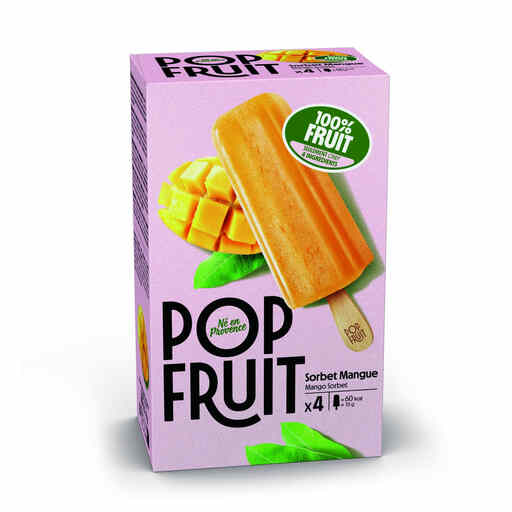 Image unavailable
The stick format makes it easy to allow one per guest for a small dinner. The box contains four sticks, weighing 280 g in total. Check the packaging for fat, sugar, allergens and storage instructions.
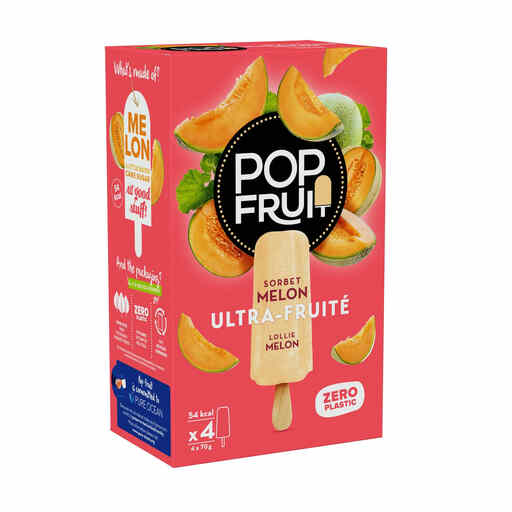 Image unavailable
Serve these sticks individually if you’d rather hand out portions than put a sharing ice cream cake on the table. The box contains four sticks, weighing 280 g in total. Before dinner, check the packaging for fat, sugar, allergens and storage instructions.
For solid foods, this claim requires a maximum of 3 g of fat per 100 g under European Union Regulation (EC) No 1924/2006. Check the figure for the product you choose: its name, even if it includes the word ‘sorbet’, isn’t enough to establish its fat content.
No. Picard and Auchan list 24 g and 23 g of sugar per 100 g respectively for their mango and passion fruit sorbet and apple sorbet with pieces, while both contain less than 0.5 g of fat per 100 g. Compare both figures for the specific product you plan to serve.
Read the ingredients list and warnings on the packaging of the product you buy. For prepacked foods, the DGCCRF states that allergenic ingredients must be highlighted. Picard’s Sorbet Pyramid, for example, warns that it may contain traces of gluten, egg, soya, milk and nuts.
Follow the instructions on the packaging of the dessert you choose. The Picard and Auchan product pages mentioned for their sorbets specify storage at −18 °C and say not to refreeze a thawed product.