Shoppers keeping an eye on fat
You want to compare frozen desserts without assuming that a fruity flavour or the word “sorbet” tells you everything you need to know about their nutritional values.


If you’re looking to limit fat, start by comparing sorbets: according to the DGCCRF, no fat is added during their manufacture. However, check the sugar and fat content per 100 g on each label. For a picnic, then choose between individual portions and a tub, depending on whether you can keep the dessert cold and serve it quickly.
You want to compare frozen desserts without assuming that a fruity flavour or the word “sorbet” tells you everything you need to know about their nutritional values.
You need to take dessert to the park and decide whether individual portions will be easier to hand out than a tub to share.
You want to check the sugars, ingredients and allergens in the product you buy, even when it’s a sorbet.
For a frozen dessert to take to the park, compare the nutritional information and ingredients first. Then choose a format you can keep cold in transit and serve without delay.
| What to consider | What to check | Who it matters to |
|---|---|---|
| Fat | Compare the dessert’s name and fat content per 100 g. Don’t automatically assume that “sorbet” means “reduced fat”. | I want to limit fat without relying solely on the dessert’s fruity appearance. Around 40% of shoppers in this group would make this their top priority. |
| Transport and serving | Choose between ice lolly sticks, pots and a tub according to the number of guests, your insulated bag or cool box, and whether you’ll be able to serve it quickly. | At the park, I’d rather hand out the dessert before it melts; around 30% of shoppers in this group would put ease of serving first. |
| Ingredients | Check the sugar content per 100 g, the ingredients list and the allergens for the product you choose. | If a guest needs to check allergens, or sugar matters more to me, the label becomes decisive. Around 30% of shoppers in this group would prioritise this check. |
No added fat doesn’t tell you how much sugar a sorbet contains. Picard’s dragon fruit and lime sorbet has less than 0.5 g of fat and 21 g of sugar per 100 g.
Compare the nutritional information per 100 g and take into account the portion you plan to serve.
A tub to share needs to stay cold during the journey and be served quickly once you arrive. The ANSES recommends buying frozen food at the end of your shop, using an insulated container and keeping transport time to a minimum.
If you won’t be able to serve the tub straight away, consider individual portions instead, while still making sure they stay cold in transit.
You’ll also need something to serve the portions into if you choose a tub.
The name “sorbet” doesn’t mean you can skip checking the allergens in the product you choose: its label may list milk or other allergens.
If you have an allergy, check the ingredients and allergen information on the packaging of the product you buy.
Picard offers sorbets in tubs, on sticks and in sharing formats.
Carrefour’s ice cream and sorbet range includes tubs and individual formats.
Auchan offers sorbets in tubs, including products labelled “full fruit”.
ALDI’s frozen dessert range includes MUCCI lemon sorbet.
These sorbet sticks are a handy choice if you want to hand out individual portions at the park rather than share a tub. Their format doesn’t mean you can skip checking the labels or planning how to keep them cold in transit.
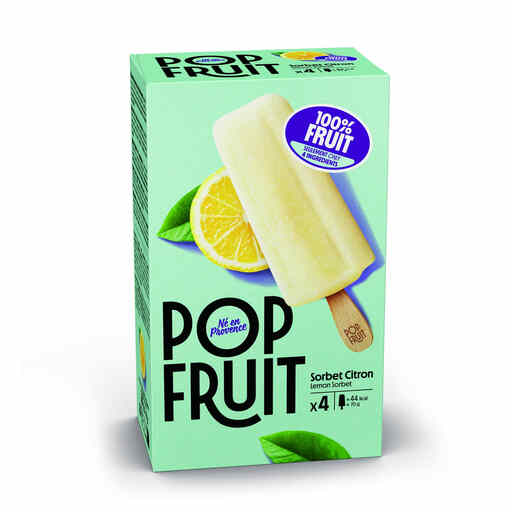 Image unavailable
The stick format is a good choice if you want to hand out portions rather than serve a tub. Use an insulated bag or cool box, and check the fat, sugar and allergen information on the packaging.
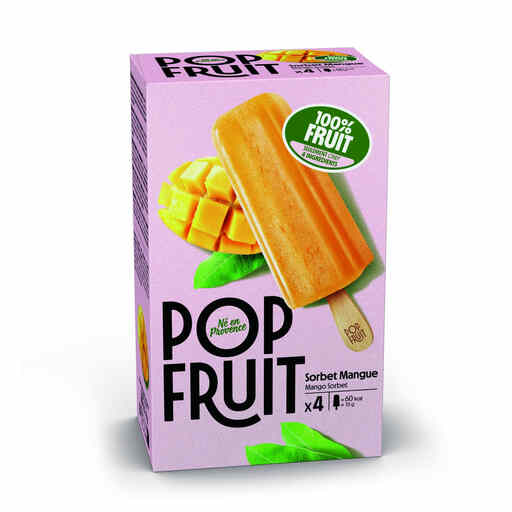 Image unavailable
These individually wrapped portions mean you won’t need to share a tub at your picnic. Keep them cold until you’re ready to serve, and compare the nutritional label and allergen list with those of any other desserts you’re considering.
Not necessarily when comparing individual products. According to the DGCCRF, no fat is added during the manufacture of sorbet, but you should compare nutritional values product by product. Check the sugar content per 100 g too, if it matters to you.
Buy it at the end of your shop, put it in an insulated bag or cool box, and keep transport time to a minimum, in line with the ANSES’s advice. Only choose a tub if you’ll also be able to serve it quickly.
Don’t refreeze a thawed dessert: the ANSES advises against refreezing food once it has thawed. If you can’t keep it cold during your picnic, choose a dessert that doesn’t need to be frozen instead.
Check the product name, ingredients, allergens, net quantity and nutritional information. To compare the fat and sugar content of two products, use their values per 100 g, then consider the portion you plan to serve.