Diners keeping an eye on fat
If you’re finishing a midweek dinner with a frozen dessert, you want to compare the amount shown per 100 g rather than rely on the product name alone.


If fat content is your top priority, compare the amount per 100 g in the frozen desserts you’re considering. Some Picard lemon sorbets contain 0.5 g or less than 0.5 g per 100 g. However, the word ‘sorbet’ or a ‘reduced sugar’ claim alone doesn’t tell you how much fat a product contains. For a quick way to finish dinner, also check the format, sugars, ingredients and storage instructions for your chosen product.
If you’re finishing a midweek dinner with a frozen dessert, you want to compare the amount shown per 100 g rather than rely on the product name alone.
You want a dessert that’s easy to serve, without assuming that a low fat content means it’s also low in sugars or energy.
Before choosing a dessert for a group, you need to check its ingredients, allergen information and storage instructions.
For a quick dinner, start with the factor that matters most to you, then check that the format and other label information suit the meal you have planned.
| Factor | What to check | Who it matters to |
|---|---|---|
| Fat | Compare fat per 100 g, then check the sugars on the same basis. According to their product information, two Picard lemon sorbets contain 0.5 g or less than 0.5 g of fat per 100 g. | If my main aim is to reduce the fat in my dessert, I want to see a precise figure before choosing. Around 36% of consumers put this need first. |
| Format and serving | Check the net weight, number of pieces and whether there are any steps to take before serving. | After a midweek dinner, I prefer a format that suits the number of diners and doesn’t require any unexpected preparation. Around 29% of consumers share this priority. |
| Sugars and energy | Check the sugars and energy per 100 g; don’t assume a ‘reduced sugar’ claim means the product is low in fat. | A dessert that’s low in fat won’t meet my needs if I also want to compare its sugars and energy. Around 21% of consumers prioritise this check. |
| Ingredients and storage | Check the ingredients, allergen information and storage instructions for the specific product. | Before serving the dessert to my guests, I need to make sure its ingredients and storage requirements are suitable. This comes first for around 14% of consumers. |
These claims refer to different properties. A strawberry product marketed by Auchan as reduced in sugar contains, among other ingredients, coconut and sunflower oils. You’ll need to check its fat content separately.
Compare the ‘fat’, ‘saturates’ and ‘sugars’ lines in the nutrition information per 100 g.
According to Picard, two of its lemon sorbets each contain 22 g of sugars per 100 g, despite having 0.5 g or less than 0.5 g of fat per 100 g.
If fat is your first filter, check the sugars and energy next, along with the portion you plan to serve.
You can’t compare a sorbet, an ice cream and a sharing dessert just by looking at their category or picture. What matters is the information for the specific product.
Use the nutrition information for each product and compare them using the same unit.
Allergen information varies between products. The DGCCRF also warns that a break in the cold chain can increase food-related risks.
Read the precautions on the packaging, pick up frozen foods at the end of your shop and put them away promptly at the stated temperature.
The retailer offers a range of frozen desserts, including individual portions, sharing options and sorbets.
Its frozen dessert range includes tub sorbets, which you can compare product by product.
The retailer offers sorbets in a range of product lines and formats.
This selection includes two tub sorbets and frozen ice pops that need to be frozen before eating. If dinner is coming up soon, factor in this preparation time as well as the fat content and format.
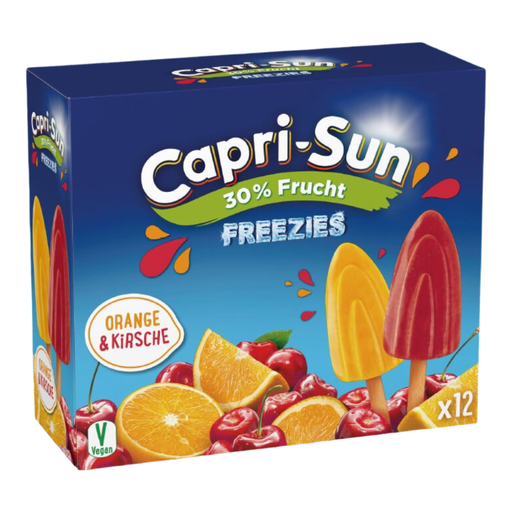 Image unavailable
The pack of 12 ice pops could be a good choice if you’d rather serve individual portions than scoop them out of a tub.
These ice pops need to be frozen before eating, so check how long this takes if you plan to serve them that evening. To compare them with a sorbet labelled per 100 g, also check that the nutrition figures use the same unit.
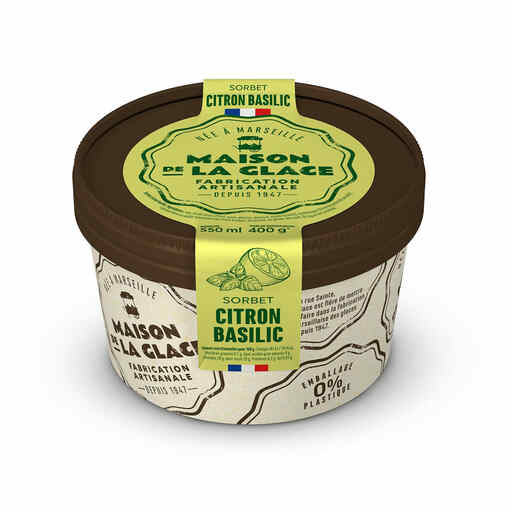 Image unavailable
This tub sorbet could be a good choice if you’d like to serve several portions from one container.
According to the Joybuy product page, this product contains less than 0.5 g of fat and 22 g of sugars per 100 g. Check your portion size and the allergen information before serving.
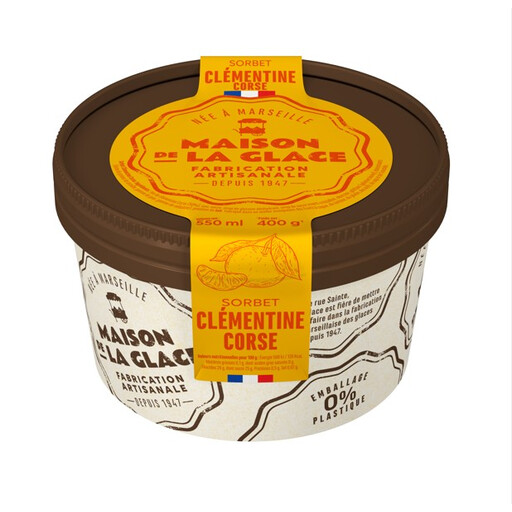 Image unavailable
This 380 g tub sorbet is another option if you’d prefer to serve the portions yourself.
Before choosing it based on its fat content, check the nutrition information on the product page or packaging. Also check the allergen information and how much you’ll need for each guest.
No. Check the figures for the specific sorbet rather than relying on its name alone. According to Picard, two of its lemon sorbets contain 0.5 g or less than 0.5 g of fat per 100 g, but also 22 g of sugars per 100 g.
Not necessarily. A claim about sugars doesn’t tell you how much fat the product contains. One product marketed by Auchan as reduced in sugar contains, among other ingredients, coconut and sunflower oils. Check its nutrition information before choosing it for another reason.
Start by comparing fat if that’s your priority, then check the sugars, energy and portion size. The European Your Europe portal lists these figures among the nutrition information for prepacked foods. Where the labels allow, use the same basis for comparison, such as figures per 100 g.
Follow the temperature and storage instructions on the product packaging. The DGCCRF recommends maintaining the cold chain during transport, so put the dessert in the freezer promptly and follow any instructions not to refreeze it after defrosting.