Hosts who want to check the fat content
You want to choose based on the nutritional information, rather than assuming a fruit flavour is suitable. Compare the fat content using the unit shown on the label of the specific dessert.


If you’d like to serve a frozen dessert that’s low in fat, check the nutritional information for the specific product rather than relying on the word “sorbet”. For dinner with friends, check the sugar content, allergens and serving size too: low fat content alone won’t meet every guest’s needs.
You want to choose based on the nutritional information, rather than assuming a fruit flavour is suitable. Compare the fat content using the unit shown on the label of the specific dessert.
If any of your guests need to avoid certain ingredients, check the ingredients list, allergens and any ‘may contain’ statements before choosing a dessert to serve.
You’re looking for a quantity that suits your group and is easy to portion out. Compare the dessert’s weight or volume with the number of guests, and bear in mind how it should be stored before and after serving.
For dinner with friends, start with the factor that matters most to your guests, then check the others for the product you’re thinking of serving. Regulation (EC) No 1924/2006 reserves the claim “low fat” for foods containing no more than 3 g of fat per 100 g for solids, or 1.5 g per 100 ml for liquids.
| Factor | What to check | Guests it matters to |
|---|---|---|
| Fat | Compare the stated value and its unit, per 100 g or per 100 ml, with the relevant threshold. | I want to confirm that it’s low in fat, rather than relying on the name “sorbet”; around 36% of consumers make this their main consideration. |
| Sugars | Check the sugar content alongside the fat content, using the same nutritional basis. | If I also want to consider sugar, low fat content alone isn’t enough to help me choose between desserts; around 29% of consumers make sugar their priority. |
| Allergens | Check the ingredients, highlighted allergens and any ‘may contain’ statements on the packaging you buy. | If a guest has an allergy or dietary restriction, I need to know whether the dessert is suitable for them before serving it; around 21% of consumers prioritise this check. |
| Serving a group | Check the weight or volume, then read the product’s storage instructions. | To share dessert without taking the whole pack out too early, I need a size that suits the number of guests; nearly 14% of consumers prioritise serving size. |
The name of a dessert doesn’t tell you its nutritional values. Auchan’s product listing for Les Cigalines extra-dark cocoa sorbet states 6.31 g of fat per 100 g.
Check the figures for the specific flavour, using the unit shown, before choosing it on this basis.
Auchan’s listings for La Ferme de la Métairie chocolate and strawberry sorbets each state less than 0.5 g of fat, but 27 g of sugars per 100 g.
If sugar matters to your guests too, compare both lines in the nutritional information.
Carrefour’s listing for Carte d’Or Sicilian Lemon sorbet mentions that it may contain traces of wheat, eggs, milk, hazelnuts, pecans and pistachios.
Ask the guests concerned what precautions they need to take, then check the ingredients and ‘may contain’ statements on the packaging you buy.
A listing for an ice cream bar sold by Picard says to store it at −18 °C and never to refreeze it after defrosting.
Follow the instructions for your chosen dessert and take out only the amount you need to serve.
The 360 g chocolate and strawberry sorbets listed by Auchan let you compare fat and sugar content per 100 g.
The Carte d’Or Sicilian Lemon sorbet listed by Carrefour comes in a 900 ml tub, a size worth considering when serving several people.
Carrefour’s range includes a 606 g lemon sorbet tub, which you can compare with other sizes designed for sharing.
The retailer offers individual frozen desserts, among other products, and each one should be checked individually.
These frozen desserts give you the chance to consider a sharing tub and two other formats for dinner. Before choosing, compare the nutritional information and allergens for each product; the Carte D’Or tub title says ice cream, while its description presents it as a sorbet.
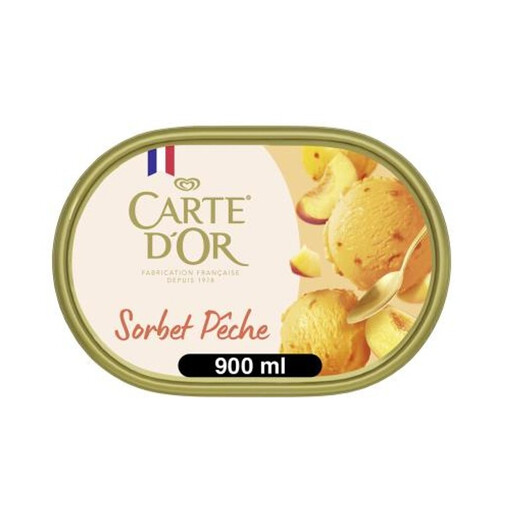 Image unavailable
The 900 mL tub is worth considering if you’re serving dessert to several people. Check the packaging to see whether it’s ice cream or sorbet, and check the fat and sugar content and allergens before choosing it.
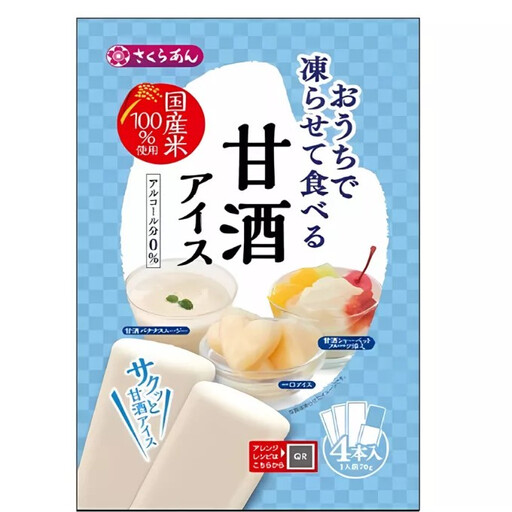 Image unavailable
Consider this 280 g sorbet based on how much you need for dinner. Compare its fat and sugar content per 100 g, then check the allergens on the packaging.
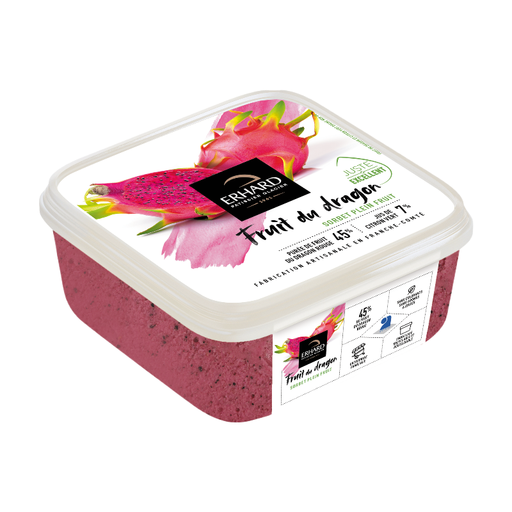 Image unavailable
Compare this 488 g sorbet with the amount you plan to serve. Check the product’s fat and sugar content and allergens before offering it to your guests.
In France, Regulation (EC) No 1924/2006 allows this claim, or wording with the same meaning, for food containing no more than 3 g of fat per 100 g if it’s solid, or 1.5 g per 100 ml if it’s liquid. Check the value and unit shown for the specific dessert rather than relying on its category.
No. Auchan states that La Ferme de la Métairie chocolate and strawberry sorbets contain less than 0.5 g of fat but 27 g of sugars per 100 g. Compare these two values separately.
Read the ingredients, highlighted allergens and any ‘may contain’ statements on the packaging of the dessert you’ve chosen. For example, Carrefour’s listing for Carte d’Or Sicilian Lemon sorbet mentions that it may contain traces of wheat, eggs, milk and several nuts.
Don’t refreeze a product that has defrosted if its instructions say not to. The listing for the ice cream bar sold by Picard says to store it at −18 °C and never to refreeze it after defrosting; follow the instructions for the dessert you actually serve.