Parents keeping an eye on fat
You want to compare the stated fat content of frozen desserts without assuming that a sorbet is also low in sugar.


If your main priority is limiting fat, compare the figures per 100 g for the specific dessert you’re considering. Several Picard and Auchan sorbets contain less than 0.5 g of fat per 100 g, but also contain between 19 and 23 g of sugars. If your child sometimes refuses their main course, decide on a portion in advance, check the allergens and avoid using dessert to make up for a meal they haven’t eaten.
You want to compare the stated fat content of frozen desserts without assuming that a sorbet is also low in sugar.
You want dessert to remain part of the meal without increasing the portion when your child refuses their main course. The French National Health Insurance Fund advises against making up for a refused meal with another food or a larger dessert.
You’re choosing between an individual lolly and a tub to portion out, and also need to consider the allergen information and storage instructions for the product you choose.
For a frozen dessert for a child who’s a fussy eater, first check the fat and sugar content per 100 g, then decide on the portion before the meal. The format doesn’t replace the need to read the allergen information for the flavour you choose.
| Criteria | What to check | Who this is for |
|---|---|---|
| Fat and sugars | Compare the fat and sugar content per 100 g for the specific flavour and format. | I’m looking first for a stated fat content that meets my criteria, without overlooking the dessert’s sugar content. Around 42% of consumers are said to prioritise this nutritional comparison. |
| The place of dessert in the meal | Decide on the portion before serving; don’t automatically increase it if your child refuses their main course. | If the main course is refused, I want dessert to stay part of the usual meal rather than become a bargaining chip. For around 33% of consumers, maintaining this routine would come before other criteria. |
| Format and allergens | Choose between a tub and an individual portion, then check the ingredients and may-contain statements for the exact product. | An easy-to-serve portion matters to me, but I also need to check for allergens that affect my household. Around 25% of consumers would prioritise this practical need. |
Picard and Auchan product pages list 19 g of sugars per 100 g for Picard red berry sorbet, 21 g for POP'FRUIT melon lollies and 23 g for Auchan apple sorbet. Each contains less than 0.5 g of fat per 100 g.
Check the fat, sugar and other nutritional information per 100 g together before comparing flavours.
The French National Health Insurance Fund advises against increasing the dessert portion to make up for a refused main course.
Decide on the portion separately from how much of the rest of the meal your child may eat.
According to their respective product pages, Picard red berry sorbet and Auchan apple sorbet may contain traces of milk and nuts. Allergen statements vary between products.
If your child has an allergy, check the label for the flavour and batch you’re buying, even if you already know the brand.
If you’re serving a tub over several occasions, follow the storage instructions on its packaging.
Check the recommended temperature and advice on refreezing before putting the dessert away or serving it again.
The examples below refer to specific products, not every dessert from each brand. Their nutritional values and allergen information don’t necessarily apply to other flavours.
Picard’s 650 g tub of red berry sorbet makes it easy to compare values per 100 g and check the product ingredients.
The product pages we checked cover Auchan apple sorbet in a tub and POP'FRUIT melon lollies sold at Auchan.
The product page for ESKISS whole-fruit apple sorbet, sold in a 650 g tub, gives you values to compare with other apple recipes.
Carrefour Extra apple sorbet is worth considering if you’re looking for a tub of sorbet.
ALDI’s frozen range includes Mucci frozen desserts.
These two products are sorbet lollies in individual portions. Their format can make it easier to serve a set portion. To choose based on fat, sugars or an allergy, check the information for the specific flavour.
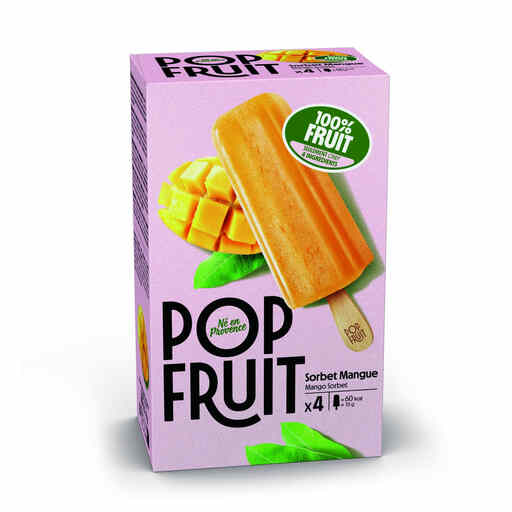 Image unavailable
The lolly format may suit you if you prefer to serve an individual portion after a meal. Check the fat and sugar content per 100 g, as well as the allergen information and age guidance on the packaging you buy.
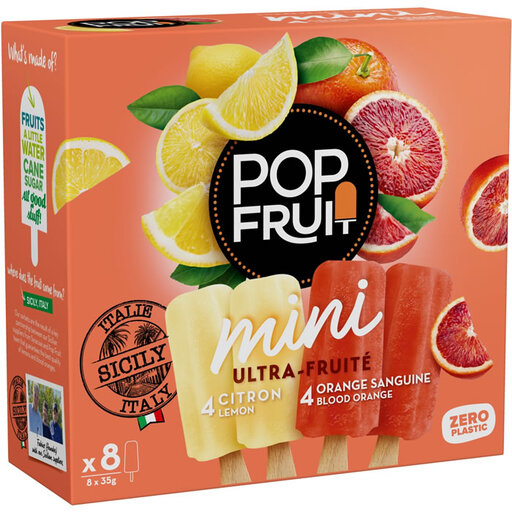 Image unavailable
The mini lollies offer another individual format if you want to decide on the portion before serving. As the pack contains two flavours, compare the nutritional values and allergen information for each rather than assuming they’re the same.
No. The word “sorbet” alone doesn’t establish a nutrition claim. Compare the fat and sugar content per 100 g for the specific product, and only describe it as “lighter” if that claim is justified for the product under the rules that apply to nutrition claims.
No. The French National Health Insurance Fund advises against making up for a refused meal with another food or a larger dessert at the same meal. Deciding on a portion in advance helps keep dessert separate from discussions about the main course.
Not always. The product pages for Picard red berry sorbet and Auchan apple sorbet mention possible traces of milk and nuts. Check the allergen declaration for the product and batch you’re buying. If your child has a diagnosed allergy, follow the advice of their healthcare professional.
Follow the instructions on the packaging. The product pages for the sorbets reviewed state that they should be stored at −18 °C and advise against refreezing a defrosted product. Check the instructions for the specific product you buy.