People comparing fat content
You want to check the figures per 100 g rather than assume a dessert is ‘light’. Look at the fat and saturated fat shown in the nutrition information for each product.


To choose a frozen dessert with a view to reducing fat, compare the nutritional values per 100 g of the products you’re considering. Then check saturated fat, sugars and energy too. A sorbet may be worth considering, but its name doesn’t guarantee that it’s low in sugars. Before placing a grocery collection order, also check the allergens, pack size, storage instructions and collection arrangements.
You want to check the figures per 100 g rather than assume a dessert is ‘light’. Look at the fat and saturated fat shown in the nutrition information for each product.
You’re considering a fruit dessert to reduce fat, while still keeping its sugar content in mind. Picard’s Pure Sélection Lemon Sorbet product page lists less than 0.5 g of fat per 100 g. That figure alone doesn’t tell you everything about its nutritional content.
You need to consider your household’s allergens, how much to serve and the journey home after collection. Read the allergen information and storage instructions for your chosen product, then check the collection arrangements before confirming your order.
Start by comparing the figures per 100 g on a like-for-like basis. Then check the sugars and energy, along with any practical considerations that could make a product unsuitable for your household or collection arrangements.
| Criteria | What to check | Who it matters to |
|---|---|---|
| Fat | Check the fat and saturated fat per 100 g; compare desserts of similar types. | I want to reduce fat without relying on the word ‘light’ alone, so I need comparable figures for the products I’m considering. Around 38% of consumers make this a priority. |
| Sugars and energy | Compare sugars and energy per 100 g, including when choosing a sorbet. | I’m interested in sorbet, but I also want to know how much sugar the recipe contains before choosing my portion. Around 37% of consumers prioritise this balance. |
| Collection and practical use | Check allergens and traces, net quantity, collection arrangements and storage instructions. | I’m ordering for my household, so the dessert needs to suit its dietary requirements and be easy to transport and store in the freezer. Around 25% of consumers put these considerations first. |
A low fat figure doesn’t tell you everything about a dessert’s nutritional values. The type of dessert is no substitute for checking its recipe.
For the products you’re considering, compare fat, saturated fat, sugars and energy per 100 g, then take the portion you’ll serve into account.
A tub, a box of sticks and individual portions don’t necessarily contain the same quantity of dessert.
Check the net quantity and number of pieces to find a pack that suits the portions you have in mind.
A fruit-based recipe doesn’t mean you can skip checking the allergen ingredients and any possible trace warnings for that particular product.
Check the product page for your chosen item, then read the information on its packaging too.
Choosing a frozen dessert also means thinking about how it will be transported and stored once you’ve collected your order. The Picard product pages checked state that items should be stored in the freezer at −18 °C.
Check the product instructions and plan to put it back in the freezer after collection. Don’t refreeze a thawed product if its packaging says not to.
Picard provides sorbet product pages that are useful for checking a specific product before you buy.
Carrefour’s online categories include frozen desserts, tubs, cones, ice lolly-style sticks and sorbets.
ALDI offers ice cream and frozen desserts, including MUCCI products, in a range of formats.
These two products are sorbet sticks worth considering if this format suits you. Compare their nutrition information and allergens on the product pages and packaging, then check the collection arrangements that work for you.
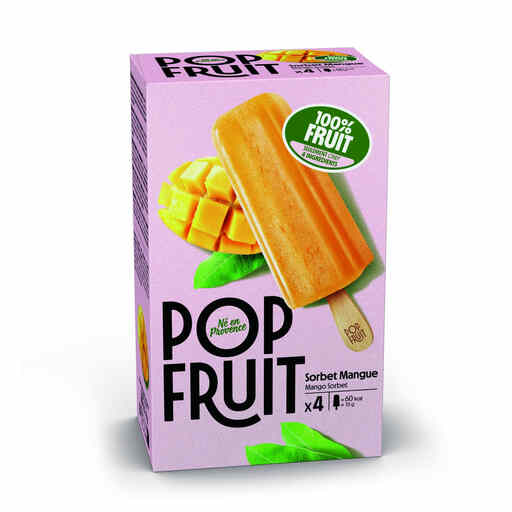 Image unavailable
Worth considering if you’d like individual mango sorbet portions: the product name indicates four sticks with a total weight of 280 g.
Before choosing, compare the fat and sugars per 100 g on the product page, and check the allergens and collection arrangements.
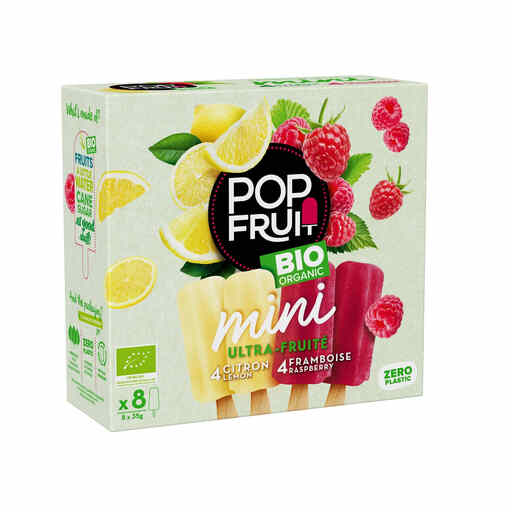 Image unavailable
Worth considering if you’d like lemon and raspberry-flavoured sorbet sticks. Compare the nutritional information for each flavour rather than assuming it’s the same.
Check the packaging for the quantity and number of sticks, as well as the allergens, storage instructions and collection arrangements.
No. Compare the nutritional values for the specific product, particularly the fat and saturated fat per 100 g. The DGCCRF notes that nutrition claims are regulated, but a claim on the front of the pack is no substitute for checking the nutrition information.
Not necessarily. Check the fat content of the sorbet you’re considering and compare it with other desserts you’re interested in. Picard’s Pure Sélection Lemon Sorbet product page lists less than 0.5 g of fat per 100 g; check its sugar content too before choosing.
Yes. Check the allergen ingredients and any possible trace warnings for each product. The fact that a dessert is described as fruit sorbet doesn’t mean it’s suitable for every dietary restriction.
Follow the instructions on the packaging and plan to put it in the freezer once you’re home. The Picard product pages checked state that items should be stored at −18 °C and that thawed products should not be refrozen.