For coffee with friends, start by checking the ‘fat’ value per 100 g of the frozen dessert you’re considering, rather than relying on a name that suggests it’s light or on a small portion size. Then choose a number of portions to suit your guests, and check the ingredients, allergens and defrosting instructions for the specific product.
Who is this guide for?
Hosts who keep an eye on fat content
If this is more important to you than how the dessert looks, compare the values per 100 g of products of the same type. The DGCCRF says that presenting nutritional information this way makes it easier to compare products.
Groups who prefer easy-to-serve portions
If you want to serve dessert with coffee without having to cut it up, check the stated number of pieces or portions. Auchan and Picard catalogues include sharing formats and desserts in individual portions.
Hosts who need to take allergies into account
If a guest needs to avoid an ingredient, check the ingredients list and allergens for the exact dessert before serving it. A lower fat content tells you nothing about whether it contains the allergen in question.
What should you check before buying?
For coffee with friends, first check the ingredients and nutritional information for the dessert you’re considering, then look at its format and how you’ll be able to serve it.
| Criteria |
What to check |
Who this matters to |
| Fat |
The value per 100 g and the exact wording of any nutrition claim on the product. |
I want to compare fat content without relying on the word ‘light’. Around 36% of consumers would put this check first. |
| Number of portions |
The stated number of pieces or portions, compared with the number of guests. |
When several friends are coming round for coffee, I prefer to have portions that are easy to serve. Around 29% of consumers would put this need first. |
| Ingredients and allergens |
The ingredients list and allergens declared for the product you’ve chosen. |
If a guest needs to avoid an ingredient, I need to know exactly what the dessert contains before serving it. Around 21% of consumers would prioritise this. |
| Defrosting |
The product’s instructions and how much to defrost for serving. |
I want the dessert to be ready in time for coffee without having to deal with too many defrosted leftovers. Around 14% of consumers would make this their main consideration. |
Mistakes to avoid
-
Assuming ‘light’ means lower in fat
A product name or small portion size is no substitute for nutritional information. The DGCCRF explains that values per 100 g allow you to compare products on a like-for-like basis.
When comparing similar desserts, check the fat content, as well as the sugars and energy value per 100 g.
-
Choosing without checking guests’ allergies
The ingredients need to suit everyone’s dietary requirements, regardless of the fat content. Assurance Maladie points out that food allergies can cause serious reactions.
Find out which ingredients need to be avoided before buying, read the label on the product you choose and keep its packaging to hand while serving.
-
Defrosting too much dessert and planning to refreeze the leftovers
The Ministry of Agriculture says that refreezing a defrosted product encourages bacteria to multiply.
Plan how much you’ll serve and follow the defrosting instructions on the packaging. Do not refreeze a defrosted product.
Where to shop for desserts
These retailers offer a range of formats, while Carrefour lets you distinguish between a chilled dessert and a frozen one. Check the product page or packaging for each item before choosing.
Auchan
Auchan offers frozen desserts and pastries in a range of formats, including cakes and bite-sized treats.
- There are several formats to consider, depending on the number of guests.
- Check the fat content of the product you choose: its format won’t tell you how much fat it contains.
Picard
Picard offers sharing cakes, petits fours, macarons and frozen desserts, among other options.
- The number of portions or the weight shown for some products can help you plan how to serve them.
- Check the nutritional information for the specific dessert before choosing it for its fat content.
Carrefour
Carrefour lists a Carrefour Sensation chocolate dairy dessert, described on its product page as low in fat, with 1.5 g per 100 g.
- The product page gives a fat value to check if you’re choosing a chilled dessert.
- This is a chilled product, not a frozen dessert, so it doesn’t meet the requirement for freezer storage.
Product available on Joybuy
This box of frozen ice pops could be a good option for serving several people. Before choosing it as a frozen dessert, check how it should be stored and prepared, along with the nutritional information for this product.
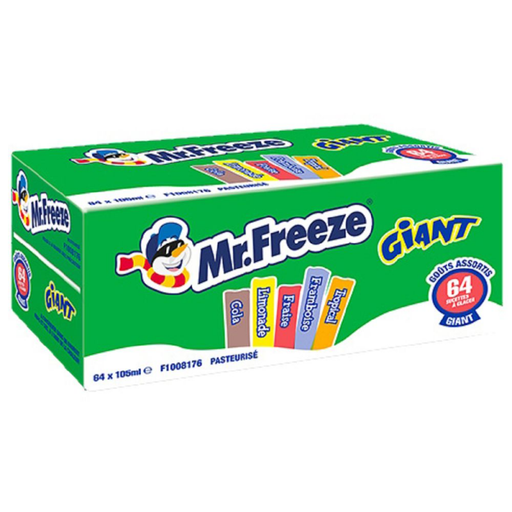 Image unavailable
MR FREEZE Mister Freeze Ice Pop, 64 × 105 ml
The pack contains 64 ice pops, each 105 ml, giving you individual portions to serve when friends come round for coffee.
Check the product page or packaging to see whether the ice pops should be kept in the freezer or frozen before consumption. Also compare the fat, sugars and energy values per 100 g before choosing this product to meet your nutritional requirements.
View on Joybuy
Frequently asked questions
Is the word ‘light’ enough to help me choose a lower-fat dessert?
No. Check the ‘fat’ value per 100 g for the specific dessert. Compare products of the same type and check the sugars and energy value too. The DGCCRF says that presenting nutritional values per 100 g makes comparisons easier.
What format should I choose for coffee with friends?
Choose a number of portions or pieces that suits your guests. Sharing cakes, macarons and petits fours are among the formats offered by Auchan and Picard, but the format won’t tell you how much fat they contain.
Can you refreeze dessert after defrosting it?
Do not refreeze a defrosted dessert. According to the Ministry of Agriculture, doing so encourages bacteria to multiply. Follow the product’s instructions and only defrost the amount you plan to serve.
Is a lower-fat dessert suitable for a guest with a milk allergy?
Not necessarily. The fat content won’t tell you whether the dessert contains milk or another ingredient that needs to be avoided. Check the ingredients list and allergens for the exact product before serving it.


