Anyone keeping an eye on fat content
You’re looking for a specific figure or claim, rather than a dessert that simply seems light. Compare the fat content per 100 g of the product you’re thinking of buying.


For Valentine’s Day, if fat content is your top priority, compare the values per 100 g and look for a specific claim rather than relying on the name “sorbet” or “ice cream”. Then choose a size that’s right for two, and remember to check the sugars, ingredients and allergens in your chosen dessert.
You’re looking for a specific figure or claim, rather than a dessert that simply seems light. Compare the fat content per 100 g of the product you’re thinking of buying.
You want to serve a Valentine’s Day dessert without letting the pack size dictate how much you eat: a single portion, a box of individual pieces and a sharing tub all divide up differently.
You’re considering a sorbet or a frozen fruit dessert, but still want to check the sugars, ingredients list and allergen information for the specific product you choose.
For solid foods, EU Regulation (EC) No 1924/2006 reserves the claim “low fat” for products containing no more than 3 g of fat per 100 g. This doesn’t replace checking the rest of the nutritional information or deciding how much to serve.
| Criterion | What to check | Who is it for? |
|---|---|---|
| Fat content | The value per 100 g and, where relevant, the exact wording of the claim. | If I want to limit fat, I need a figure rather than relying on how fruity the dessert looks; around 42% of consumers would make this their top priority. |
| Pack size and portions | The number of pieces or portions, the total weight and how much you plan to serve. | For dinner for two, I’d rather be able to serve two portions without letting the size of the tub guide me; around 33% of consumers would prioritise pack size. |
| Ingredients | Sugars per 100 g, the ingredients list and allergen information for the exact product. | Even if the fat content suits me, I want to know about the sugars and ingredients before choosing; around 25% of consumers would make this their priority. |
A fruity flavour and the name “sorbet” don’t tell you how much fat the product contains.
If fat content is a deciding factor, check the value per 100 g and look for a specific claim on the product you’re considering.
A claim about fat content doesn’t tell you how much sugar a product contains. For example, Carrefour lists 29 g of carbohydrates per 100 g for its Carrefour Extra apple sorbet, labelled “0% fat”.
Compare the sugars, carbohydrates, ingredients and allergen information separately.
A tub or ice cream cake may contain more than the two portions you’re planning for dinner: its total weight isn’t the same as the amount each person will be served.
Check the number of portions stated and decide how much to serve before choosing a size.
Poorly planned transport can affect how well your dessert keeps. Anses recommends buying frozen foods at the end of your shop, carrying them in an insulated bag and keeping the journey as short as possible.
Plan your journey home and check the storage and serving instructions on the packaging.
Picard’s frozen dessert range includes individual portions, sharing desserts and frozen fruit.
Carrefour product pages let you check the ingredients of products such as Carrefour Extra apple sorbet.
Auchan’s range includes frozen pastries and desserts, both individual and made for sharing.
E.Leclerc offers frozen desserts in its Bio Village and Eco+ ranges.
ALDI’s range includes tubs, ice lollies, mochi and other frozen desserts.
These three ERHARD sorbet tubs are fruity sharing options for a Valentine’s Day dessert. At 488 g each, they’re a good size to serve two; compare the nutritional information and packaging details before choosing.
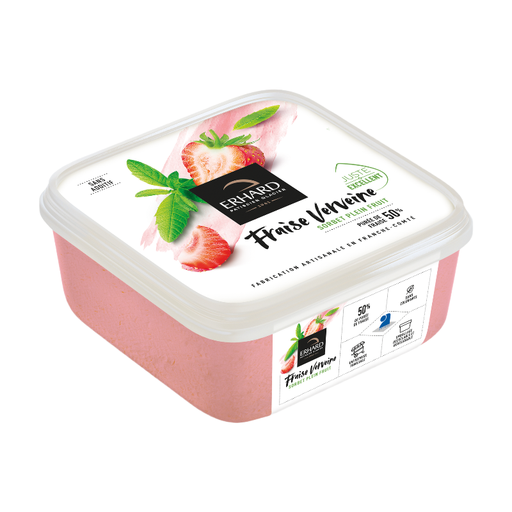 Image unavailable
A tub of fruity sorbet to share for dessert. Decide how much to serve and check the sugars and allergen information on the packaging.
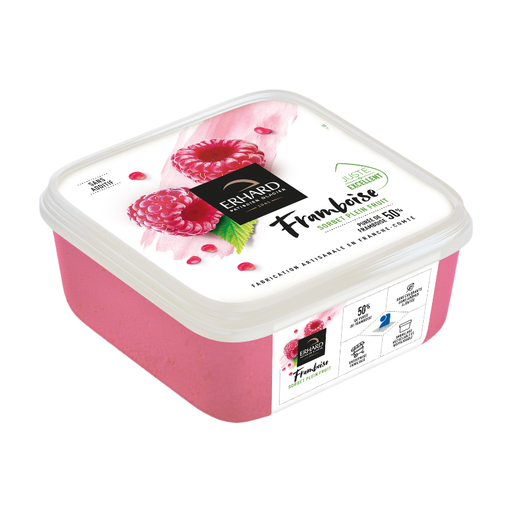 Image unavailable
A tub of sorbet to divide into two portions, depending on how much you’d like to serve. Check the product’s nutritional information and allergen details before buying.
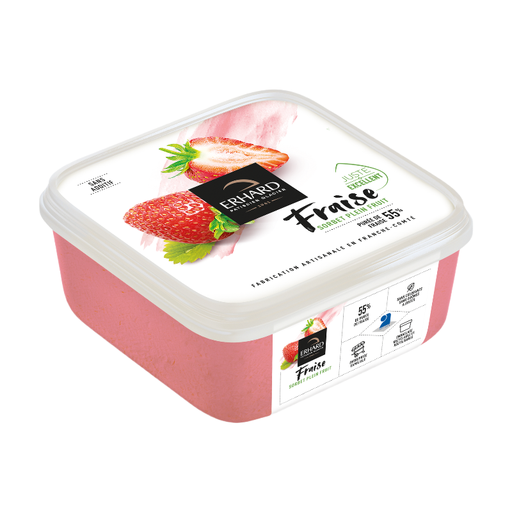 Image unavailable
Another strawberry sorbet in a tub, ready to portion up for two. Compare its ingredients and nutritional information with those of other products rather than relying on the range name alone.
For solid foods, this claim means a maximum of 3 g of fat per 100 g under EU Regulation (EC) No 1924/2006. On its own, it doesn’t tell you about the sugars or how much you’ll serve.
No. The claim refers to fat, not sugar. For example, Carrefour lists 29 g of carbohydrates per 100 g for its Carrefour Extra apple sorbet labelled “0% fat”. Check the “carbohydrates” and “sugars” figures for the product you choose.
First check the fat and sugars per 100 g, then the ingredients list, allergens, net quantity and storage instructions. The DGCCRF notes that this information is part of the labelling for prepacked foods. If you’re choosing a dessert for two, also check the number of portions or pieces.
Buy it at the end of your shop and carry it in an insulated bag, keeping the journey as short as possible, as recommended by Anses. Once you’re home, follow the storage and serving instructions on the packaging.