Teams serving dessert to a group
If you’re preparing several portions from one tub, match its size to the number of portions needed. Check the recipe and storage instructions for the product you choose.


A tub of ice cream or sorbet can work for serving a group in a care home, provided you check the recipe, allergens, serving texture and any instructions specific to residents. The format makes sharing easy, but it is no substitute for a prescribed texture or individual monitoring of food intake. Where these needs apply, the care or catering team should approve the choice and how it is served.
If you’re preparing several portions from one tub, match its size to the number of portions needed. Check the recipe and storage instructions for the product you choose.
A decrease in the amount eaten or unintended weight loss calls for individual attention, as highlighted by the Haute Autorité de santé and Santé publique France. In these cases, you shouldn’t choose a dessert based on flavour alone.
A prescribed texture, allergy or individual diet means you’ll need to check the exact recipe and how the dessert will be served with the relevant team.
The choice between a tub of ice cream, a tub of sorbet and an individual dessert depends first on the instructions that apply to residents, then on the recipe you want and how the service is organised.
Consider it: for sharing a flavour residents enjoy, provided they can have the recipe and the texture as served.
Check: even a simple flavour may contain pieces or ingredients that aren’t suitable for someone with individual dietary requirements.
Consider it: if a fruit-based dessert fits the menu and the preferences of the residents concerned.
Check: the word ‘sorbet’ doesn’t guarantee that it’s allergen-free or suitable for a particular texture requirement.
Choose this: when a resident’s instructions call for a dessert or serving method that’s different from the shared tub.
Plan for: a system that ensures the chosen dessert is identified and served to the right resident.
| Criterion | What to check | Who it matters to |
|---|---|---|
| Texture and individual suitability | Read the ingredients and allergen information; check for pieces and any texture instructions before serving. | If I’m serving a resident with a prescribed texture or an allergy, I want the product and the way it’s presented to match their instructions. Around 42% of consumers would put this compatibility first. |
| How dessert fits into the meal | Compare the product’s nutritional information and ask for confirmation that it fits the menu when food intake is being monitored. | When a resident’s food intake is monitored, I’m looking for a dessert they enjoy, without mistaking it for nutritional care. Around 33% of consumers would make this their priority. |
| Portions and serving | Match the weight or volume to the number of portions needed; check the storage and after-opening instructions. | When serving several residents, I want to be able to portion the tub and store it according to the label. Around 25% of consumers would prioritise this. |
A name such as ‘vanilla’ or ‘fruit’ doesn’t necessarily tell you whether there are pieces, what other ingredients are included or what the texture will be like when served. Picard and Auchan, for example, offer frozen desserts with added pieces.
Read the ingredients for the exact product and get approval for how it will be served if a particular texture or dietary restriction has been prescribed.
The Haute Autorité de santé distinguishes between identifying eating difficulties and providing care for malnutrition. Choosing a standard frozen dessert cannot, on its own, meet an individual nutritional need.
If a resident’s food intake is monitored, ask the relevant team how the dessert fits into the planned meal.
The storage conditions on the packaging remain important throughout storage, portioning and use after opening.
Prepare for service in advance, keep the product at the temperature stated and follow the manufacturer’s instructions after opening, in line with DGCCRF guidance.
Carrefour lists tubs of ice cream and sorbet separately from pots and mini formats in its frozen dessert range.
E.Leclerc’s ESKISS range includes tubs of ice cream and sorbet, including 500 g and 650 g formats, as well as a 1 L coffee-flavoured tub.
Auchan has a section dedicated to tubs of ice, sorbet and ice cream.
Picard offers tubs of ice cream in a range of sizes, including 380 g, 550 g and 555 g.
ALDI France offers several MUCCI tubs, including 500 g vanilla and chocolate recipes.
Lidl France has a frozen dessert category in its frozen food range.
These two frozen desserts in tubs are worth considering for a shared serving. Check their recipes and any instructions specific to residents before including them in the meal.
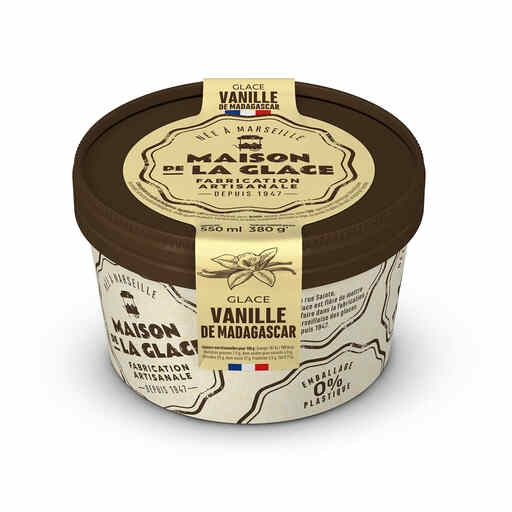 Image unavailable
This 380 g tub could be considered for serving vanilla dessert to several residents.
Before serving it to a resident with individual requirements, check the ingredients, allergens and texture when served.
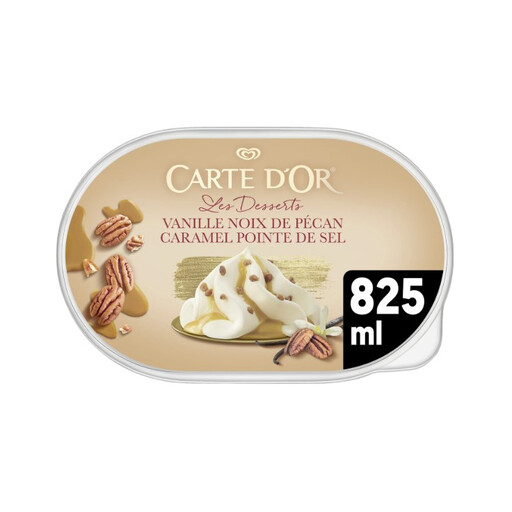 Image unavailable
This frozen dessert in a tub is worth considering for a shared serving if its recipe meets the requirements of the residents concerned.
As it contains pieces of pecan, check the texture and allergens before serving. Confirm the net contents on the packaging when planning portions.
No. A format designed for sharing doesn’t remove the need to check each resident’s texture requirements, allergies and dietary monitoring. If an adjustment is needed, the relevant team should approve the recipe and how it will be served.
It depends on the menu, residents’ preferences and the ingredients in the exact product. Sorbet isn’t automatically free from allergens or suitable for a prescribed texture. Equally, ice cream isn’t, simply by virtue of its category, a solution to a specific nutritional need.
Planning portions and following the temperatures and storage conditions on the packaging will help you organise service in line with the product instructions. Follow the manufacturer’s directions after opening too. DGCCRF reminds consumers that these instructions should be taken into account alongside the date on the packaging.
No. You also need to take account of storage conditions and the instructions that apply after opening. Check the packaging and the manufacturer’s guidance before using the tub for a care home meal.