People keeping an eye on fat
You want to choose a frozen dessert based on its value per 100 g and any claim on the packaging, rather than a name that suggests it’s a lighter option.


For Easter lunch, compare the fat content per 100 g of frozen desserts of the same type, then choose a size that suits the number of guests. Under Regulation (EC) No 1924/2006, published in the Official Journal of the European Union, the claim ‘low fat’ for a solid food requires it to contain no more than 3 g of fat per 100 g. A nutrition value alone does not confirm that this claim appears on the packaging. Also check the allergens and preparation instructions for the product you choose.
You want to choose a frozen dessert based on its value per 100 g and any claim on the packaging, rather than a name that suggests it’s a lighter option.
You need to match the number of portions and the net weight to your plans. Picard and Auchan’s frozen dessert ranges include individual portions as well as desserts to share.
You need to read the ingredients list for the exact product, even if its fat content suits you. The DGCCRF advises that allergenic ingredients must be highlighted on the label.
| Criteria | What to check | Who it’s for |
|---|---|---|
| Fat | Compare the ‘fat’ value per 100 g across similar desserts. If you’re looking for the ‘low fat’ claim, check that it appears on the product and that it meets the threshold for solid foods. | If my main aim is to limit fat, I want to check this without relying on the dessert’s name; around 50% of consumers would put this check first. |
| Size and serving | Check the number of portions, the net weight and the preparation or defrosting instructions. | To serve everyone at my table without choosing the wrong size, I need to know how many portions it serves; nearly 30% of consumers would prioritise this first. |
| Ingredients and allergens | Read the ingredients list and check which allergens are highlighted on the label for the product you’ve chosen. | If a guest needs to avoid an ingredient, I check the exact composition before choosing a dessert; around 20% of consumers would make this their top priority. |
These claims refer to different characteristics. For a solid food, Regulation (EC) No 1924/2006 sets a maximum of 3 g of fat per 100 g for the ‘low fat’ claim.
Check the exact claim on the frozen dessert and its nutrition information per 100 g. Don’t infer one from a statement about sugar.
A dairy dessert sold in the chilled aisle won’t meet the need for a dessert that must be kept frozen, even if its product information says it’s low in fat.
Check the product category and storage instructions before choosing it for your meal.
Net weight alone doesn’t tell you how many portions you’ll be serving. Picard and Auchan offer both individual portions and desserts to share.
Check the stated number of portions against your guest list and read the preparation instructions.
A category with several frozen desserts doesn’t guarantee that the product you choose carries a claim about its fat content.
Check the information or packaging for the specific product, including any claims, nutrition values and allergens.
Picard’s frozen dessert range includes pastries, ice cream desserts and a variety of formats.
Auchan’s frozen pastries and specialities category features a variety of desserts, including macarons and ice cream desserts.
At Carrefour, the product category deserves as much attention as its nutrition table: a chilled dairy dessert isn’t a frozen dessert.
E.Leclerc offers fruit desserts and fruit compotes, among other products. This is a separate category from the frozen desserts covered here.
Lidl’s frozen food range includes ice cream.
Aldi shares details of its product ranges in regular catalogues.
This six-piece ice cream dessert is worth considering if you’re planning individual portions. To check its fat content, look at the value per 100 g and any claim on the packaging for the product being sold.
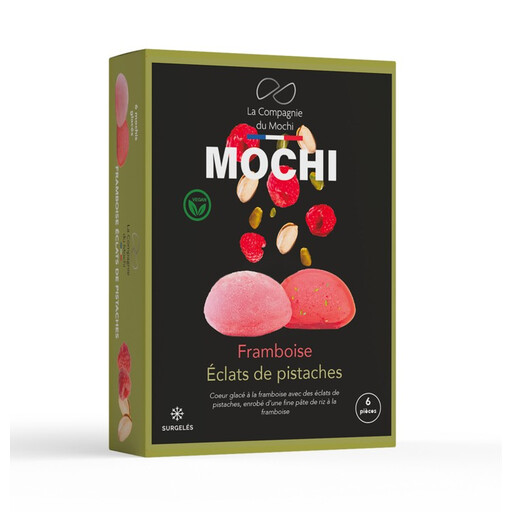 Image unavailable
The six pieces make it easy to plan individual portions for Easter lunch. The pack is listed as 198 g. Before choosing this dessert, check the packaging for fat per 100 g, allergens and serving instructions.
Under Regulation (EC) No 1924/2006, published in the Official Journal of the European Union, this claim can only be used for a solid food if it contains no more than 3 g of fat per 100 g. On its own, it doesn’t tell you anything about sugar or allergens.
First compare the values per 100 g for desserts of the same type, then consider the portion you plan to serve. The DGCCRF says that nutrition information given per 100 g or 100 ml makes it easier to compare products.
Read the ingredients list for the exact product. The DGCCRF states that allergenic ingredients must be highlighted in the list. Don’t assume they’re absent based on the dessert’s name or appearance.
No. It doesn’t replace checking the ‘fat’ value per 100 g. If you’re specifically looking for the ‘low fat’ claim, also check that it appears on the product.