Anyone counting the calories in a whole portion
You want to know the energy content of the tray or plate you’ll actually eat, rather than relying on the kcal figure per 100 g.


To choose a frozen festive meal that comes in under 500 kcal, check the energy content of the portion you’ll serve, not just the figure per 100 g. An individual tray makes this easy to work out; for a sharing dish, you’ll need to consider the weight of each serving. If your limit applies to the whole plate, include any sides and sauces too.
You want to know the energy content of the tray or plate you’ll actually eat, rather than relying on the kcal figure per 100 g.
You’re preparing several plates from a family-size pack and want to check the weight and energy content of each serving.
You’re looking for a frozen festive recipe that’s ready to cook or heat, while keeping an eye on portions, ingredients and storage instructions.
First decide what your 500 kcal limit covers — the main dish alone or the whole plate — then compare the energy content with the amount you plan to serve.
| Criteria | What to check | Who it matters to |
|---|---|---|
| Energy per portion | Check the kcal per 100 g and the weight you’ll eat; multiply the two figures, then divide by 100. | If I’m eating a whole tray, I want to know the energy content of the entire dish before choosing it; around 40% of consumers prioritise checking their portion this way. |
| Sharing dish | Compare the total weight with the number of portions planned, then calculate the energy content of the amount served. | When I’m hosting several people, I need to be able to divide the dish without assuming the portions will be equal; for around 30% of consumers, serving a sharing dish is the main consideration. |
| Recipe and preparation | Check the ingredients and any stated allergens, as well as the cooking instructions. | I want to serve a festive recipe without spending a long time in the kitchen, while taking my guests’ needs into account; this is the top priority for around 30% of consumers. |
The Directorate-General for Competition Policy, Consumer Affairs and Fraud Control (DGCCRF) explains that nutritional information is given per 100 g or 100 ml. A larger portion will therefore contain a different amount.
Calculate the energy content using the weight you’ll actually eat: kcal per 100 g × grams served ÷ 100.
A main dish under 500 kcal doesn’t mean the whole plate will stay within that limit once you add sauce, bread or sides.
Before you buy, decide whether your limit applies to the main dish alone or the whole plate, then factor in everything you plan to serve.
The amount you actually serve may differ from the theoretical portion size shown for a sharing dish.
Decide how much each portion will weigh, then use the kcal per 100 g on the label to calculate its energy content.
A product you spot in an online range may depend on the shop or the offer currently available.
Check availability with your chosen shop and have another recipe in mind whose portion size you can check too.
The formats available from these retailers can help you compare your options. For each product, check the product details or packaging before choosing a portion that comes in under 500 kcal.
The retailer has a festive meals range and individual trays with product details showing the weight and energy per 100 g.
Its frozen ready-meal range includes both individual dishes and sharing options.
The retailer’s frozen ready meals include individual and family-size options.
The retailer separates individual frozen ready meals from family-size options.
The retailer has a frozen ready meals range, with offers linked to dates when products are available in store.
Its frozen food range includes ready meals for a variety of occasions.
This product is a frozen side to serve as part of a festive meal, rather than a festive main course in its own right. If your limit applies to the whole plate, count the other foods you’re serving too.
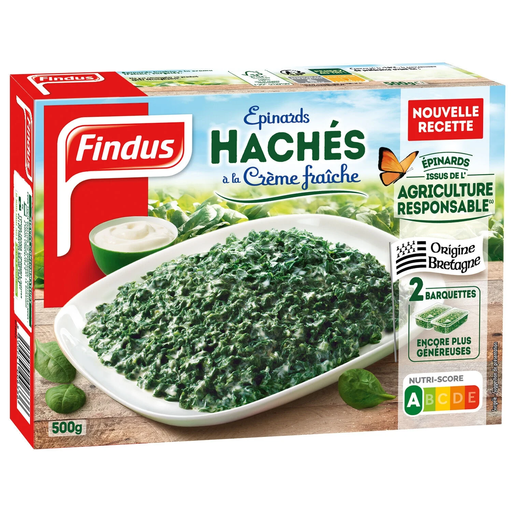 Image unavailable
This spinach can be served as a side if you’re putting together the meal portions yourself. The pack contains 500 g; check the energy content of the amount you serve and take the other items on the plate into account. If relevant to your guests, check the allergen information on the packaging, particularly the milk and wheat listed for this product.
No. You need to check the amount you’ll actually eat. Multiply the kcal per 100 g by the weight served in grams, then divide by 100. The DGCCRF reminds shoppers that nutritional information is given per 100 g or 100 ml.
Yes, based on the weights and figures per 100 g shown by Picard: the 350 g tray with rice noodles and Thai basil sauce contains around 301 kcal, while the 350 g tray with black rice, carrots and coconut milk sauce contains around 445 kcal. These calculations don’t include any sides.
Before serving, read the ingredients list and any allergens stated for the exact product. The DGCCRF includes the ingredients list among the labelling information required for prepacked foods.
Don’t judge whether it’s safe by appearance alone, and don’t serve it if you’re unsure whether it has been kept under the correct storage conditions. The French Agency for Food, Environmental and Occupational Health & Safety (Anses) highlights the importance of maintaining the cold chain to reduce microbiological risks.
Not necessarily: availability may depend on the shop, click and collect service or time of year. Check with your chosen retailer before finalising your menu.