
Livraison le jour même ou le lendemain

Qualité garantie

Débloquez vos offres de bienvenue: Livraison GRATUITE | Jusqu'à -80 % | 30 jours d'essai gratuits à JoyPlus
Téléchargez l'application
Craving the authentic flavours of a dim sum restaurant without leaving your kitchen? It's a dream for many fans of Asian cuisine. But with the overwhelming selection in the frozen food aisle, making the right choice can be tough. How can you be sure of the quality and taste of a frozen Chinese bun before you check out?
As product experts at Joybuy, our mission is to do the groundwork for you. This guide provides clear benchmarks and practical tips to help you find the real gems that will satisfy your cravings, whether for a quick breakfast, a comforting snack, or the centrepiece of a full meal.
Before we dive into our top picks, here are the key criteria to ensure you make the right choice.
The term frozen baozi encompasses a huge variety of fillings. To avoid any unpleasant surprises, the first step is to figure out what you're in the mood for:
A quick glance at the ingredients often speaks volumes about the quality of a Chinese steamed bun. Pay close attention to the filling percentage: a higher ratio is usually a sign of a more generous and flavourful product. The quality of the wheat flour also plays a key role in the dough's texture, which should be light and fluffy after steaming. Finally, remember to check the allergen list if you have any intolerances.
The main advantage of frozen food is the time it saves. Most Asian steamed buns are designed to be cooked quickly. The gold standard is steaming, which is ideal for reheating the bun without sacrificing its incredible fluffiness. Just check that the instructions are clear and require nothing more than a steamer or a bamboo basket.
Here are our top picks, chosen for their high-quality ingredients and authentic flavours.

Why we chose it: These buns are the quintessential classic Cantonese dim sum. The pristine white dough encloses a silky egg custard filling with a perfectly balanced sweet flavour that's never cloying. They are the perfect introduction to the world of Asian steamed buns.
Highlights:
Who is it for? Fans of sweet, traditional flavours, and families looking for a simple yet delicious breakfast or snack.
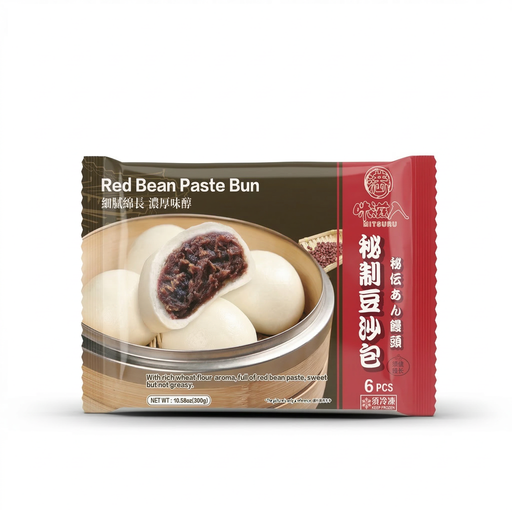
Why we chose it: The red bean bun is a cornerstone of Chinese pastry. This version from Mitsuru stands out with its soft dough and generous filling. The authentic, comforting taste is uncannily reminiscent of the buns from the best Asian bakeries.
Highlights:
Who is it for? Those who love traditional flavours and are looking for a simple, satisfying snack. A sure bet that everyone will love.

Why we chose it: Time for a more daring, modern experience. Its black dough, coloured with bamboo charcoal, creates a striking visual contrast with the golden filling. When you take a bite, the salted egg yolk bun releases a molten (lava) centre that divinely combines the sweetness of the custard with the savoury richness of the egg yolk.
Highlights:
Who is it for? Adventurous foodies and connoisseurs who want to experience the unique and incredibly trendy taste of liu sha bao.
Our selection focuses on the classics, but the world of frozen dim sum is endless! From BBQ pork buns to vegetable fillings and regional specialities, if you're curious to explore further, our full catalogue is for you.
? Discover our entire collection of frozen stuffed buns here
Steaming is by far the best method. There's no need to thaw the buns beforehand! Simply place them in a steamer basket over a pot of simmering water and cover. Steam for 8 to 12 minutes, depending on their size and the package instructions. The dough should come out perfectly puffed, hot, and fluffy. We strongly advise against using the microwave, as it tends to dry out and harden the dough.
Dim sum is a broad term for a wide range of small Cantonese dishes, often enjoyed with tea. This includes dumplings, steamed bites, spring rolls, and more. The baozi, which is a stuffed steamed bun, is just one of the many dishes that make up a dim sum meal. Simply put: all baozi can be considered dim sum, but not all dim sum are baozi.
Once they're in your shopping cart, they go straight into the freezer! They must be stored at -18°C or below. Always refer to the best-before date on the packaging. The golden rule: never refreeze a thawed product. It's a matter of both quality and food safety.