
Livraison le jour même ou le lendemain

Qualité garantie

Débloquez vos offres de bienvenue: Livraison GRATUITE | Jusqu'à -80 % | 30 jours d'essai gratuits à JoyPlus
Téléchargez l'application
Suddenly craving a steamed Chinese bun, ultra-fluffy and generously filled? But the thought of spending hours in the kitchen is putting you off? Frozen bao is the perfect alternative for enjoying this Asian street-food treasure effortlessly. The only problem is, with supermarket freezers becoming more and more crowded, it's hard to track down the hidden gem that won't disappoint on either taste or texture.
Our mission: to help you navigate the options. This guide breaks down the essential criteria for making the right choice and shares our selection of the best frozen dim sum to enjoy at home.
To avoid making a mistake, there are a few key points to check before you head to the checkout.
This is what gives the baozi its character. And the good news is, there's something for every palate:
The balance of flavours is paramount. A quality filling should be neither too salty nor too sweet, and its ingredients should remain distinct and identifiable.
A great filling in a bad dough? Unthinkable. The bun must be light, airy, and perfectly elastic after cooking. There are two main types:
The ingredient list for the dough should be as short as possible: wheat flour, water, yeast, and a hint of sugar are the basic components.
Steaming is, without a doubt, THE gold standard method for achieving a soft and perfectly moist texture. Most frozen bao are designed to be cooked directly from frozen, a significant time-saver. Check the instructions on the packaging: a cooking time of 8 to 12 minutes is an excellent sign of speed and convenience.
Enough theory, let's get to the tasting! Here are our top picks, selected for the quality of their ingredients and their well-balanced taste.

Why we love it: This bao stands out from the crowd with its spectacular look and unique taste. The black dough, coloured with bamboo charcoal, creates a striking contrast with the molten, golden custard centre. The filling, made from real salted egg yolk, perfectly captures the sweet-and-savoury balance so characteristic of an authentic liu sha bao.
Highlights:
Who is it for? For fans of sweet and savoury dim sum who want to recapture the magic of a Cantonese restaurant dessert, and for anyone curious to add a touch of originality to brunch or an afternoon snack.
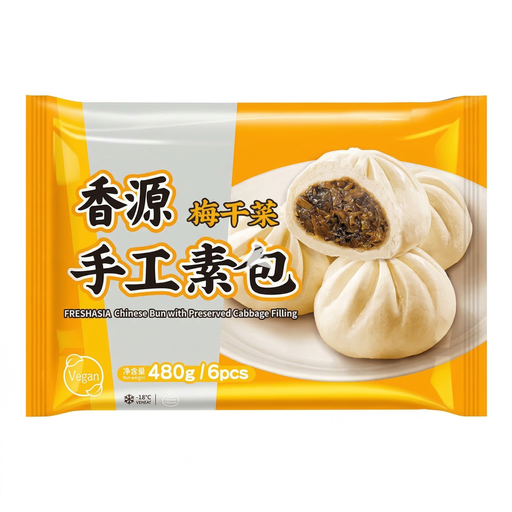
Why we love it: A stunning vegetarian alternative that easily rivals its meat-based counterparts. The combination of preserved cabbage, shiitake mushrooms, and black fungus creates a complex filling, rich in texture and umami flavour. The soft, fluffy dough generously envelops this delicious vegetable filling.
Highlights:
Who is it for? For vegetarians, flexitarians, and anyone looking for a savoury baozi with character and authentic plant-based flavours. An excellent option for lunch on the go.
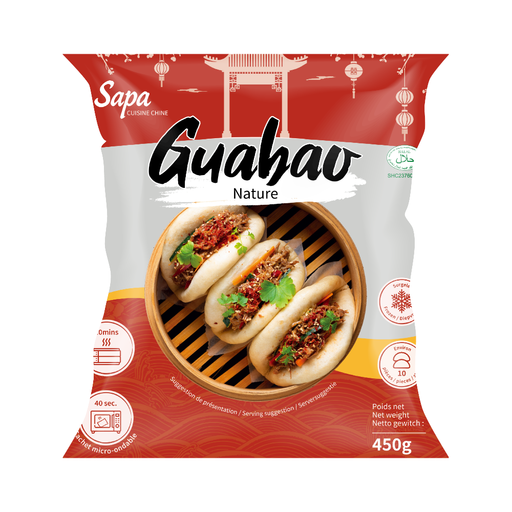
Why we love it: No filling here, but a blank canvas for your creativity: a neutral bao bun, ready to be filled. Its open "wallet" shape is that of the famous gua bao, the "Taiwanese burger." Its soft and airy texture is ideal for soaking up the sauces from your homemade fillings.
Highlights:
Who is it for? For creative home cooks who love to control their recipes from start to finish. Ideal for a "street-food" night at home to wow your guests with 100% personalised gua bao.
Our selection highlights a few gems, but the world of bao buns is much larger. If you want to explore other fillings, different formats, or simply discover more options, feel free to browse our complete catalogue.
Discover our entire range of steamed buns
Steaming is without a doubt the ideal method. Place the frozen bao (do not thaw) in a steamer basket lined with parchment paper, over a pot of simmering water. Cover and steam for 8 to 12 minutes, depending on the size and the manufacturer's instructions. What about the microwave? We don't recommend it. While it's possible, the result is often disappointing, yielding a dry or rubbery dough.
The baozi (or bao) is a round, sealed bun, already filled with a savoury or sweet filling. The gua bao, on the other hand, is a flat, folded steamed bun served empty. It's up to you to fill it, much like a taco or a pita.
Frozen bao should be kept in their original packaging in the freezer at -18°C (0°F) or colder. The golden rule: never refreeze a thawed product. This is essential to preserve its quality and ensure food safety.