
Livraison le jour même ou le lendemain

Qualité garantie

Débloquez vos offres de bienvenue: Livraison GRATUITE | Jusqu'à -80 % | 30 jours d'essai gratuits à JoyPlus
Téléchargez l'application
A pack of frozen bake-at-home croissants can save a family breakfast, an impromptu brunch, or a Sunday snack. But not all products are created equal. Baking time, butter content, size, filling, and storage conditions all have a direct impact on the final result on the plate.
Here are the key points to check to avoid unpleasant surprises and choose frozen croissants that suit your habits.
The promise on the packet doesn't always tell the whole story. To know what you're really buying, look at the ingredient list and identify the fat used. A recipe for all-butter croissants must clearly state butter as the main fat. Conversely, a dough or filling based on margarine will yield a different texture and taste.
The Nutella-filled croissants shown below, for example, contain vegetable margarine as well as a certain proportion of concentrated butter. They are aimed more at lovers of filled pastries than at those seeking an all-butter recipe.
The number of pieces is not always enough to estimate portions. Six croissants for a total weight of 420g do not serve the same purpose as ten mini-croissants weighing 250g. For a family breakfast, compare the total weight, the number of pieces, and their size.
Mini bake-at-home croissants are practical for a buffet or an assortment of pastries. For a more generous individual portion, a standard-sized croissant is generally more appropriate.
A frozen product must remain at –18°C until preparation. Once thawed, it must never be refrozen. Also remember to check the available space in your freezer and the time needed to preheat the oven.
Once the pack is opened, reseal it carefully to limit drying out and alterations caused by the cold.
Croissant recipes generally contain wheat, gluten, eggs, and milk. Some products may also carry a mention regarding traces of soy, sesame, or nuts. If several people are helping themselves to the same breakfast, take the time to read the labelling, especially in case of allergies or intolerances.
For an organic recipe, look for the European organic farming logo and the corresponding mention in the ingredient list. The product FOURNIL Organic Croissants x6 420g indicates ingredients from organic farming in the European Union and third countries, with 24% butter.
The products presented here announce a baking time of approximately 15 to 17 minutes. The result may, however, vary depending on the oven, the selected cooking mode, and the number of pieces placed on the tray. The instructions printed on the packaging remain the reference to follow.
Before placing an order, check whether the croissants should be baked directly from the freezer or if they require a thawing and proofing phase. This difference can completely change the breakfast organisation.
The data per 100g allows for comparing recipes on a common basis. A butter croissant can be particularly high in fat, while a filled version will often contain more sugar.
As an indication, the FOURNIL Organic Croissants shows, for the cooked product, 433 kcal and 24g of fat per 100g according to the information provided. The croissants filled with spread indicate 471 kcal, 28.6g of fat, and 16.7g of sugar per 100g. This data obviously does not replace medical advice, but it allows for adjusting quantities to the context — daily breakfast, brunch, or occasional snack.
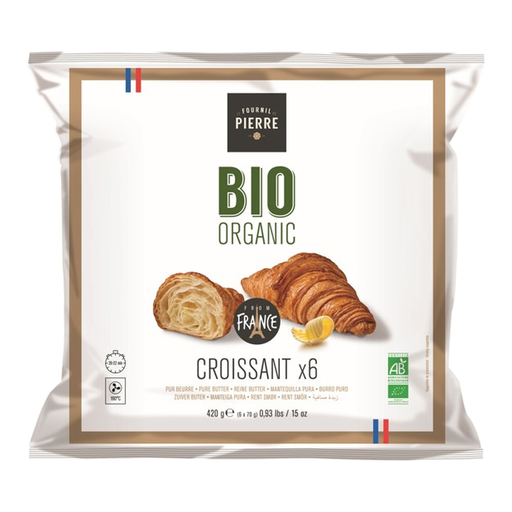
Why this choice fits this profile: With six pieces, this pack suits households that want to plan several breakfasts without accumulating different formats.
The composition precisely mentions 24% butter and the organic nature of the recipe. This makes it easier to verify the facts rather than relying on a simple marketing promise.
Six croissants, 420g total, indicated organic ingredients, and a stated baking time of 15 to 17 minutes.
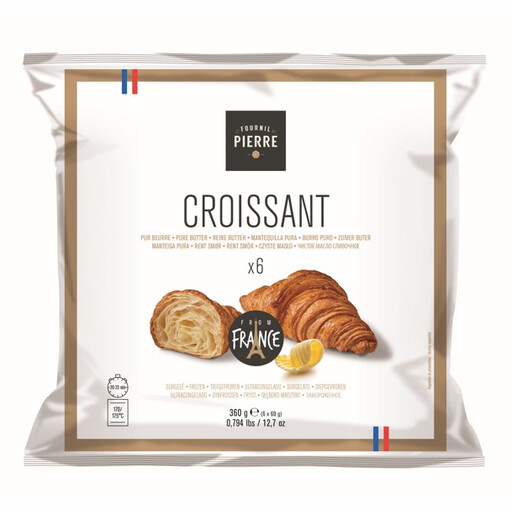
Why this choice fits this profile: Its pack of six croissants is suitable for a brunch or a breakfast where everyone wants a generous pastry.
The sheet indicates 21% butter, as well as milk and powdered cream. This information makes it possible to distinguish the recipe from a pastry relying solely on vegetable fats.
Six pieces averaging 60g each, storage at –18°C, and baking instructions to follow on the packaging.
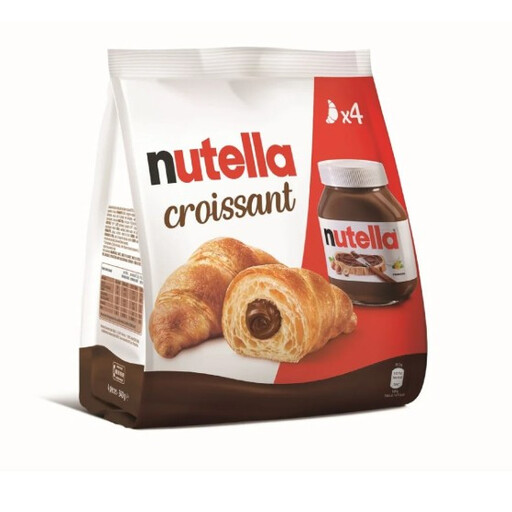
Why this choice fits this profile: The hazelnut-cocoa filling adds a very sweet touch, ideal for a snack or an occasional breakfast.
The sheet specifies the presence of vegetable margarine and 17% spread. You can therefore choose this product for its filling without confusing it with an all-butter croissant.
Four pieces for 340g, storage at –18°C, and declared presence of hazelnuts, milk, soy, eggs, and gluten.
The mini bake-at-home croissants from Fournil de Pierre, sold in packs of ten for a total weight of 250g, are ideal for a table offering several pastries or for children who prefer smaller portions. Their stated baking time is also around 15 to 17 minutes.
If you are not set on a bake-at-home product, the all-butter brioche ERHARD, 280g, is an alternative to be stored in a cool, dry place. Its recipe contains 18% butter and eggs from free-range hens. However, it should not be categorised as a frozen pastry.
Find an updated selection of croissants and pastries suited to different formats, recipes, and uses for the home in France.
It depends on the reference. Some bake-at-home croissants are designed to go directly from the freezer to the oven, while others require a thawing or proofing phase. Always consult the instructions on the packet before starting preparation.
At –18°C, they keep until the expiry date or the best-before date indicated on the packaging. In the freezer compartment of a refrigerator, the storage time may be shorter. Temperature and maintaining the cold chain remain essential.
Not necessarily. The filled reference presented here contains vegetable margarine, concentrated butter, and a hazelnut-cocoa filling. To identify an all-butter recipe, check that butter is indeed the fat indicated in the composition and compare the stated proportions.