
Livraison le jour même ou le lendemain

Qualité garantie

Débloquez vos offres de bienvenue: Livraison GRATUITE | Jusqu'à -80 % | 30 jours d'essai gratuits à JoyPlus
Téléchargez l'application
As sunny days return, so does the urge to garden. But the joy can be short-lived: pots that crack at the first frost, colours that fade after just one summer... Choosing a frost-resistant outdoor flower pot seems simple in theory. In practice, numerous pitfalls can turn what should have been a great purchase into a costly disappointment. Our mission: to help you decode the labels and identify the criteria that make the difference for a truly long-lasting investment.
Before you even start comparing models, let's review the three classic mistakes that lead directly to buyer's remorse.
To ensure your planter or pot weathers the seasons without issue, here are the three technical points you must absolutely check.
The choice of material has a direct impact on durability, weight, and maintenance. While terracotta retains its charm, it remains porous and therefore susceptible to frost unless it is of very high quality. The recycled plastic flower pot is now emerging as one of the best solutions. Brands like Deroma use injected, recycled polymers that guarantee excellent durability. Lighter and therefore easy to move, their design allows them to withstand thermal shock without any issues.
True weather resistance isn't just a marketing claim: it's a measurable technical feature.
Good drainage is non-negotiable. Always check for a drainage hole at the bottom of the pot. Some particularly versatile models offer a removable plug. This allows you to use it outdoors (by removing the plug) or indoors (by leaving it in and using a saucer). This flexibility is a considerable advantage for a balcony planter, for example.
Rather than a random list, we've selected products that meet specific needs while checking all the boxes for the criteria we've just discussed.
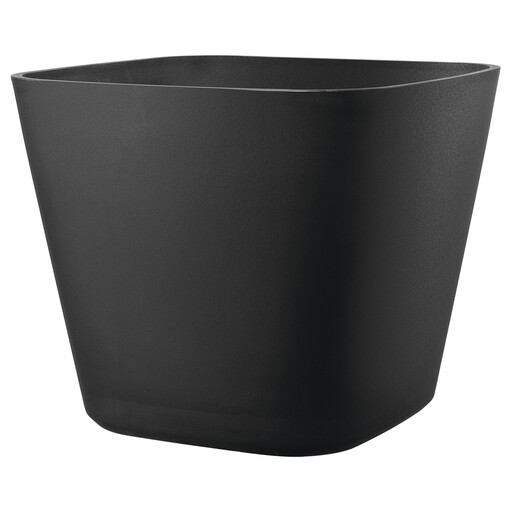
Why we love it: Its compact size and modern square shape are perfect for optimising space on a balcony or small patio. It's lightweight and easy to handle.
It features a removable drainage plug, which solves the drainage problem while offering indoor/outdoor versatility. Its recycled plastic construction includes a special treatment to resist frost and UV rays.
Maximum versatility thanks to the removable plug. Eco-friendly design (recycled and recyclable materials).
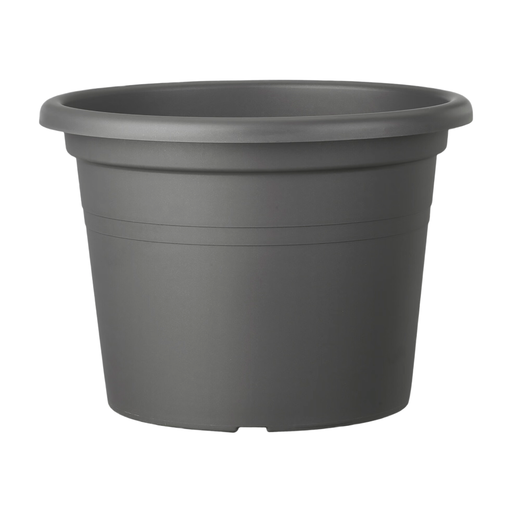
Why we love it: This large outdoor flower pot (50 cm) is ideal for accommodating large plants like shrubs or dense floral arrangements. Its classic cylindrical shape is a timeless design that fits into any outdoor space.
Its design is engineered for unbeatable durability, with built-in frost and UV resistance. It comes pre-drilled, ensuring optimal drainage from the moment you set it up and avoiding the water retention trap.
Large volume for the root development of substantial plants. A robust construction, made to stay outside 365 days a year.
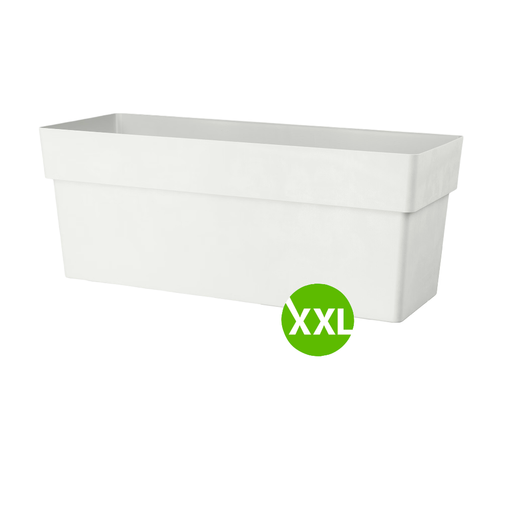
Why we love it: This 99 cm long designer outdoor planter is perfect for defining a space, creating a green divider on a patio, or adorning a low wall. Its rectangular lines and white colour add a very contemporary touch.
Its injection-moulded recycled plastic design guarantees frost and UV resistance, preventing fading and cracks. The base is pre-drilled to ensure effective drainage along its entire length—a critical feature for large planters.
Long format (99 cm) ideal for structured landscaping. The fusion of design and durability, thanks to a robust and eco-friendly construction.
We've compiled a complete selection of products that meet our criteria for quality and durability.
Even with a certified frost-resistant pot, a few extra precautions can't hurt. Ensure the drainage hole is not blocked. You can add a layer of clay pebbles or gravel at the bottom to further improve water drainage. For more delicate plants, moving the pot closer to a wall or raising it slightly off the ground can offer extra protection from the deep cold.
Absolutely. Today's technologies make it possible to produce extremely high-performance pots from recycled plastic. These materials are formulated to be dense and robust. They are often treated throughout to be UV-resistant and to maintain their flexibility in the face of temperature changes, making them a reliable and much lighter option than traditional materials.
The rule of thumb is to choose a pot with a diameter 2 to 5 cm larger than the root ball. This gives the plant enough space to grow during the season without drowning it in an excessive volume of soil, which could retain too much moisture and promote root rot.