
Same-day & Next-day Delivery

Quality Guaranteed

Unlock Your Welcome Offers: FREE Delivery | Up to 80% OFF | Free 30-day JoyPlus trial
Download the APP
Decorating your balcony, patio, or garden is a real pleasure, but choosing flower pots often turns into a headache. Who hasn't had the unpleasant surprise of finding a pot, which looked so beautiful in the store, cracked by the first frost or faded by the sun after a single summer? Rest assured, this isn't inevitable. These disappointments are most often the result of misleading labels or a lack of information about the materials.
To help you see things more clearly, our editorial team has broken down the topic. Let's forget the marketing jargon and focus on the facts. Here's how to avoid the two most common pitfalls when buying a truly frost-proof outdoor flower pot.
anthracite flower pot colour or another vibrant shade can lose its lustre in just a few months. Colour fastness depends on the quality of the pigments and, most importantly, on whether a UV-resistant treatment has been integrated into the material itself. This is a crucial technical detail, but one that is often overlooked.To invest in an outdoor planter or pot that will stand up to the seasons without flinching, three technical points must be scrutinized.
This is the number one criterion. While terracotta retains its charm, it is often susceptible to frost unless you opt for very expensive artisanal models. Modern solutions now offer a much better compromise.
The high-quality recycled plastic pot, for example, is emerging as an excellent choice. Made from technical polymers, these pots are non-porous, which blocks any water infiltration that could cause cracks during a frost. Even better, UV-resistant agents are integrated directly into the material during manufacturing. This ensures the colour won't fade and remains stable year after year. This is the key difference between simple surface-dyed plastic and a true frost-proof planter designed to last.
Poor drainage is a surefire way to cause root rot. A good outdoor pot must allow excess water to escape. Several systems exist:
Shape and size are not just aesthetic choices. A large outdoor flower pot must have walls thick enough to support the weight of the soil and withstand thermal shocks without deforming. For a balcony pot, the empty weight is an important criterion, as is its stability. Square or rectangular shapes often help to optimise space in a limited area.
Rather than searching for a non-existent "perfect" product, it's better to find the one that perfectly matches your use case. Here is a selection of models that tick all the boxes on our demanding checklist.
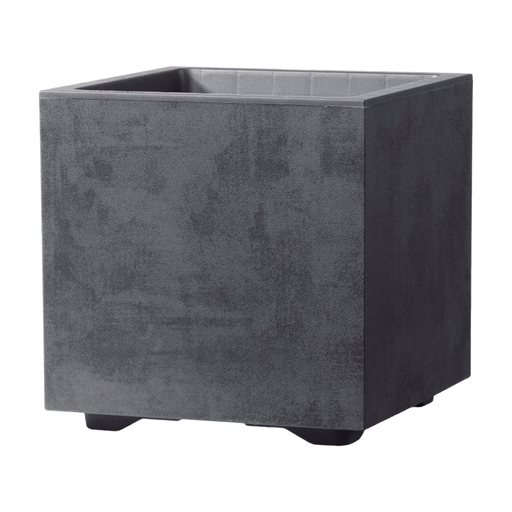
Why it's a smart choice: Perfect for those looking to maximise space on a balcony or small patio. Its cubic shape is easy to arrange, and its 25 cm size is suitable for a wide variety of plants. The integrated water reservoir is a real plus for city dwellers who want simplified maintenance.
Its recycled polymer construction provides certified resistance to frost and UV rays, preventing cracks and discolouration. The removable plug offers complete control over drainage.
Versatility, thanks to the water reservoir and controllable drainage, combined with a durable and eco-friendly design.
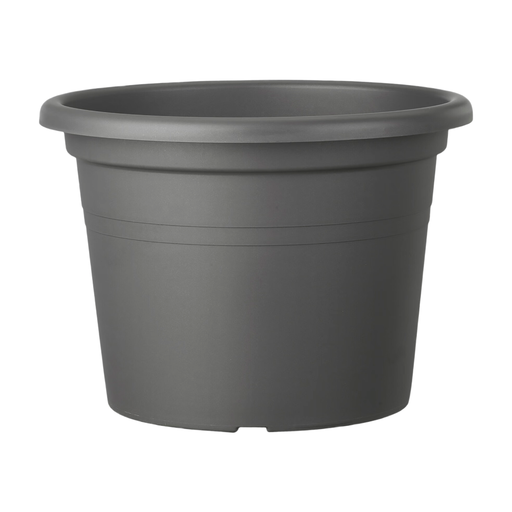
Why it's a smart choice: For those who prioritise functionality and environmental impact. Made from recycled and recyclable materials, this 40 cm pot offers a generous volume for shrubs or floral arrangements. Its classic cylindrical shape fits in anywhere.
The technical composition of the material ensures reliable resistance to frost and UV rays. The pre-drilled drainage hole eliminates any risk of error and guarantees optimal water evacuation.
The combination of a strong environmental commitment (recycled materials) and a simple, effective design (direct drainage).
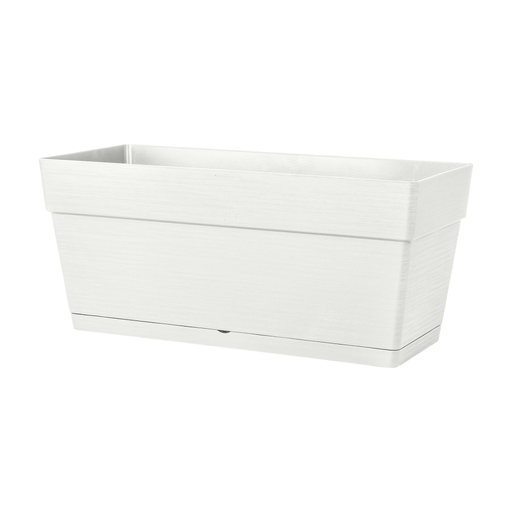
Why it's a smart choice: This large 79 cm planter is perfect for structuring a space, defining a patio, or housing plants that need room to grow. Its "low wall" shape is both modern and functional, and its water reservoir simplifies the maintenance of such a large volume of soil.
For such a large format, robustness is essential. Its technical polymer construction is designed to resist frost and UV rays without warping or cracking, a critical point for large containers.
Large planting capacity and simplified water management thanks to the integrated reservoir, all in a durable and attractive format.
We have put together a complete selection of products that meet these demanding standards for durability and design.
Check the technical specifications. The mention of materials like injected polypropylene or a recycled technical polymer is an excellent indicator. By nature, they are non-porous, which is the best defence against frost damage. European manufacturing, such as from the Italian brand DEROMA, is also a mark of reliability and standards compliance.
This system is very versatile. For plants that dislike stagnant moisture (like succulents or lavender), you just need to ensure the reservoir isn't kept constantly full or remove the overflow plug to ensure direct drainage. For thirstier plants, it's a major asset that allows you to water less frequently.
On the contrary, it's one of the most low-maintenance materials available. A simple wipe with a sponge, water, and a little neutral soap is enough to restore its original appearance. It requires no treatment, varnish, or additional protection against the elements.