
Livraison le jour même ou le lendemain

Qualité garantie

Débloquez vos offres de bienvenue: Livraison GRATUITE | Jusqu'à -80 % | 30 jours d'essai gratuits à JoyPlus
Téléchargez l'application
A minor collision, a hit-and-run, a scratch in a car park… These everyday hassles can quickly turn into an administrative nightmare. For total peace of mind, the front and rear dash cam has established itself as the guardian angel for drivers. Acting as a true black box, it continuously records what happens in front of and behind your car, becoming your best witness when trouble strikes.
But with dozens of models on the market, how do you navigate the options? 4K, Full HD, parking mode, GPS… the technical jargon can be daunting. No need to panic! This guide is here to break down the essentials and help you choose the car camera that will effectively protect your journeys and your vehicle.
To make the right choice, let's review the key points that will make all the difference.
Image quality is the most critical factor. It's what allows you to read a license plate or identify a decisive detail.
Don't overlook night vision. High-performance sensors and technologies like HDR (High Dynamic Range) make a huge difference after sunset, preventing images that are too dark or, conversely, washed out by headlights.
GPS and Wi-Fi are no longer just gadgets. They transform your dash cam into an intelligent co-pilot.
For protection even when you're not there, parking mode is a must-have. Once your car is parked and the engine is off, the camera enters standby. Upon detecting the slightest impact with its G-sensor or sensing suspicious movement, it wakes up and records a clip. Note that this feature requires a specific wiring kit (hardwire kit) for continuous power from the battery, which includes a safety feature to prevent it from draining.
We have selected three models that excel in their category, catering to different needs and budgets.

Why it stands out: It's the perfect combination of ultra-high resolution and cutting-edge connectivity. Its masterstroke? 5 GHz Wi-Fi 6, which allows you to transfer 4K videos to your smartphone at lightning speed. No more long waits to retrieve evidence.
Pros:
Who is it for? For demanding tech enthusiasts who want the best of 4K and the convenience of ultra-fast file transfers with Wi-Fi 6.
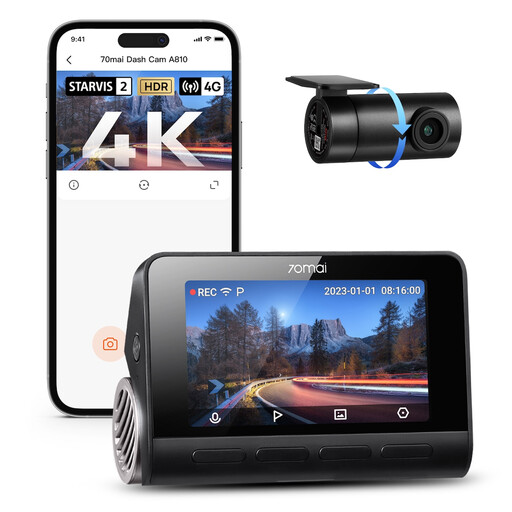
Why it stands out: This one is all about image quality, especially at night. The A810-2 is equipped with the best sensors available: two Sony STARVIS 2 sensors, one front and one rear, both paired with HDR. The result is a stunning night vision performance. This expertise is well-recognized, as the A810 model received the "Technology Innovation Award" from Futures and a "Good" rating from German test organizations Autobild.de and Computerbild.de in 2024.
Pros:
Who is it for? For those who often drive at night or in changing weather conditions, and for whom perfect night-time footage is non-negotiable.
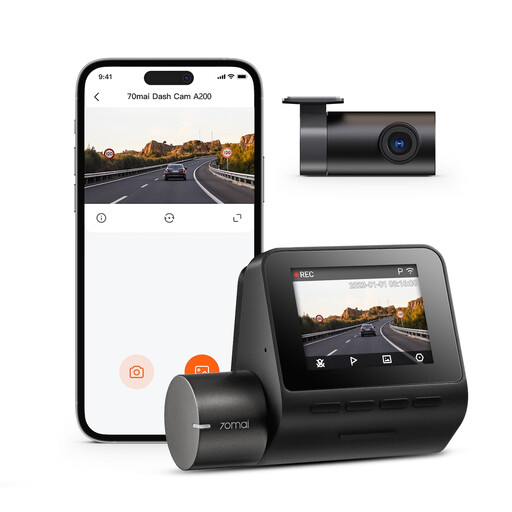
Why it stands out: Its strength is fluidity. When recording with the front camera alone, it reaches 60 frames per second (fps) in 1080p, double that of a standard dash cam. This feature is incredibly effective for freezing the action and easily reading the license plate of a fast-moving vehicle.
Pros:
Who is it for? For budget-conscious drivers looking for the best value for money. It's perfect for those who prioritize maximum fluidity to capture fast movements over the race for 4K.
This selection is just a glimpse of the excellent models available. To discover other configurations, brands, or price ranges, feel free to browse our complete catalog.
? Explore our full collection of the best dash cams to find the model that perfectly meets your needs.
Yes, using a dash cam is perfectly legal in France for private use. In case of an incident, the recordings are admissible as preliminary evidence in court, although their value is left to the judge's discretion. However, be mindful of privacy rights: it is strictly forbidden to publicly broadcast (e.g., on social media) videos where people or license plates are identifiable. To do so, blurring is mandatory.
Parking mode takes over once your car's ignition is turned off. For it to work, the camera needs a constant power supply. This is provided by a "hardwire kit" that connects to the vehicle's fuse box. This kit is smart: it includes a protection feature that cuts off power before your car's battery gets too low. Once active, parking mode operates in two ways:
4K video means large files, so your memory card must be up to the task. You must choose a microSD card rated U3 (UHS Speed Class 3) or V30 (Video Speed Class 30). They guarantee a minimum write speed of 30 MB/s, which is essential for recording 4K without stuttering or dropped frames. As for capacity, aim for at least 128 GB or 256 GB. This will give you plenty of recording time before the loop recording starts overwriting the oldest files.