
Livraison le jour même ou le lendemain

Qualité garantie

Débloquez vos offres de bienvenue: Livraison GRATUITE | Jusqu'à -80 % | 30 jours d'essai gratuits à JoyPlus
Téléchargez l'application
Equipping your car with a front and rear dash cam is no longer a luxury, but an essential precaution to protect your vehicle and cover your back in case of a collision. The problem? The market is a jungle. Between disappointing "4K" promises and parking modes that drain your battery, making the right choice can be an uphill battle. How do you navigate it all?
As a product expert for Joybuy, my mission is to cut through the noise for you. Let's forget the marketing jargon and focus on what really matters. Here's a guide to avoiding the common traps and identifying the technical features that truly make a difference.
Too many drivers end up disappointed with their purchase, trapped by overhyped features or deal-breaking flaws. Here are the most common mistakes:
To make the right choice, focus on these three pillars. They are what guarantee the real-world performance and reliability of your in-car camera.
Instead of getting mesmerized by the "4K" logo, look for the image sensor's model number. Sony STARVIS sensors are the market benchmark, renowned for their stunning sensitivity in low light.
Combine this information with the presence of image processing technologies:
A 4K dash cam equipped with a STARVIS sensor and HDR will deliver usable footage in almost any condition.
For 24/7 surveillance, a hardwire kit is non-negotiable. Connected to the fuse box, it includes a protection feature to prevent it from draining your car's battery.
Also, check the camera's internal power source:
A dash cam with Wi-Fi and GPS is a daily game-changer.
Instead of an endless list, here are three models that check all the boxes, each tailored to a specific need.
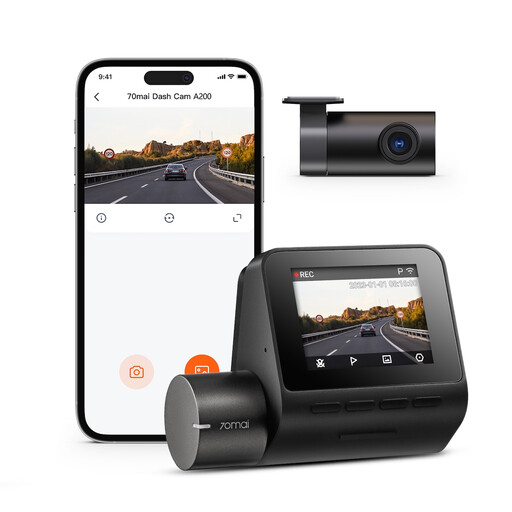
Editor's Pick: Perfect for daily commutes, this model gets straight to the point: a flawless 1080p image day and night, without the unnecessary gadgets that drive up the price.
This model ignores the "fake 4K" race. It focuses on a native 1080p resolution paired with HDR, which is far more effective and readable than an interpolated 4K, especially when light is scarce.
Its 70mai Night Owl Vision technology and HDR work wonders at night. The 60 FPS mode (front camera only) ensures perfect fluidity to catch every detail, even at high speed.
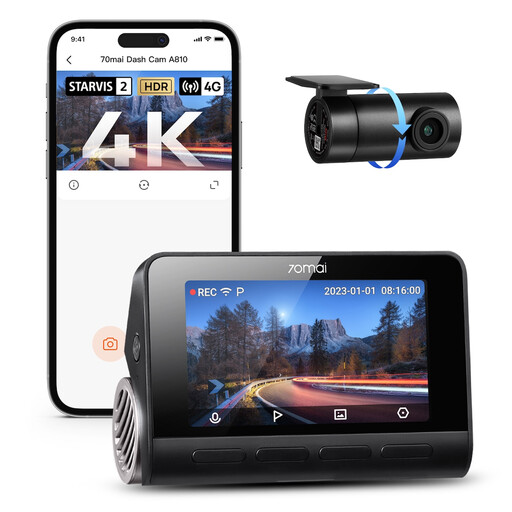
Editor's Pick: For those who want zero compromises on image quality and features. This model combines true 4K with premium sensors for cutting-edge performance, 24/7.
It shatters the poor night vision pitfall with its dual Sony STARVIS 2 sensors (IMX678 front, IMX662 rear) and dual-channel HDR. The result: the image isn't just brighter, it's rich in detail and color.
The combination of true 4K + elite sensors delivers formidable image clarity. The built-in GPS and 4G compatibility (via an optional kit) make it a truly connected surveillance tool.
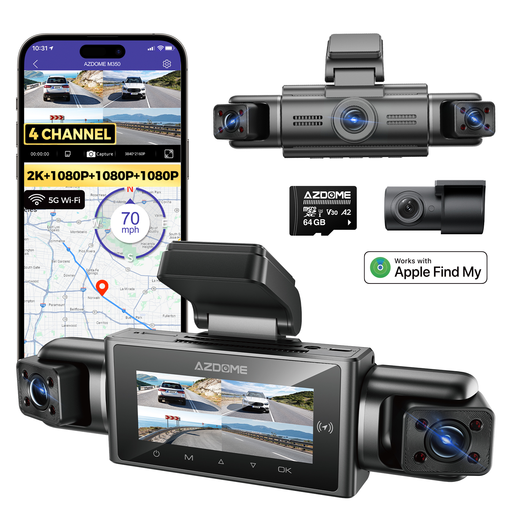
Editor's Pick: Essential for road professionals (rideshare, taxis) or families seeking maximum security. This system goes far beyond the front/rear duo by also recording the sides of the vehicle. No more blind spots!
It solves the blind spot problem. While most dash cams are limited to front and rear views, this 4-channel model records everything simultaneously: front, rear, left, and right. The coverage is total.
Its 360° panoramic view is obviously its master stroke. But the icing on the cake is its integration with the Apple Find My network, which lets you locate your car without any third-party app. A market exclusive.
We have selected a full range of products that meet our strict requirements and comply with current regulations.
Yes, this is the main risk with a poorly managed parking mode. The solution? Use a hardwire kit. These kits connect to the fuse box and monitor the battery's voltage: if it drops too low, they cut power to the camera to save your battery.
The front camera is a piece of cake: you stick it to the windshield and plug it into the cigarette lighter. For the rear camera, it's a bit more technical: you need to run the cable neatly to the front. Fortunately, the kits often include small tools to make the job easier. For installing a hardwire kit to the fuse box, hiring a professional is a wise precaution if you're not DIY-savvy.
In many jurisdictions, rules of evidence allow for dash cam recordings to be submitted in civil cases. The footage can therefore be presented to a judge, who will assess its relevance. However, be sure to respect privacy rights: never publish images of people who are not involved in the incident. In case of a legal dispute, consulting a lawyer is always essential.