
Livraison le jour même ou le lendemain

Qualité garantie

Débloquez vos offres de bienvenue: Livraison GRATUITE | Jusqu'à -80 % | 30 jours d'essai gratuits à JoyPlus
Téléchargez l'application
As a product expert for the Joybuy editorial team, my mission is to help you navigate the dense world of dashcams. Equipping your vehicle with a front and rear 4K dash cam is an excellent investment in your safety and peace of mind. Yet, too many drivers are left disappointed by models that don't live up to their promises. To avoid falling into the same trap, here are the three classic mistakes to avoid.
To ensure you get reliable video evidence under all conditions, focus on these three fundamental criteria.
Forget the numbers: resolution isn't everything. Image quality primarily depends on the sensor. A larger, more modern sensor captures more light, a critical factor for recording clarity, especially in low-light conditions. Sensors like the Sony STARVIS 2 are now the industry benchmark. They offer far superior sensitivity and noise reduction, guaranteeing first-class night vision with accurate colours and perfectly sharp details.
A true dual 4K dash cam records natively in 3840 x 2160 pixels without any software tricks. This high resolution allows you to zoom in on the footage without losing quality. To be truly effective, it must be paired with High Dynamic Range (HDR) technology. HDR is essential: it balances the very bright and very dark areas of the same scene (like exiting a tunnel or driving at night facing oncoming headlights), ensuring no detail is lost in either the shadows or the highlights.
Beyond simple recording, modern features are genuine safety enhancements:
Here is our selection of models that check all the boxes, designed for different types of drivers.
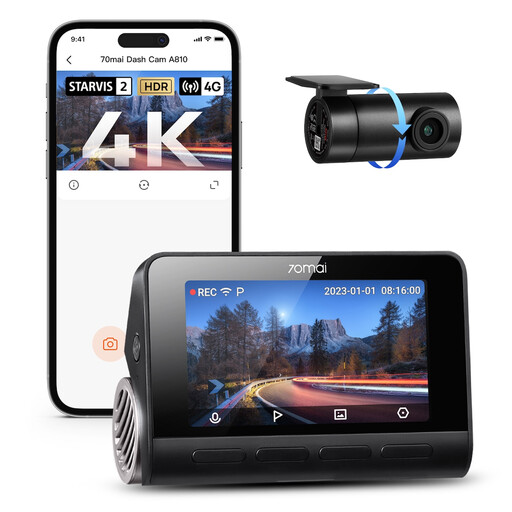
Why it stands out: It's the top choice for those who want the absolute best in image quality, day or night. It packs the very latest sensor technology and cutting-edge features like 4G connectivity (via an optional kit) for remote monitoring.
This model uses a genuine Sony STARVIS 2 sensor on the front (IMX678) for native 4K and stunning low-light performance. Its AI-powered parking mode is designed to work with a dedicated kit (UP04), thus avoiding the battery drain trap.
Dual Sony STARVIS 2 sensors (front and rear) for flawless image clarity. HDR night vision and 4G compatibility for remote surveillance.
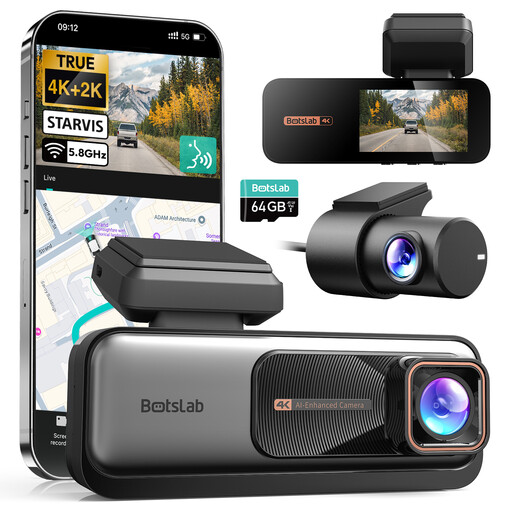
Why it stands out: Perfect for daily commutes and professional drivers looking for a complete, ready-to-use system with robust safety features and very wide visual coverage.
It delivers certified 4K resolution at the front thanks to its Sony STARVIS sensor (IMX415). Its ADAS is AI-driven for more precise alerts, and it includes a 64GB card, preventing unpleasant surprises and hidden costs.
Complete system with smart ADAS, built-in GPS, and an included 64GB microSD card. Ultra-wide 170° front viewing angle to capture the entire scene.
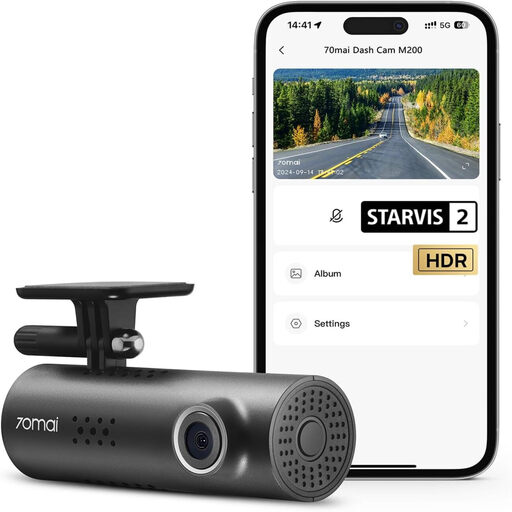
Why it stands out: For drivers who want to secure the front of their vehicle with top-notch night vision technology, without necessarily investing in a full dual 4K system.
Although it's not a 4K system, it focuses on the essentials and does them perfectly. It features a Sony STARVIS 2 sensor, allowing it to avoid the "poor night vision" trap so common in entry-level models. Quality over quantity.
Sony STARVIS 2 IMX662 sensor for high-end HDR night vision, all in a compact and affordable package. An excellent option for a first-time setup focused on front-facing security.
Yes, using a dash cam is perfectly legal in France for private use. However, sharing footage where individuals or licence plates are identifiable is governed by GDPR. In the event of a dispute, recordings can be submitted to law enforcement or a judge, who will rule on their admissibility as evidence.
Yes, and it's absolutely essential. A hardwire kit connects directly to the vehicle's fuse box. It provides constant power to the dash cam for parking mode while including a protection feature that prevents it from draining the car's battery. Without this kit, parking mode will either not work or will drain your battery in record time.
Dash cams record in a loop, which subjects the memory card to constant write and rewrite cycles. It is crucial to use "High Endurance" microSD cards, which are specifically designed for this intensive use. Their lifespan varies, but it's wise to replace them every 1 to 2 years to prevent data loss due to card failure. Regular formatting (once a month) also helps to extend their longevity.