
Livraison le jour même ou le lendemain

Qualité garantie

Débloquez vos offres de bienvenue: Livraison GRATUITE | Jusqu'à -80 % | 30 jours d'essai gratuits à JoyPlus
Téléchargez l'application
Driving safety is paramount. With increasingly dense traffic and unpredictable driver behaviour, video evidence in the event of a collision is no longer a luxury, but a true necessity. The problem? The dash cam market is a jungle of often incomprehensible spec sheets.
Our mission: to help you cut through the noise. We're ditching the technical jargon to break down the criteria that truly matter for a front and rear 4K dash cam. Follow our guide to find the perfect model for you and equip your vehicle with complete peace of mind for 2026.
Before comparing models, you need to know what to look for. Here are the three essential criteria for finding the perfect 4K car camera for your needs.
4K (3840x2160p) resolution for the front camera has become the new standard, and for good reason: it's the only way to guarantee you can read a license plate or a road sign, even from a distance or while in motion. For the rear, Full HD (1080p) or 2K resolution is more than enough to get a clear view of the situation. Ultimately, it's this image clarity that will serve as definitive proof in a dispute.
A dash cam with Wi-Fi and GPS simplifies your life.
Even when parked, your car is vulnerable. A dash cam with parking mode watches over it 24/7. Equipped with a shock sensor (G-sensor), it automatically activates and records upon the slightest impact. Note that this feature requires the installation of a permanent hardwire kit to power the camera without draining the vehicle's battery.
Night vision is the other pillar of effective surveillance. A good dash cam must perform well in low-light conditions. Technologies like WDR (Wide Dynamic Range) or dedicated sensors (like the Sony STARVIS) make all the difference, whether at night or in an underground car park.
After sifting through spec sheets and user reviews, our editorial team has selected three models that stand out for their performance and reliability.
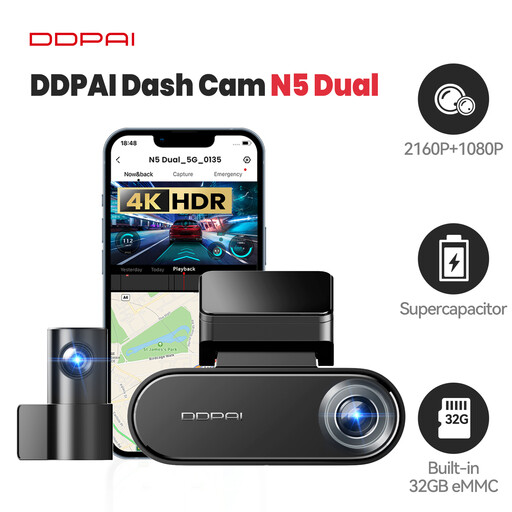
Why It Stands Out?: The DDPAI N5 Dual is all about peace of mind. Its trump card? A dual storage system. In addition to the microSD card, it features 32GB of built-in eMMC memory that takes over if the card fails. This dual-layer security ensures your most critical recordings are never lost.
Key Features?:
Who is it for?? For demanding drivers who want maximum protection without compromising on the reliability and security of their recordings.
See price and details on Joybuy.fr
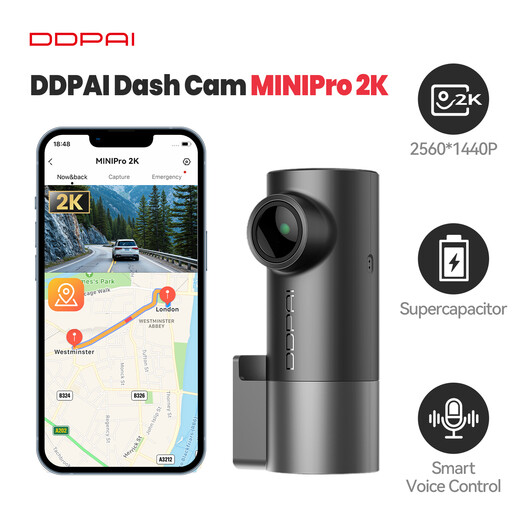
Why It Stands Out?: This is the pinnacle of discretion and efficiency. This front-only camera boasts an ultra-compact design, allowing it to blend in seamlessly behind your rear-view mirror. No visual clutter, just the essentials. Its 2K (1440p) resolution offers a significant improvement in sharpness over standard Full HD.
Key Features?:
Who is it for?? For those seeking a minimalist setup and effective front-facing protection, with image quality that goes beyond basic Full HD.
See price and details on Joybuy.fr
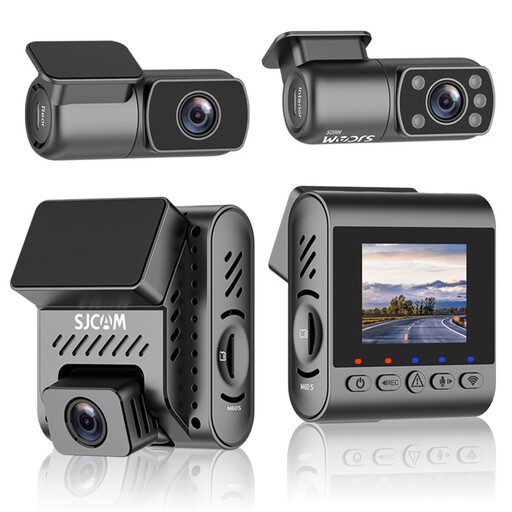
Why It Stands Out?: The SJCAM M60S takes things to the next level with its three-camera system: front, rear, and even interior. It's the ultimate surveillance solution, perfect for road professionals (rideshare, taxis) or families who want to keep an eye on the cabin. Bonus: the interior camera includes infrared night vision for perfect visibility, even in complete darkness.
Key Features?:
Who is it for?? For road professionals and safety-conscious parents who need 360° security and want to see everything, both on the road and inside the vehicle.
See price and details on Joybuy.fr
This selection covers the essentials, but the world of car accessories is vast. To complete your setup, from fast chargers to the most ingenious smartphone mounts, feel free to explore the rest of our guides.
Discover our range of device charging mounts
4K offers a level of detail that can make all the difference, especially for reading a distant license plate or in bad weather. It's a real advantage. If you're on a tighter budget, 2K (1440p) resolution is an excellent compromise, far superior to standard 1080p. But for indisputable video evidence, 4K remains the number one choice.
Parking mode puts your camera in a standby state once the ignition is off. Its shock sensor (G-sensor) remains alert: at the slightest jolt (like a door ding in a parking lot), the camera wakes up and records a secure video clip. For this to work, it needs a constant power supply via a hardwire kit connected to the car's fuse box.
Installing the front camera is a breeze: you stick it to the windshield and plug it into the cigarette lighter. The rear camera takes a bit more time, as you need to run the cable discreetly along the car's trim to the trunk. Most kits are designed for a DIY installation, but for a flawless and invisible result, having a professional handle it is always a good option.