
Livraison le jour même ou le lendemain

Qualité garantie

Débloquez vos offres de bienvenue: Livraison GRATUITE | Jusqu'à -80 % | 30 jours d'essai gratuits à JoyPlus
Téléchargez l'application
Equipping your vehicle with a front and rear 4K dash cam is a smart move for any driver looking to protect their vehicle and their journeys. In the event of an incident, high-quality video can make all the difference. But be warned: the market is a jungle of models with tempting promises, and it's easy to be lured by a product that ultimately disappoints. As a product expert at Joybuy, I'm here to help you separate fact from fiction.
Before you dive in, here are the 3 most common pitfalls to avoid:
To make an informed decision, focus on the specifications that directly impact the quality of your videos.
A 4K dash cam must offer a native resolution of 3840?x?2160 pixels. But resolution isn't everything; the image sensor is even more important. Sony STARVIS or STARVIS 2 sensors are the benchmark, capable of capturing sharp, detailed images even in low-light conditions. Also, consider the frame rate: 30 frames per second (FPS) is standard, but 60 FPS ensures much smoother video, which is ideal for analysing fast-paced scenes.
A dual-channel dash cam simultaneously records the front and rear of your vehicle, offering complete protection in case of a rear-end collision. Pay attention to the field of view (FOV) of both lenses. A 140° to 150° angle for the front camera is an excellent balance, as it covers multiple lanes of traffic without excessively distorting the image (the so-called "fisheye" effect).
A GPS WiFi dash cam will make your daily routine easier.
Finally, if parking mode is a critical feature for you, be aware of what it entails: the almost-mandatory purchase of a hardwire kit and an installation that may require professional help if you're not familiar with your car's fuse box.
Instead of an endless list, we've selected three models that excel in their respective categories and meet specific needs.
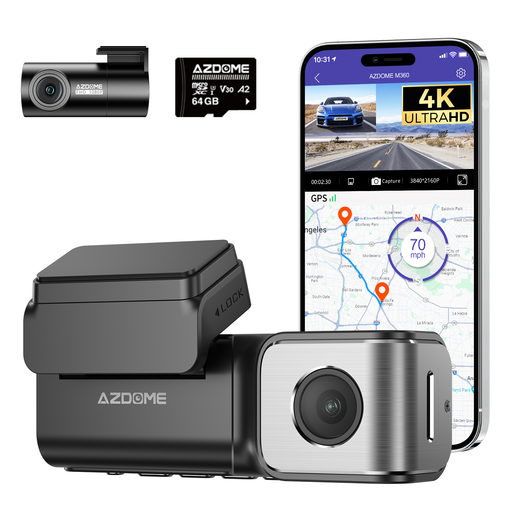
Why it's a great choice: This is the ideal compromise for daily use. It combines a 4K front resolution with a Full HD rear camera, complemented by essential features like 5 GHz WiFi and GPS, without being overly complicated. A reliable choice for a first-time setup.
This model features true native 4K resolution at the front, avoiding the interpolation trap. WDR technology is included to optimise the image in low light, offering decent night-time performance for its price range.
Dual-channel 4K + 1080P: High-quality image at the front and reliable surveillance at the rear.
Built-in 5 GHz WiFi and GPS: Fast video transfers and journey geotagging without extra accessories.
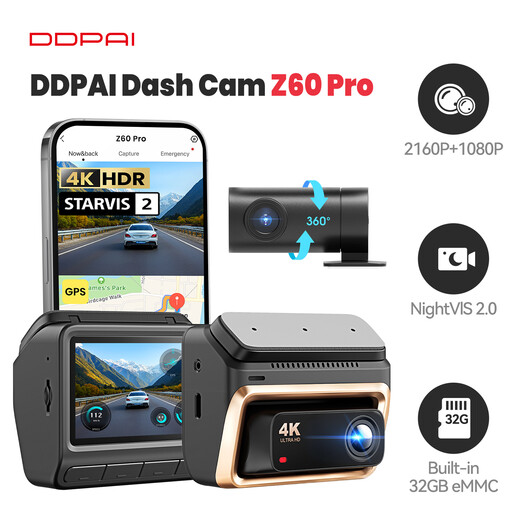
Why it's a great choice: For those who want the absolute best. It integrates Sony STARVIS 2 sensors on both the front and rear, handles HDR recording on both channels, and offers a 60 FPS mode for impeccable image smoothness. A model built for pure performance.
Here, night vision isn't just a marketing term. It relies on cutting-edge sensors (Sony STARVIS 2 IMX678 at the front) and AI-ISP image processing, ensuring stunning clarity even in near-total darkness.
Dual Sony STARVIS 2 Sensors: Exceptional image quality, day or night.
Dual-Security Storage: 32 GB of built-in eMMC memory takes over if the microSD card fails.
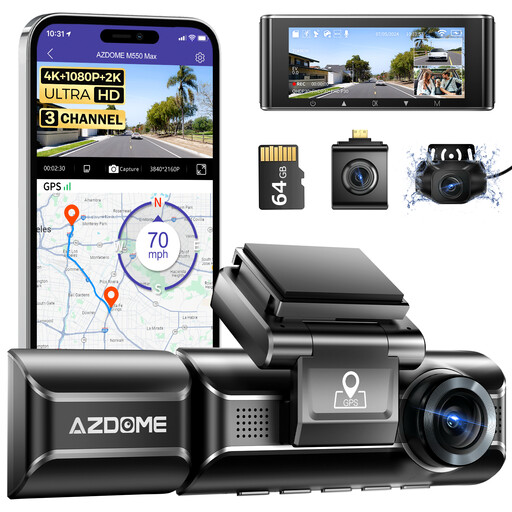
Why it's a great choice: The perfect solution for rideshare drivers, taxis, or families. It provides total surveillance with three cameras: front (4K), rear (1080P), and cabin (2.5K). The interior camera, equipped with infrared vision, is a real bonus for the safety of both passengers and the driver.
This model doesn't just make promises, it delivers: surveillance is handled by three distinct channels. The need for a hardwire kit for 24/7 parking mode is clearly stated, allowing for an informed purchase.
3-Channel Recording: Complete coverage (front, rear, cabin) for maximum security.
Dual STARVIS Sensors: Guarantees excellent image quality for the front and cabin cameras, including at night thanks to infrared.
Discover our full selection of products that meet our strict selection criteria and current safety standards.
Yes, using a dash cam is completely legal in France for private use. Recordings can be used as evidence in the event of an accident. However, privacy laws apply: it is illegal to publish footage where people or license plates are identifiable without their consent or without prior blurring. Furthermore, if you are carrying passengers (e.g., for carpooling or ridesharing), you are obligated to inform them of the camera's presence.
For a basic parking mode that activates upon impact detection (using the camera's internal battery), installation is straightforward. However, for continuous 24/7 surveillance (such as time-lapse recording), using a hardwire kit connected to the vehicle's fuse box is essential. If you have no knowledge of automotive electronics, it is highly recommended to hire a professional to avoid any risk to your car's electrical system or draining your battery.
Continuous loop recording puts a heavy strain on memory cards. A standard microSD card's lifespan can drop to just a few months. It is imperative to choose "High Endurance" cards, which are specifically designed for this intensive use. Even with these cards, it is advisable to check that they are functioning correctly every 2 to 3 months and to plan on replacing them every 1 to 3 years, depending on the intensity of your usage.