
Livraison le jour même ou le lendemain

Qualité garantie

Débloquez vos offres de bienvenue: Livraison GRATUITE | Jusqu'à -80 % | 30 jours d'essai gratuits à JoyPlus
Téléchargez l'application
Equipping your vehicle with a front and rear 4K dash cam has become a smart move to protect your property and have irrefutable video evidence in case of an incident. The problem? The market is saturated with confusing marketing promises. Between inflated resolutions and gimmicky features, it's easy to make the wrong purchase.
As a product expert for Joybuy, my mission is to help you see things more clearly. Let's break down the pitfalls to avoid and the criteria that truly matter for making the right choice.
To avoid these pitfalls, focus on these non-negotiable technical specifications.
4K resolution (3840x2160 pixels) promises a surgical level of detail, but it's worthless without a quality image sensor. Sony STARVIS sensors are the gold standard, renowned for their excellent low-light performance. HDR (High Dynamic Range) technology is also a major asset: it balances overexposed and underexposed areas of the image, a real advantage in tunnels or when facing dazzling headlights.
A dual-lens dash cam simultaneously records the front and rear of your vehicle. This is the winning combination for complete protection, especially in rear-end collisions. For professionals (ride-sharing, taxis) or the most demanding users, a 3-channel dash cam adds an interior-facing camera for near-total surveillance.
A dash cam with GPS and Wi-Fi makes your life easier.
Here are three models that check all the boxes for performance and reliability, each tailored to a specific user profile.
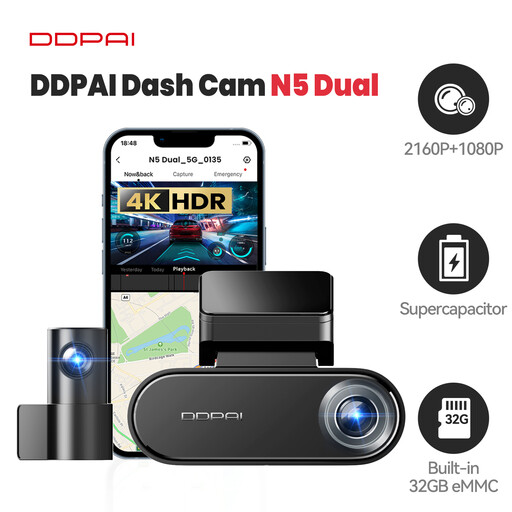
The right choice for this profile: Perfect for the driver who wants a complete and reliable solution without breaking the bank. It offers the essentials of a front and rear 4K dash cam setup, with indispensable modern features like 5 GHz Wi-Fi and built-in GPS.
It combines true 4K resolution at the front with 1080p at the rear. Most importantly, its dual storage (internal eMMC memory + SD card) safeguards your important recordings in case of card failure.
An unbeatable price-to-feature ratio for a dual-channel setup. Its D?save 2.0 technology, which ensures dual file backup, offers unparalleled peace of mind.
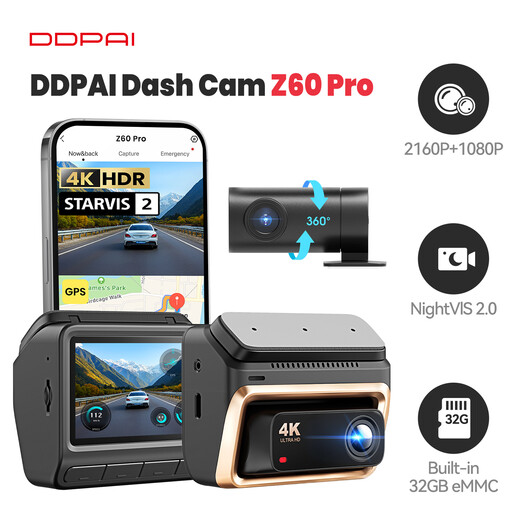
The right choice for this profile: For those who accept no compromises on image quality. Equipped with Sony STARVIS 2 sensors on both the front and rear, it's built for maximum clarity, day or night.
Its night vision isn't a gimmick. The NightVIS 2.0 technology, combined with AI-powered image processing, drastically improves clarity in low-light conditions. Goodbye to noisy, unusable night footage.
Its Sony STARVIS 2 sensors (including the excellent IMX678 at the front) deliver first-class image quality. The option to record at 60 fps ensures perfect fluidity to capture the fastest-moving scenes.
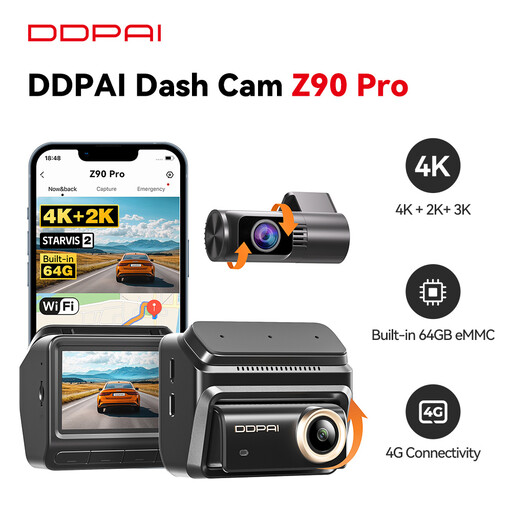
The right choice for this profile: Designed for comprehensive surveillance, this 4K car camera can be upgraded to a 3-channel system. Its advanced features, like optional 4G connectivity, make it the ideal tool for intensive and professional use.
Its parking mode integrates IPS power management which, according to the manufacturer, constantly monitors the vehicle's voltage to cut power before draining the battery. A crucial feature for 24/7 surveillance without unpleasant surprises.
Its modularity, with the option to upgrade to 3 channels for total coverage (front, rear, interior). The 64 GB of internal eMMC storage enhances the security of your recordings.
We have curated a full range of products that meet our strict selection criteria and comply with French regulations.
Yes, it's non-negotiable for reliable and safe operation. This specific hardwire kit continuously powers the dash cam from the vehicle's battery while protecting it from a complete drain, thanks to a smart cut-off that activates if the voltage drops too low.
Loop recording, especially in 4K, puts a heavy strain on memory cards. You must opt for a "High Endurance" microSD card, designed to withstand thousands of write cycles. Its lifespan typically ranges from 1 to 3 years depending on usage intensity. Remember to format it monthly and replace it at the first sign of recording errors.