
Livraison le jour même ou le lendemain

Qualité garantie

Débloquez vos offres de bienvenue: Livraison GRATUITE | Jusqu'à -80 % | 30 jours d'essai gratuits à JoyPlus
Téléchargez l'application
Hit-and-runs, parking lot scrapes, vandalism... Unexpected incidents, whether you're driving or parked, are every driver's nightmare. In these situations, where it's one person's word against another's, irrefutable video evidence is a game-changer. This is precisely the role of a front and rear 4K dash cam: a technological guardian angel that provides complete peace of mind.
But the market is a jungle of models and technical jargon: Sony STARVIS 2 sensors, HDR night vision, 24h parking mode, 4G... It's not easy to navigate. Our mission is to clear the path for you. This guide breaks down the features that truly matter and presents a selection of models that have caught our eye, helping you make the right choice.
Before diving into our selection, let's review the key points to check to ensure you make the right choice for your future 4K dash cam.
A 4K resolution (3840x2160 pixels) on the front camera has now become the standard. It allows you to capture crucial details, like license plates or road signs, with impeccable clarity, day or night.
For clear images even in low-light conditions, two technologies stand out:
For complete protection, even when your vehicle is parked, 24h parking mode is an essential feature. It allows the camera to remain in standby and automatically activate to record if it detects an impact or suspicious movement near the car.
A key point to note: To work, this mode requires a continuous power supply. It is therefore imperative to use a specific hardwire kit, usually sold separately. This kit connects to the fuse box and includes protection to prevent draining your car's battery.
A dash cam with GPS and Wi-Fi greatly simplifies its daily use:
Here are three dual-lens dash cam models that have caught our attention for their performance and their ability to meet the needs of the most demanding drivers.
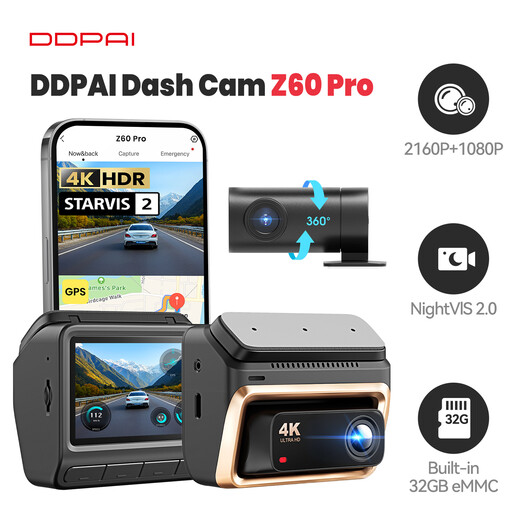
Why it stands out: The DDPAI Z60 Pro goes all-in on image quality with a duo of Sony sensors. The front model, a STARVIS 2 IMX678, and the rear IMX662 sensor ensure HDR capture on both video streams. The icing on the cake is its dual storage technology (eMMC memory + microSD card), which offers welcome redundancy to secure your recordings.
Key features:
Who is it for? The tech enthusiast who wants to make no compromises on image quality and seeks maximum reliability thanks to dual storage.
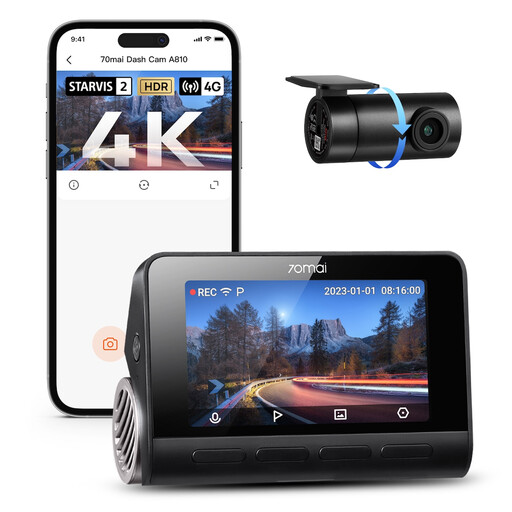
Why it stands out: The 70mai A810-2 is a true Swiss Army knife. It combines excellent 4K image quality, driven by the Sony STARVIS 2 IMX678 sensor, with highly advanced smart features. Its AI-powered parking mode is particularly clever at detecting suspicious activity around the vehicle.
Key features:
Who is it for? The driver who wants to keep an eye on their vehicle at all times and from anywhere, thanks to a smart parking mode and remote connectivity.
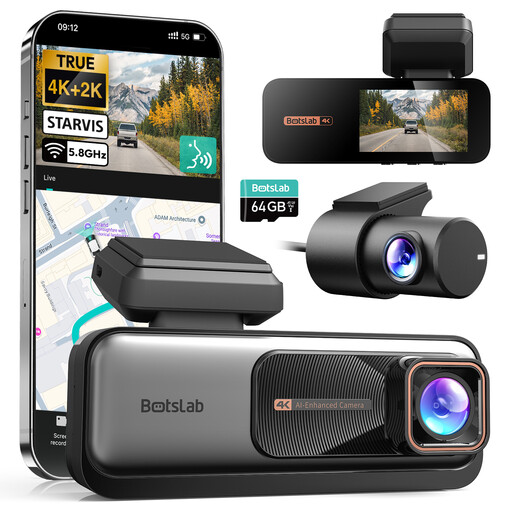
Why it stands out: Its main advantage is its extra-wide 170° front field of view, capable of covering up to six lanes of traffic. It also packs a dedicated AI processor (NPU) that beefs up its Advanced Driver-Assistance System (ADAS), making it more responsive in alerting to dangers or even signs of driver fatigue.
Key features:
Who is it for? Those who want a panoramic view of the road and relevant driver assists for enhanced active safety.
This selection highlights high-performance models focused on image quality and advanced features. If your budget or needs are different, feel free to explore our full catalogue.
? Discover our full range of DVR Cameras
While 1080p is often sufficient to document an incident, 4K offers a level of detail that can change everything. It significantly increases the chances of reading a license plate from a distance, at night, or on a moving vehicle. For truly usable video evidence, 4K is a decisive advantage.
Parking mode allows the dash cam to monitor your vehicle even when the engine is off. There are two main types:
Yes, using a front and rear dash cam is legal in most countries for private use. You have the right to film on public roads from your vehicle. However, sharing these images online or with third parties is strictly regulated by data protection laws (like GDPR) and privacy rights. In the event of an accident, recordings are admissible as a form of evidence by law enforcement and insurance companies. As legislation can change, it is always wise to stay informed about your local regulations.