
Livraison le jour même ou le lendemain

Qualité garantie

Débloquez vos offres de bienvenue: Livraison GRATUITE | Jusqu'à -80 % | 30 jours d'essai gratuits à JoyPlus
Téléchargez l'application
Getting a front-rear 4K dash cam is no longer just a luxury for tech enthusiasts. With increasingly dense traffic and more frequent road disputes, it has become an essential tool for peace of mind for many drivers. The problem? The market is saturated with confusing marketing promises.
As the head of product testing at Joybuy, my mission is to help you cut through the noise. Together, we'll break down the most common traps so you can make an informed choice without being fooled by misleading technical jargon.
Before you even start comparing models, it's crucial to know how to spot a bad deal.
To choose a truly high-performance and reliable 4K car camera, you need to look beyond the resolution printed on the box. Here are the three essential checkpoints.
The key to a perfectly sharp image is the combination of native 4K resolution (3840?x?2160 pixels) and a quality image sensor. A good sensor absorbs more light and captures more detail, which makes all the difference at night or in rainy weather. Models equipped with Sony STARVIS sensors (or equivalent) are a safe bet for getting usable footage in all conditions.
A collision can happen in an instant... and not always from the front. A front and rear dash cam offers much broader coverage, recording what happens in front of and behind your vehicle. Typically, the front camera records in 4K, while the rear module uses 1080p—a resolution that is more than sufficient to identify a vehicle in a rear-end collision.
Far from being gimmicks, these options transform a simple camera into a true digital co-pilot:
Instead of an endless list, we've selected models that meet specific needs, based on the performance and reliability criteria we've just discussed.
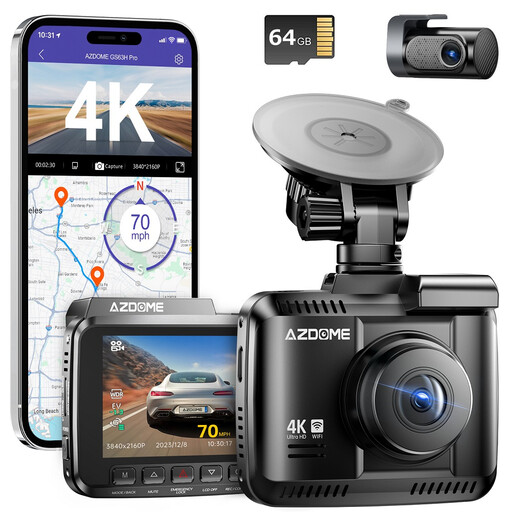
Why this model: Ideal for getting a 4K front and 1080p rear setup without breaking the bank. It includes essential features (GPS, Wi-Fi), and the included 64 GB SD card is a real bonus for out-of-the-box use.
This model offers true 4K resolution on the front camera, without interpolation, while remaining affordable. The secret? It focuses on the essentials and skips the often-superfluous advanced features.
Excellent value for a dual 4K camera kit. A 64 GB memory card is included.
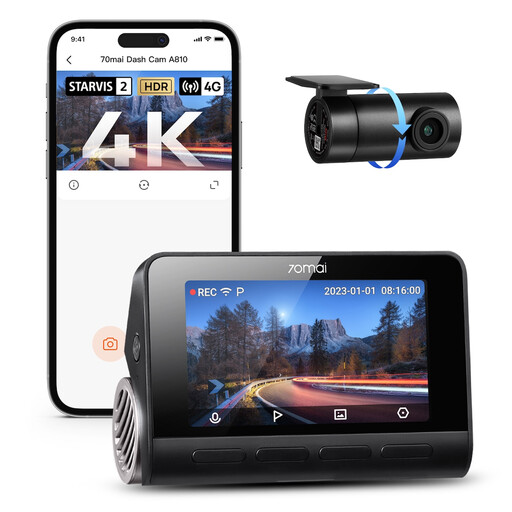
Why this model: For those who make no compromises on image quality. Equipped with two Sony STARVIS 2 sensors (IMX678 front, IMX662 rear), it's built to excel in low-light conditions.
It directly tackles the "fake night vision" trap. Its HDR technology and STARVIS 2 sensors ensure true clarity in the dark, instead of just brightening a poor-quality image.
Stunning low-light image quality thanks to the Sony STARVIS 2 sensors. Optional 4G module for remote monitoring.
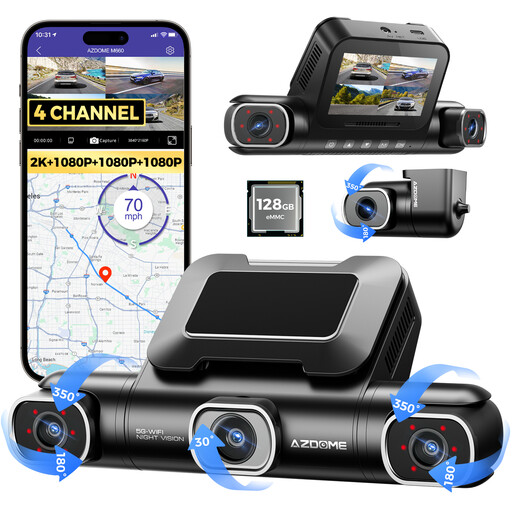
Why this model: For road professionals (rideshare drivers, delivery drivers) or families seeking absolute peace of mind. This 4-channel system records the front, rear, and cabin (left/right), leaving no blind spots.
It addresses the blind spot weakness of classic front/rear systems. In the event of a side-swipe hit-and-run or vandalism, its 360° coverage provides complete video evidence where other cameras are blind.
360° coverage with 4 cameras. Built-in 128 GB eMMC storage, which is more reliable than a standard SD card.
We have curated a complete selection of dash cams that meet our selection criteria and legal standards.
Loop recording, especially in 4K, puts a heavy strain on memory cards. A standard card can fail in just a few months. It is imperative to use "High Endurance" microSD cards, which are specifically designed to withstand intensive write cycles. Their lifespan varies from 1 to 3 years depending on usage. Pro tip: format the card monthly to maintain its performance.
The hardwire kit connects directly to the car's fuse box. If you have a good understanding of automotive electrical systems, the installation is manageable. However, to avoid any electrical risks and prevent voiding your vehicle's warranty, it is often wiser to have the installation done by a professional.
Yes, in many jurisdictions, dash cam footage is considered admissible evidence. In the event of a dispute, a judge will ultimately determine its value. However, be mindful of privacy laws: it is generally illegal to publish footage on the internet or social media without systematically blurring the faces and license plates of third parties. In practice, the primary use of a dash cam is to help fill out an accident report and to support a claim with your insurance provider.