Which criteria should you check first?
Start with the loads you wash most often, make sure the appliance will fit and can be opened, then compare the usage and durability information for models that genuinely suit the space.
| Criteria |
What to check |
Who it matters to |
| Capacity and washing frequency |
Compare the capacity in kg of dry laundry with your usual loads, then check the manual for the maximum load allowed on the programmes you use. |
When my laundry baskets fill up quickly, I want to wash my usual loads without having to run lots of cycles. Around 29% of consumers prioritise getting the capacity right. |
| Size and access to the drum |
Measure the space and access route. Allow room to open a front-loader’s door or keep the space above a top-loader clear. |
In a narrow room, I need to be able to install the appliance and reach the laundry without anything getting in the way of the opening. This is the main consideration for around 24% of consumers. |
| Energy and water use, spin performance and noise |
For similar capacities, compare the kWh per 100 cycles, litres per cycle, spin-drying class and noise level during spinning shown on the energy label. |
If I dry laundry indoors or the washing machine is near a living area, I also look at spin performance and noise, not just energy and water use. Around 24% of consumers prioritise these factors in everyday use. |
| Durability and repairability |
Check the durability index and its breakdown, particularly the criteria relating to spare parts, maintenance and repairability. |
Before choosing an appliance I’ll use regularly, I want to understand what its durability score actually means. Maintenance and repairability are a priority for around 23% of consumers. |
The capacity shown for a washing machine refers to a load of dry laundry under the conditions of the reference programme. UFC-Que Choisir notes that the limits may be lower for other fabrics. The energy figures on the label refer to the Eco 40-60 programme, so don’t assume they apply to all your cycles.
For new purchases in France, the durability index has applied to front-loading and top-loading washing machines since 8 April 2025, according to economie.gouv.fr. The score combines repairability and reliability criteria. The DGCCRF recommends checking the breakdown to understand what it covers.
Washing machines for these needs
These Joybuy models let you compare 7 kg and 8 kg front-loaders with a 7 kg top-loader. First choose the loading style and capacity to suit your laundry and your space, then check the details for the model you decide on.
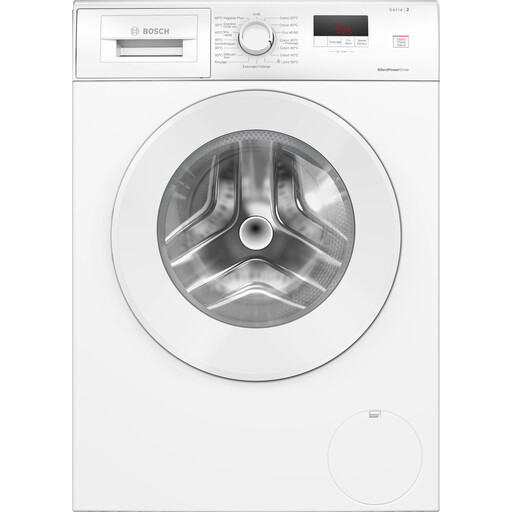 Image unavailable
Bosch WGE02407FR, 7 kg front-loading washing machine
Worth considering if your usual loads suit a 7 kg capacity and you have enough space to open a front-loading door.
The model name indicates a spin speed of 1,400 rpm and an A energy rating. Check the load limits for the programmes you use and the durability index breakdown before choosing.
View on Joybuy
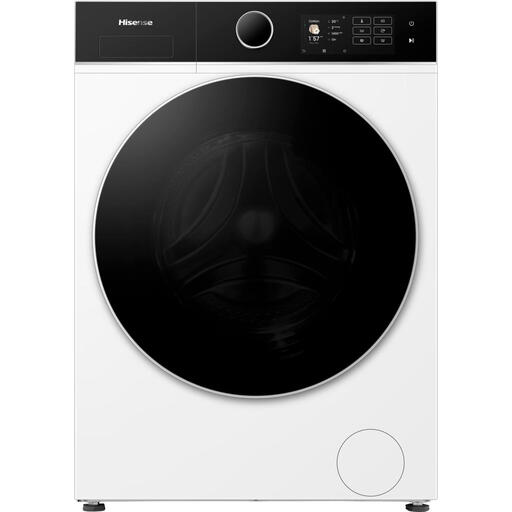 Image unavailable
Hisense WF5I8043BWF, 8 kg front-loading washing machine
The 8 kg capacity is worth considering if it suits your regular loads and a front-loader fits your space.
The model name indicates a spin speed of 1,400 rpm and an inverter motor. Check the full dimensions, the space needed to open the door and the durability index breakdown.
View on Joybuy
 Image unavailable
Haier T Series 7 THASN276TM6-S, 7 kg top-loading washing machine
A top-loader is worth considering if access to a front-loading door is a problem, as long as there’s enough room to open the lid.
The model name indicates a capacity of 7 kg, a spin speed of 1,200 rpm, an A energy rating and Wi-Fi connectivity. Measure the space, including the clearance above the appliance, and check the durability index breakdown.
View on Joybuy
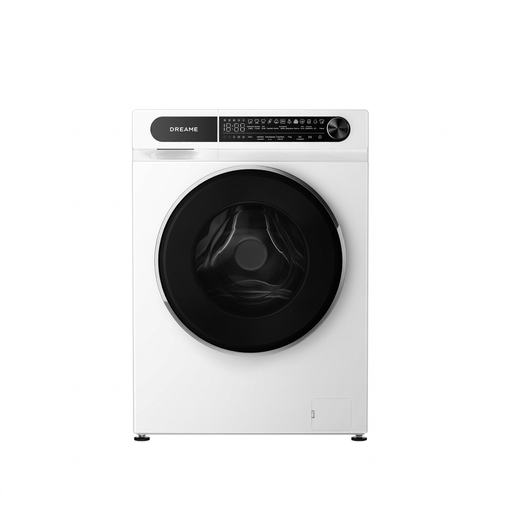 Image unavailable
Dreame DRWASHS8KG Washing Machine S, 8 kg
This 8 kg front-loader is worth considering if the capacity suits your regular loads and you have enough space in front of the door.
Before choosing it over another front-loader, compare the energy label and spin-drying class, then check the French durability index and its breakdown.
View on Joybuy
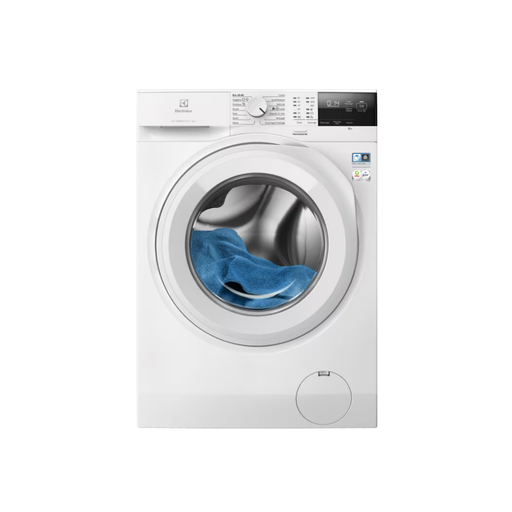 Image unavailable
Electrolux EW6FI4805AW, 8 kg front-loading washing machine
Worth considering for usual loads suited to an 8 kg capacity, if there’s enough room to use a front-loading door.
The model name indicates a spin speed of 1,400 rpm and Steam Hygiene and SensiCare features. Check the manual for load limits by programme, along with the durability index breakdown.
View on Joybuy
Frequently asked questions
Does an 8 kg capacity apply to every programme?
No. The stated capacity refers to a load of dry laundry under the conditions of the reference programme. Synthetic, wool and delicate programmes may allow a smaller load. Check the manual for your model if these fabrics make up a significant part of your laundry.
Is a top-loading washing machine always better for a small room?
No. Its narrower width can help, but you’ll need room to open the lid. A shallower front-loader may also suit your space, as long as you allow enough clearance in front of the door and check that the capacity is right for you. UFC-Que Choisir recommends considering these dimensions together.
Does the durability index apply to new washing machines in France?
Yes. According to economie.gouv.fr, it has applied to front-loading and top-loading washing machines since 8 April 2025. The score out of 10 combines repairability and reliability criteria. For online purchases, also check the breakdown of the parameters, available alongside the index.
What should I check about spare parts and warranties?
Check the criteria relating to spare parts in the index breakdown, then look at the repair terms and any commercial warranty offered. The European Commission requires certain spare parts to be available for 10 years for washing machines covered by its ecodesign rules, but this doesn’t necessarily apply to every part or every fault. In France, according to economie.gouv.fr, the legal guarantee of conformity covers new goods for two years; it is separate from a commercial warranty.


