Households that shop once a week
You need room to store fresh food for several days. The capacity you need depends on the number of people in your household and how much space your usual shop takes up.


For a weekly shop that includes fresh and frozen food, a fridge freezer is a good starting point, provided both compartments offer enough capacity for your household. A fridge with a small freezer compartment is better suited to limited storage, while a large multi-door model is only worth considering if the extra capacity justifies the space it takes up and you can get it into position. Compare the capacity of each compartment in litres, then check the dimensions, energy label and noise level of the model you choose.
You need room to store fresh food for several days. The capacity you need depends on the number of people in your household and how much space your usual shop takes up.
Freezer capacity matters just as much as fridge capacity. Electrolux notes that the freezer compartments built into its fridges are generally smaller than those in fridge freezers.
The stated capacity isn’t the only thing to consider. You also need to be able to get the appliance into your home, open its doors and meet the ventilation requirements set out in the manual.
When choosing a fridge for your weekly shop, work out separately how much room you need for fresh and frozen food before measuring the space available. A compact model limits how much you can store, while a fridge freezer or larger appliance will need more space, depending on the model.
| What to consider | What to check | Who should consider it? |
|---|---|---|
| Fresh food capacity | Compare the usable capacity of the fridge in litres. Que Choisir suggests 100 to 150 L as a starting point for one person, then around 50 L for each additional person. Adjust this to suit your shopping habits. | If I need fresh food to last until my next shop, enough storage becomes my priority; around 37% of shoppers put this need first. |
| Space for frozen food | Check the freezer compartment’s capacity in litres separately, along with its star rating. A small built-in compartment and the freezer section of a fridge freezer may not meet the same needs. | If I stock up on frozen food to last several days, a small freezer limits what I can buy; around 27% of shoppers put this need first. |
| Space needed | Measure the space where the appliance will go and the delivery route. Also check that the doors can open fully and allow for the ventilation clearances specified in the model’s manual. | In a narrow kitchen or where access is difficult, I need to make sure I can install and use the appliance before looking for extra capacity; around 18% of shoppers prioritise this constraint. |
| Energy use, noise and maintenance | Check the energy rating, kWh/year and noise level, preferably against models of a similar size and capacity. Check the defrosting system if you want to avoid defrosting it by hand. | For an appliance that runs every day, I prioritise energy use, noise or maintenance over maximum capacity; around 18% of shoppers put these criteria first. |
Total capacity combines the fridge and freezer sections. It may look sufficient even when one compartment is too small for your shop.
Compare the usable capacity of each compartment and check how the storage space is divided.
A multi-door model may have enough room for your household’s supplies but still not fit through a doorway, along a corridor or up a staircase. It also needs room for the doors to open and for ventilation.
Measure the route to your kitchen, then check the appliance dimensions, door clearance and installation guidance in the manual.
Electrolux says that an integrated freezer compartment is generally smaller than the freezer section in a fridge freezer. Its star rating alone won’t tell you how much frozen food you can store.
Work out how much freezer capacity you need for your shop, then check the litres and compartment specifications on the product page.
Two appliances with very different capacities won’t meet the same storage needs. The energy rating alone doesn’t replace checking their annual energy consumption.
Compare kWh/year, noise levels and usable capacity across fridges of a similar size and capacity.
The range includes fridge freezers and multi-door models to consider if you want separate fresh and frozen food compartments.
Its ranges let you compare a fridge freezer with a fridge that has a more compact freezer compartment.
The multi-door range includes high-capacity appliances to compare when your shop calls for more room for fresh and frozen food.
The range includes fridge freezers and wider formats, which you can compare to find the capacity you need.
This selection includes fridge freezers that keep fresh and frozen food separate, as well as larger appliances to consider if your household needs more capacity. Compare their stated capacity with the space you actually have at home.
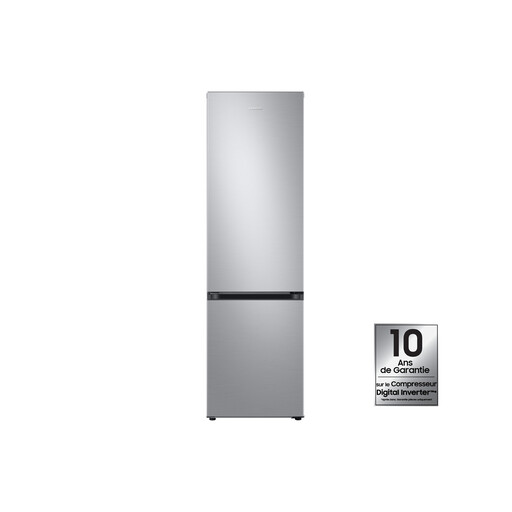 Image unavailable
Worth considering if you want to store fresh and frozen food separately after your shop. Stated total capacity: 390 L; energy class C. Check the clearances needed for installation.
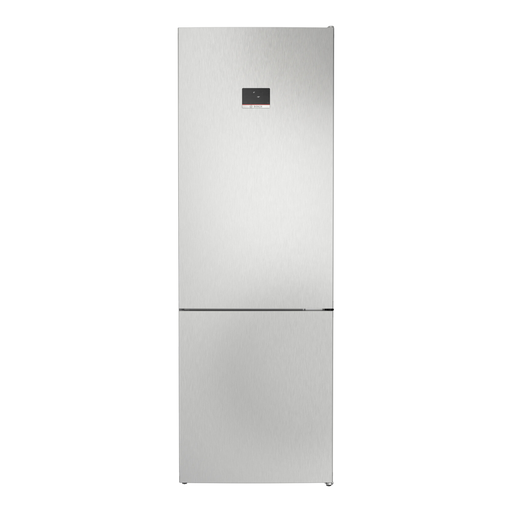 Image unavailable
A fridge freezer to consider for shopping that needs to last several days, with a separate freezer section. Stated total capacity: 440 L; energy class D. Measure access to your home and the space available.
 Image unavailable
Worth considering if your shop calls for a higher-capacity appliance and your kitchen can accommodate four doors. Stated total capacity: 467 L; energy class E; Total No Frost function indicated in the model name. Check the space needed for the doors to open and for ventilation.
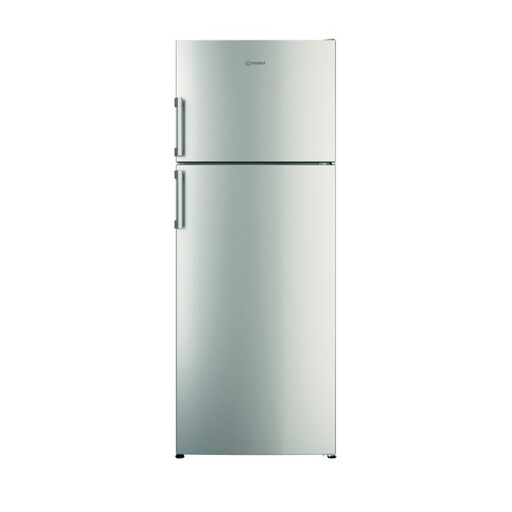 Image unavailable
A fridge freezer to compare if your shop includes both fresh and frozen food. Stated total capacity: 437 L; energy class E. Bear in mind that the freezer needs defrosting by hand, and check that it can be brought through to your kitchen.
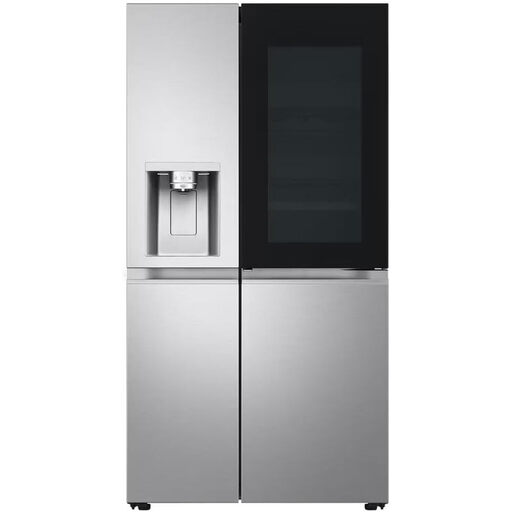 Image unavailable
Worth considering if your storage needs justify a large appliance and you have space to install it. Stated total capacity: 628 L; energy class D. Check access and clearances, and make sure a water connection is available if you want to use the dispenser.
Start with the usable capacity you need for fresh food, then adjust it to suit your household size and shopping habits. Que Choisir suggests 100 to 150 L for one person and around 50 L for each additional person. If you buy a lot of fresh food for the week, compare the internal layout of the models you’re considering too.
Consider a fridge freezer if frozen food makes up a large part of your shop. Electrolux says that an integrated freezer compartment is generally smaller. In every case, check the capacity in litres and the star rating of the specific model.
Check the capacity of each compartment, the appliance dimensions and access route, ventilation requirements, energy label and noise level. ADEME states that the energy label for large household appliances must be displayed online as well as in store. Also compare annual energy consumption between models that offer similar storage capacity.
Find out about having it taken away or arranging a suitable collection for electrical and electronic equipment. The Ministry for the Ecological Transition lists collection points and recycling centres, among other options. Before your new appliance is delivered, confirm with the retailer whether they offer take-back and disconnection services.