Start by choosing enough fridge space and storage that fits your containers without blocking the flow of air. If you also freeze portions, compare freezer capacity separately. In all cases, check the coldest area: Anses recommends keeping it between 0 and +4 °C. Finally, compare the dimensions and kWh/year, as ADEME points out that fridges run continuously.
Who are these criteria useful for?
Households cooking for several days
When meal containers, raw ingredients and leftovers all take up fridge space at the same time, look at the fridge capacity and shelf layout. Anses recommends not overfilling the appliance, so that cold air can circulate.
People who freeze portions
If some of your meals go in the freezer, check its capacity separately from the fridge capacity and see whether the drawers make it easy to find portions. No Frost technology helps manage frost; it doesn’t remove the need to check storage conditions.
Shoppers who care about temperature control and energy use
Clear controls make an appliance easier to use, but a thermometer lets you check the temperature inside, as Anses advises. To compare appliances of a similar size and capacity, also check their energy labels and stated kWh/year.
What should you check before choosing?
Start by working out how much of your food needs refrigerating and how much needs freezing. Then check the storage, temperature controls and available space in your kitchen.
| Criteria |
What to check |
To suit my needs |
| Temperature |
Find the coldest area and check its temperature with a thermometer. Anses recommends keeping it between 0 and +4 °C; a display or alarm is no substitute for checking it. |
I store raw food and homemade meals, and want to be able to check conditions inside the appliance, especially after loading it. |
| Storage |
Compare the fridge capacity, then check the height and layout of the shelves and drawers. Leave room for cold air to circulate, as Anses advises. |
My meal containers need to fit alongside the other food without me having to fill every available space. |
| Freezing |
Check the freezer capacity separately from the total capacity. Make sure the drawers are easy to access, and remember that No Frost is designed to limit frost, not control the temperature. |
If I freeze portions regularly, I want to be able to store and find them without compromising the space for fresh meals. |
| Installation and energy |
Measure the space and the delivery route. For appliances of a similar size and capacity, compare the energy rating and stated kWh/year; ADEME points out that these appliances run continuously. |
I want a capacity that suits my kitchen without choosing an appliance that’s bigger than I need. |
What mistakes should you avoid?
-
Judging by total capacity alone
A large total capacity doesn’t tell you how much space is for food to be kept chilled rather than portions to be frozen. The dimensions could also make it impossible to install the appliance in your chosen spot.
Compare the two capacities separately, and measure the appliance, its intended space, the clearance needed and the delivery route.
-
Mistaking No Frost for food storage temperature control
A feature that manages frost or air circulation doesn’t prove that the coldest area stays between 0 and +4 °C when the fridge is full.
Check the temperature inside the appliance and avoid overfilling the shelves. Anses recommends storing perishable food in the coldest area.
-
Choosing features without checking energy use
According to ADEME, the size of an appliance and some of its features can increase energy use, even though it runs continuously.
Work out how much capacity you need, then compare the kWh/year for appliances with a similar capacity. If you’re considering a connected feature, check its requirements before making it a deciding factor.
What can brands tell you?
These examples highlight features to compare on a model-by-model basis; they don’t represent every product in each brand’s range.
Bosch
Bosch lists the KGN492IAF fridge freezer as having 311 L of fridge capacity and 129 L of freezer capacity. Compare these figures separately if you store both fresh meals and frozen portions.
- The stated split helps you assess how much space is available for each use.
- Its stated dimensions of 203 × 70 × 66,7 cm mean you’ll need to check the space available and access.
Samsung
Samsung describes the RB34C605CS9/EF as a 344 L fridge freezer that’s 60 cm wide. It’s a useful comparison if width is an important factor.
- The stated width and capacity help you check whether this format suits your available space and storage needs.
- The connected monitoring listed for this model depends on a Wi-Fi connection, an account and an app, among other things. It’s no substitute for checking the energy label or the temperature inside the appliance.
Which fridge freezers should you look at on Joybuy?
These options are fridge freezers for storing fresh meals and portions to freeze. Compare their size and stated capacities with your available space and the quantities you usually store.
 Image unavailable
Haier HTW5618ENMG, 3-door fridge freezer, 360 L
Worth considering if you want to store fresh meals and frozen portions in a three-door appliance. The model name indicates Total No Frost, an E energy rating, Wi-Fi and My Zone. Check the capacity of each compartment, the dimensions and the temperature in the coldest area.
View on Joybuy
 Image unavailable
Candy CFQQ5T817EPS, 4-door fridge freezer, 467 L
Consider whether its four-door design suits your available space and the way you store portions. The model name indicates Total No Frost and an E energy rating. Compare the capacity of each compartment separately, and check the temperature once you’ve started using the appliance.
View on Joybuy
 Image unavailable
CHiQ JR263LGE, 262 L Low Frost fridge freezer
Its stated width of 54 cm could be useful in a narrow kitchen. Also check its height of 176 cm and the space needed to open the door. The model is listed with a 70/30 split. Low Frost doesn’t mean you’ll never need to defrost it: check the maintenance requirements and monitor the fridge temperature.
View on Joybuy
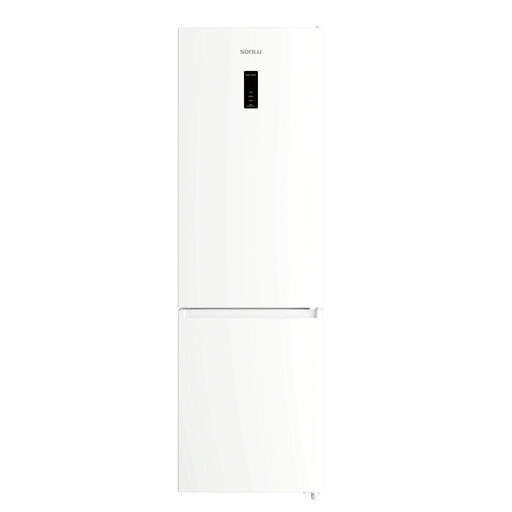 Image unavailable
Sonlu CD-400RW, 355 L fridge freezer
The stated capacities of 252 L for the fridge and 103 L for the freezer make it easier to compare space for fresh meals and frozen portions. The listed width is 60 cm; the model name also mentions a reversible door, electronic controls and an E energy rating. Check the full dimensions, kWh/year and temperature inside the appliance.
View on Joybuy
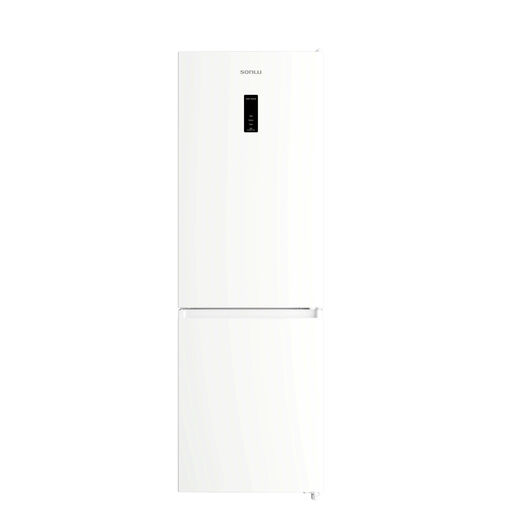 Image unavailable
Sonlu CD-350RW, 310 L fridge freezer
This model lists 211 L for chilled meals and 99 L for frozen portions. Check whether this split works for the containers you use. Its name indicates a width of 60 cm, a reversible door, electronic controls and an E energy rating. Before choosing, compare the full dimensions and kWh/year, and plan to check the actual temperature.
View on Joybuy
Frequently asked questions
What temperature should I aim for when storing prepared meals and raw food?
Anses recommends keeping the coldest area of the fridge between 0 and +4 °C. Store raw meat and fish there, along with certain homemade dishes containing ingredients of animal origin. Check the temperature regularly, especially after loading the appliance.
Is the temperature display on the door enough?
No. It makes it easier to read the setting, but it doesn’t replace checking the temperature inside the appliance. Anses advises checking it regularly, for example with a thermometer. A model that displays minimum and maximum readings can help you track fluctuations.
How can I compare the energy use of two fridges?
Compare appliances of a similar size and capacity, then check their energy rating and annual kWh consumption on the label. ADEME points out that fridges run continuously, so choose a capacity that suits what you actually store, too.
Does No Frost mean I don’t need to monitor stored meals?
No. No Frost helps limit frost, but it doesn’t replace checking the coldest area or arranging food so air can circulate. Anses recommends keeping this area between 0 and +4 °C.


