To choose a fridge with the right capacity, first work out how much space you have and how much fresh and frozen food you need to store. Then compare annual energy use in kWh between appliances of a similar size and capacity. A good energy rating is no substitute for checking the capacity, ventilation requirements and door clearance.
Who is this guide for?
Households replacing their fridge
If you want to keep the energy use of an appliance that runs constantly in check, look at its stated kWh/year and the fridge and freezer capacities. ADEME points out that size and unnecessary extra features also affect energy use.
Kitchens with limited space
If your fridge needs to fit in an alcove or close to a wall, measure the available height, width and depth. Also check the route in for delivery, how the door opens and the ventilation requirements in the manual for your chosen model.
Households unsure how much freezer space they need
If you mainly store fresh food and just a few frozen items, compare the capacity in litres for each separately. A small freezer compartment and the freezer section at the bottom of a fridge freezer do not offer the same amount of storage.
Which features should you compare?
First, choose a format that suits your kitchen and storage habits. Then compare the energy figures for appliances with a similar capacity.
| Feature | What to check | What suits my needs |
|---|
| Energy use |
Compare the kWh/year and energy rating on the label for the exact model. The European Commission states that the label for the fridges covered shows an A to G scale, as well as energy use and capacity. |
I want to take account of the electricity used all year round, without choosing a rating letter in isolation from the size of the appliance. |
| Storage |
Check the fridge and freezer capacities in litres separately. Look at the shelves and drawers in light of the containers you use. |
A small compartment may be enough for a few frozen items. If I regularly store more, I need to check the freezer capacity of a fridge freezer. |
| Installation |
Measure the appliance, the space and the access route. For an integrated model, also check the housing dimensions, door fixing and ventilation requirements in the manual. |
I want to be able to install the appliance and open the door fully, whether my kitchen has an alcove or a space for a freestanding model. |
| Noise |
Compare the noise level in dB shown on the label or product details for the models you are considering. Don’t assume it applies to every appliance from the same brand. |
In an open-plan kitchen and living area, the stated noise level can help you choose between two fridges that already meet your capacity and size requirements. |
What mistakes should you avoid?
-
Choosing by the energy rating alone
The rating letter on its own won’t tell you whether the appliance is the right size for your needs. ADEME notes that a larger or over-equipped fridge may use more energy.
Compare kWh/year between models of a similar size and capacity, then rule out any capacity you won’t use.
-
Choosing an integrated fridge based on its external dimensions
An appliance may not fit the existing housing or door fixing, even if its external dimensions seem suitable.
Before ordering, check the housing measurements, fixing system and ventilation requirements against the manual for the exact model.
-
Confusing a small freezer compartment with a large freezer
Manufacturer specifications list a freezer capacity of 19 L for the Beko BSSA210K4SN and 103 L for the Bosch KGN39AIAU fridge freezer. So simply having a freezer compartment doesn’t tell you how much space is available.
Think about how much frozen food you usually store, then choose the capacity you need for fresh and frozen food separately.
A guide to brands and their models
These examples showcase different formats. The specifications apply to the models listed, not every appliance from each brand.
Bosch
The KGN39AIAU is a freestanding fridge freezer with a bottom freezer.
- Bosch lists a 260 L fridge, a 103 L freezer, an A energy rating and a noise level of 29 dB for this model.
- Its stated dimensions of 2030 × 600 × 665 mm mean you’ll need to check the available space and access route.
Electrolux
The KRD6DE18S4 is an integrated, single-door fridge designed to fit a suitable housing.
- Its product details list a capacity of 310 L, energy use of 114 kWh/year, a noise level of 32 dB and a housing height of 1780 mm.
- This model has no freezer compartment. Also check the other dimensions and door fixing requirements for installation.
Beko
The BSSA210K4SN is an integrated, single-door fridge with a small freezer compartment.
- Beko lists a fridge capacity of 156 L and a freezer capacity of 19 L.
- If you store a lot of frozen food, make sure 19 L will be enough before choosing this format.
Liebherr
The KPsle290-26 is an example of a freestanding, single-door fridge.
- Liebherr lists a total capacity of 250 L, energy use of 158 kWh/year and a noise level of 38 dB.
- Check how the capacity is divided and the model’s dimensions if you need freezer space or have a specific space in mind.
Fridge freezers on Joybuy
These models combine fridge and freezer storage in a freestanding appliance. Compare their capacity and overall dimensions with the space in your kitchen. This selection doesn’t include the single-door or integrated formats mentioned above.
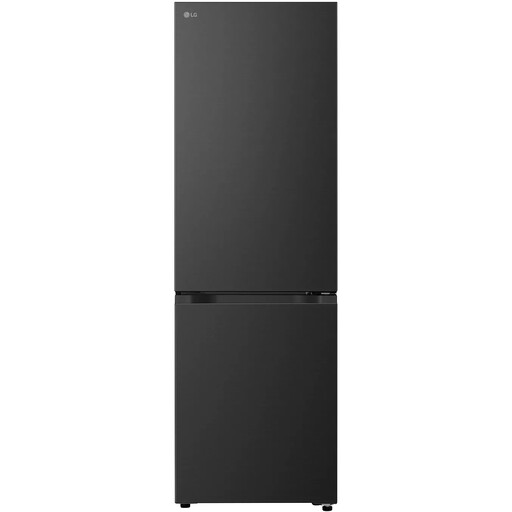 Image unavailable
LG GBBS312AEV, 333 L No Frost fridge freezer, A rated
This 333 L fridge freezer is worth considering if you want to store fresh and frozen food in one appliance. Check that the freezer space, dimensions and ventilation requirements suit your needs and kitchen.
 Image unavailable
LG GBBSJ1CCSW, 333 L fridge freezer, C rated
This 333 L model combines fridge and freezer storage. If you’re comparing it with another fridge freezer of a similar capacity, check the kWh/year on the energy label and the clearance required for installation.
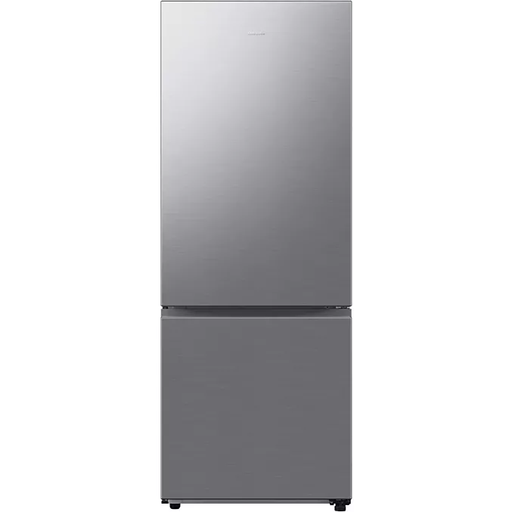 Image unavailable
Samsung RB53DG703DS9, 538 L fridge freezer, grey
Consider whether the stated 538 L capacity suits your storage habits and the space you have available. Before comparing energy use, check the energy rating on the label for the exact model, as well as its dimensions and installation clearances.
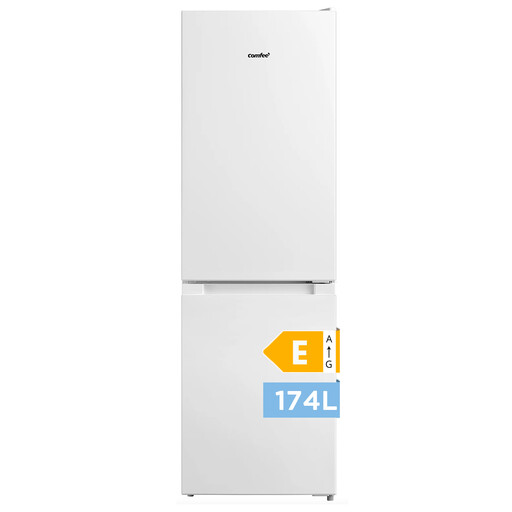 Image unavailable
Comfee' RCB169WH2(E), 174 L Low Frost fridge freezer, E rated
With a capacity of 174 L and a stated height of 150 cm, this fridge freezer is worth considering for a measured space. The product title lists a 4-star freezer, a reversible door and a noise level of 39 dB. Check the label to compare its kWh/year and the manual for the required clearances.
 Image unavailable
CHiQ JR227LSE, 227 L Low Frost fridge freezer, E rated
The product title lists a 153 L fridge and a 74 L freezer, a stated width of 54 cm and a reversible door. Before deciding whether it suits your space, also check the height, depth, clearances and kWh/year for the exact model.
Frequently asked questions
Is the energy label enough to compare two fridges?
No. The European Commission states that the label for the fridges covered includes the A to G rating, energy use, capacity and noise level. Compare the kWh/year between appliances of a similar size and capacity, then check their dimensions and layout.
How much ventilation space should you leave around a fridge?
Follow the requirements in the manual for your chosen model, particularly if it’s an integrated appliance. In its general installation guidance, Bosch recommends at least 200 cm² of clear space behind and below the fridge. This doesn’t replace the installation diagram for your appliance.
Does a 4-star compartment offer as much space as a fridge freezer?
Not necessarily: the star rating doesn’t tell you how much space is available. Manufacturer specifications list a freezer capacity of 19 L for the Beko BSSA210K4SN and 103 L for the Bosch KGN39AIAU. Choose according to how much frozen food you usually store.


