To choose a fridge that meets your needs without using more energy than necessary, first work out how much space you need for fresh and frozen food, then compare the kWh/year figures for suitable models. The European Commission lists these details separately on the energy label, while ADEME warns that a fridge that is too large or over-equipped can push up your bills. The energy class alone doesn’t tell you how much electricity it will use.
Who is this choice for?
Replacing a fridge to keep bills down
You’re replacing an appliance that runs continuously and want to compare its annual energy consumption without defaulting to a large capacity. ADEME points out that a fridge that is too large or over-equipped can increase your electricity bill.
Mostly fresh food shopping
You want enough room for fresh food, but little or no freezer capacity, so you don’t end up with space you’ll never use. The European Commission lists fridge and freezer compartment volumes separately on the energy label.
Food to freeze
You need to choose between a small built-in freezer compartment and the drawers in a fridge-freezer, depending on how much frozen food you keep. The European Commission lists the volume of frozen-food compartments separately.
Which criteria should you compare?
First work out what kind of storage you really need; then compare the kWh/year figures for appliances that meet those needs. ADEME advises against choosing a fridge that’s larger than necessary, while the European Commission lists annual energy consumption, energy class and compartment volumes separately.
| Criteria |
What to check when buying |
Who is it most important to? |
| Annual electricity consumption |
Compare the kWh/year figures and energy classes A to G on the label for the exact model, making sure the appliances meet the same storage needs. |
If I’m replacing an appliance that runs continuously, I want to compare the annual energy consumption of suitable models before relying on their energy class. Around 36% of consumers prioritise kWh/year. |
| Usable fridge capacity |
Check the fridge compartment capacity in litres, the external dimensions and the space needed to open the door. |
If I mainly store fresh food, I’m looking for a capacity that suits my habits, without paying for space I don’t need. Around 29% of consumers prioritise space for fresh food. |
| Freezer capacity |
Check the capacity in litres of each freezer compartment separately, and compare models with similar capacity. |
If I regularly keep frozen food, I want to know whether a small compartment will be enough or whether I need separate drawers. Around 21% of consumers prioritise freezer capacity that suits their needs. |
| Features and maintenance |
Choose features that suit the way you use your fridge and check the kWh/year figure for the complete model; a feature alone doesn’t prove that it will save electricity. |
If I want to make maintenance easier or use a particular feature, I check that it meets a genuine need rather than choosing an appliance with unnecessary extras. Around 14% of consumers prioritise ease of use and maintenance. |
Mistakes to avoid
-
Choosing based only on energy class or total capacity
The energy class doesn’t replace the annual kWh figure, and total capacity doesn’t tell you how much space is for fresh or frozen food. ADEME also warns that excessive capacity can increase your bill.
Work out how much fridge and freezer space you need, then compare the kWh/year figures, compartment volumes and dimensions of suitable models.
-
Assuming a fridge-freezer always uses more energy than a fridge
Average energy consumption figures for each category don’t compare models with identical capacities and features, so they can’t tell you how much energy any individual model will use.
Use these averages as a guide, then compare the labels of models that meet the same storage needs.
-
Adding features without checking whether you’ll use them
ADEME cites having ice available at all times as an example of an unnecessary extra that can increase your bill. A defrosting feature addresses maintenance, but doesn’t in itself prove that the appliance will save energy.
Make a list of the features you’ll actually use, then check the annual energy consumption of the complete model.
-
Confusing old-appliance take-back with additional services
Take-back of an equivalent appliance and services such as installation or disconnection should be considered separately. The DGCCRF states that like-for-like take-back is free; check the practical arrangements with the retailer.
Before ordering, ask about the take-back arrangements and get a breakdown of any additional services on offer.
Brands to know when comparing fridges
Bosch
The range includes single-door fridges without a freezer compartment, such as the KSN36VWDG, which has a 402 l fridge capacity and a D energy class, according to Bosch Électroménager France.
- The KSN36VWDG may suit households that prioritise fresh-food storage and don’t need to freeze food in the appliance.
- This model measures 1862 × 595 × 663 mm. Check that you have room for it and that its capacity suits your needs; the benefits of VitaFresh are claims made by the manufacturer.
Liebherr
The KPsle290-26 has a total capacity of 250 l and a four-star freezer compartment, according to Liebherr France.
- For this model, Liebherr states an energy consumption of 158 kWh/year and an E energy class.
- A small built-in freezer compartment may not be a suitable substitute for the drawers in a fridge-freezer if you store a lot of frozen food.
Beko
Beko offers under-counter fridges with a freezer compartment at the top, including the TSE1284N.
- The French product details for the TSE1284N list a width of 54 cm, a reversible door and static cooling.
- Check the capacity in litres and the kWh/year figure for the model you choose. The reduced frost build-up associated with MinFrost is a claim made by Beko.
Haier
The range includes fridge-freezers with separate capacities for fresh and frozen food. For the HDPR1618ANPD, Haier lists 235 l of fridge capacity and 120 l of freezer capacity.
- For this model, Haier lists an A energy class and a No Frost feature.
- The figures and food-preservation benefits presented by Haier are manufacturer claims; check the label for the model you’re considering.
Samsung
The RB33B612ESA/EF fridge-freezer has a 230 l fridge compartment and a 114 l freezer compartment, according to Samsung France.
- Samsung lists an E energy class and energy consumption of 254 kWh/year for this model.
- The air circulation and defrosting features described for this model aren’t necessarily found across the whole range.
Fridges available on Joybuy
This selection includes household fridges with fridge and freezer compartments, as well as a small compact model. Compare the capacities and stated annual energy consumption with your actual needs.
 Image unavailable
Haier HTW5618ENMG, 3-door fridge-freezer, 360 L
Worth considering if you want to compare a fridge-freezer with separate capacities for fresh and frozen food.
E energy class; stated energy consumption: 271 kWh/year. Fridge: 235 L; freezer: 125 L. Total No Frost, Wi-Fi and My Zone compartment.
View on Joybuy
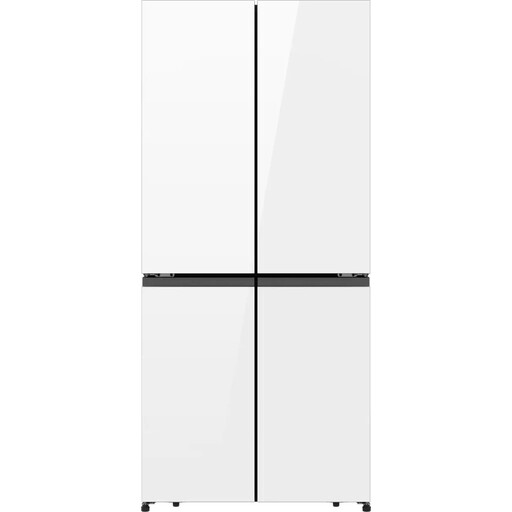 Image unavailable
Hisense RQ5P470SETE, 4-door fridge-freezer, 483 L
Worth considering if you need separate compartments and a zone with adjustable temperature.
E energy class; stated energy consumption: 293 kWh/year. Fridge: 304 L; freezer and variable-temperature zone: 179 L combined. The My Fresh Choice zone can be set from +5 °C to -18 °C. Total No Frost and Wi-Fi.
View on Joybuy
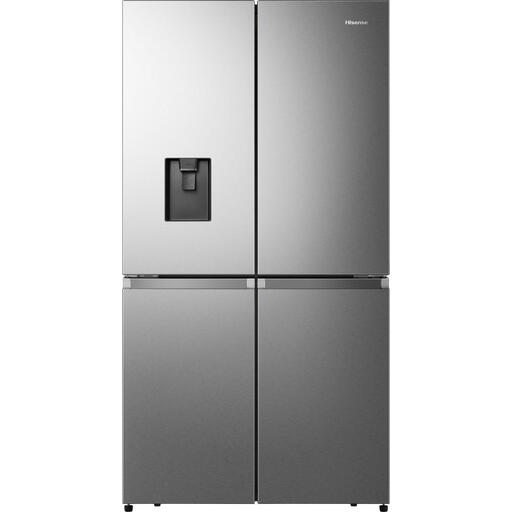 Image unavailable
Hisense RQ758N4SWSE, fridge-freezer, 606 L
Worth considering if you’re looking for generous, separate capacities for fresh and frozen food.
E energy class; stated energy consumption: 295 kWh/year. Fridge: 336 L; freezer: 149 L. Total No Frost, Wi-Fi and water dispenser with tank.
View on Joybuy
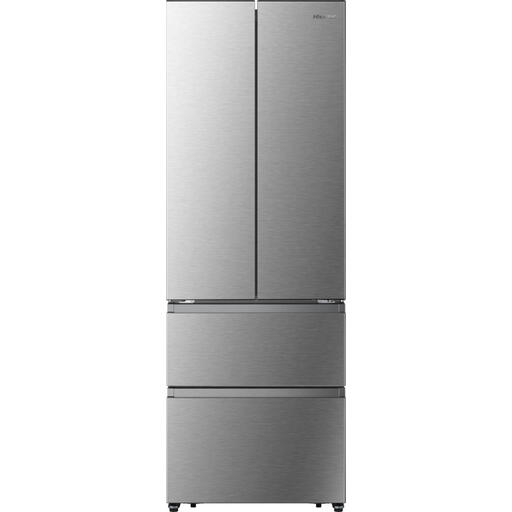 Image unavailable
Hisense RF632N4BCE, fridge-freezer, 485 L
Worth considering if you want to compare a French-door appliance with separate capacities for fresh and frozen food.
E energy class; stated energy consumption: 295 kWh/year. Fridge: 336 L; freezer: 149 L. Total No Frost, inverter compressor and water dispenser with tank.
View on Joybuy
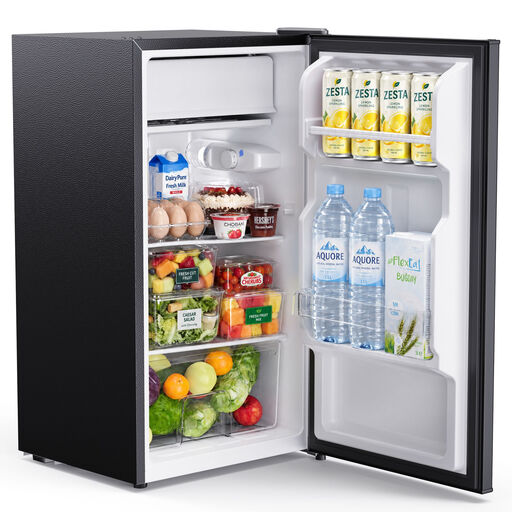 Image unavailable
Upstreman CR85, compact fridge, 85 L
Worth considering if a small fridge capacity meets your needs, with no freezer compartment mentioned in the product name.
Stated energy consumption: 84 kWh/year. Capacity: 85 L. Adjustable thermostat from 0 to 12 °C, reversible door and salad crisper.
View on Joybuy
Frequently asked questions
Is an A energy class enough to tell you how much electricity a fridge will use?
No. The label lists the energy class, kWh/year and compartment volumes separately. First choose the storage capacity you need, then compare the annual energy consumption of suitable models. To estimate the annual cost, multiply the kWh/year figure by the rate in €/kWh on your tariff; the result depends on that rate and how you use the appliance.
How should you set and use your fridge to keep food fresh?
Anses recommends a temperature between 0 and +4 °C at the coldest point and advises checking it. It also recommends not overfilling the appliance, allowing air to circulate and cleaning it regularly. Managing energy use doesn’t mean setting a temperature that’s unsuitable for food.
What should you check when arranging services to replace a fridge?
Ask the seller about the terms of any services on offer, such as delivery, installation or disconnection, and treat these separately from take-back of your old appliance. When you buy from a business, the statutory guarantee of conformity is compulsory and separate from any optional commercial guarantee. The DGCCRF states that like-for-like take-back of an equivalent appliance is free; check the practical arrangements with the retailer.
Do domestic fridges sold in France need an energy label?
Yes. Domestic refrigeration appliances covered by European rules must carry an energy label. For products covered by the rules, the A to G scale has applied since 1 March 2021; the QR code links to the model’s information in EPREL. This information requirement doesn’t mean that all buyers must choose a model with a minimum energy class.


