Households that buy fresh food and some frozen food
If you regularly buy both, check the fridge and freezer capacities separately. The total capacity of a fridge freezer doesn’t tell you how much space you’ll have for each type of food.


If you buy fresh food every week and keep a moderate amount of frozen food, a fridge freezer gives you both in one appliance. Choose a fridge-only model if you mainly buy fresh food and already have a freezer, or don’t need much freezer space. If you need to store a large amount of frozen food, compare an upright freezer with a chest freezer, taking floor space and ease of access into account. Whatever you choose, check the capacity of each compartment, installation requirements and the specific model’s annual energy consumption.
If you regularly buy both, check the fridge and freezer capacities separately. The total capacity of a fridge freezer doesn’t tell you how much space you’ll have for each type of food.
If you freeze portions or buy lots of frozen food, freezer capacity becomes a priority. An upright freezer makes it easier to organise food vertically; a chest freezer needs more floor space, and you’ll need to think about reaching food stored at the bottom.
Choosing the right capacity isn’t enough if the appliance blocks access or doesn’t meet the installation requirements. Measure the space, then check the model’s instructions for door clearance and opening direction, as well as ventilation.
First decide how much space you need for fresh and frozen food, then compare the formats that will fit your room. UFC-Que Choisir distinguishes between everyday frozen food storage and the larger capacity needed for a substantial supply.
Consider this if: you store fresh food every week and a moderate amount of frozen food in one appliance.
Bear in mind: the total capacity is split between two compartments. Check each one if you need more space for frozen food.
Consider this if: you mainly buy fresh food or already have another appliance for freezing.
Bear in mind: it won’t provide the dedicated freezer capacity you need for a large stock of frozen food.
Consider this if: frozen food is your priority and you want regular access to food stored vertically.
Bear in mind: UFC-Que Choisir describes upright freezers as more compact than chest freezers, which can offer greater capacity.
Consider this if: you’re planning to store a large amount of frozen food and have enough floor space.
Bear in mind: make sure the top-opening lid and access to food at the bottom work for the way you’ll use it.
| Consideration | What to check | Who this applies to |
|---|---|---|
| Balance of fresh and frozen food | Compare the capacity in litres of each compartment, not just the total capacity, with the space your usual shopping takes up. | I want to keep fresh food for everyday use and have a supply of frozen food, without giving all the space to one or the other. Around 31% of consumers prioritise this balance. |
| Frozen food storage | Check the freezer capacity and how easy it is to reach the food. If you’re considering a chest freezer, check its dimensions too. | When I freeze portions or buy frozen food less often, I first look for enough space to store a supply. This is a priority for around 31% of consumers. |
| Space for fresh food | Check the fridge capacity and the model’s temperature adjustment or control options. | I mainly buy fresh food and don’t want to give up space for a freezer I’ll hardly use. Around 23% of consumers put this need first. |
| Fit in your kitchen | Measure the space, then check the model’s diagram for the door, any housing requirements and ventilation. | If I’m replacing an appliance in a fitted kitchen, I need to be able to install it and open the door without obstruction. For around 15% of consumers, this requirement comes first. |
Once you’ve chosen a format, compare models that meet the same needs. ADEME points out that fridges and freezers run continuously. The energy label and the European Commission’s EPREL database show details including annual consumption in kWh and declared capacities. Don’t rely on the energy rating alone: check these figures alongside the appliance’s size.
Two appliances with the same total capacity may offer different amounts of space for fresh and frozen food. The compartment you need most could end up being too small.
Compare the separate capacities in the model’s product details or in EPREL, then check they suit your usual shopping.
A housing unit, hinge or open door can make installation impractical, even if the external dimensions appear to fit. Ventilation requirements also vary by model.
Measure the space and the route the appliance will need to take to get there, then check its diagram and installation instructions before choosing.
UFC-Que Choisir says chest freezers can offer plenty of capacity, but they take up more floor space than upright models. How often you need to reach a variety of smaller items can also affect your decision.
Compare the space available with how you’ll retrieve your food: a chest freezer prioritises storage space, while the drawers in an upright freezer make it easier to organise and access food vertically.
The energy rating on its own doesn’t tell you how much electricity the model is declared to use. Capacity and compartments should also be part of a useful comparison for your needs.
Check the annual consumption in kWh on the label and compare it with the capacities of models suited to the same use.
These ranges offer useful points of comparison for fresh food, mixed storage and built-in installation. The features mentioned apply to the specific models listed, not every appliance from each brand.
Liebherr offers fridges and fridge freezers, including freestanding and built-in models.
The range includes freestanding and built-in fridge freezers, with features that vary by model.
Electrolux offers built-in fridge freezers that are worth considering when your kitchen has a dedicated housing unit.
These appliances include fridge freezers for storing fresh and frozen food in one unit, as well as a convertible chest freezer that can be used in either mode. Compare their listed capacities with your needs, then check the installation requirements for each model.
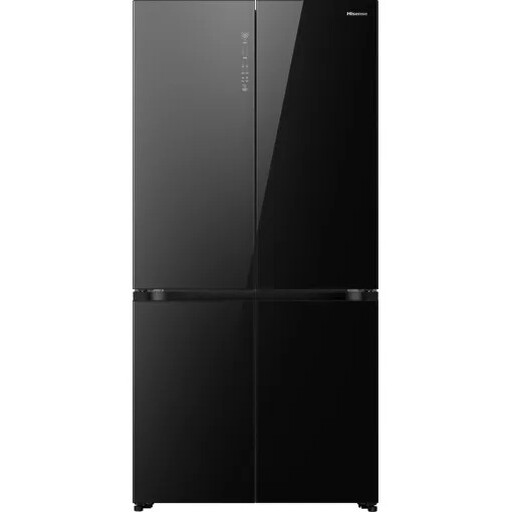 Image unavailable
Consider this if you’re looking for a large appliance for fresh and frozen food, as long as its format suits your kitchen.
Listed capacity of 591 L and energy rating E. Check the documentation for the capacity split and the space needed to open the doors and allow for ventilation.
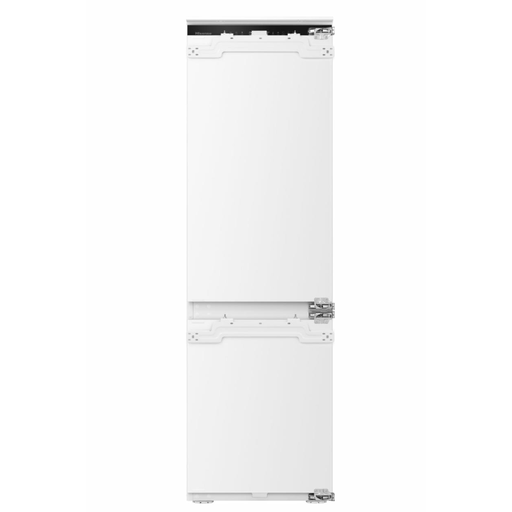 Image unavailable
Worth considering if you want to store fresh and frozen food in a fitted kitchen, once you’ve confirmed the housing unit is suitable for this model.
Listed total capacity of 252 L, No Frost and energy rating C. Check the installation diagram for the housing dimensions and required clearances.
 Image unavailable
This format combines fridge space with a bottom freezer for households that use both types of storage.
Listed total capacity of 282 L and energy rating E. Check the capacity of each compartment, as well as the door opening direction and ventilation instructions, before choosing this model.
 Image unavailable
Compare this model if you want to store fresh and frozen food in a kitchen where the appliance’s width is a key consideration.
The model name lists 153 L for the fridge, 74 L for the freezer and a width of 54 cm. It also mentions Low Frost, a reversible door and energy rating E. Check the clearances specified in the instructions, not just the width.
 Image unavailable
Consider this for storage that needs to switch between freezing and refrigeration at different times of the year. The two modes don’t provide separate compartments that can be used at the same time.
Listed capacity of 291 L, top-opening lid, removable basket and energy rating E. Check the capacity and operating conditions for your chosen mode, as well as the space needed around the chest freezer.
Check the declared annual consumption in kWh alongside the compartment capacities and intended use, rather than relying on the energy rating alone. The energy label and the European Commission’s EPREL database list details that help you compare models that genuinely meet your needs.
Anses recommends keeping the coldest part of your fridge between 0 °C and +4 °C. Find this area and check the temperature according to your appliance’s instructions. A brand’s advertised food preservation feature doesn’t replace checking the temperature.
No, you’ll need to confirm that the model you choose has a reversible door. Check its product details and instructions, then make sure there’ll be enough room to open the door once the appliance is installed. Bosch notes that the door reversal method can vary by appliance.
Compare the measurements of your housing unit with the installation diagram for the exact model, including door clearance and ventilation requirements. Dimensions given for another model, even from the same brand, aren’t enough to confirm it will fit.