Buying priorities
Compare appliances designed for the same use before looking at convenience features. The information on the energy label can help you compare annual consumption, capacity and noise levels.
| Priority |
What to check |
Your needs |
| Comparable energy consumption |
Compare kWh/year, refrigeration and freezing capacity in litres, format and noise. The EU label shows these details alongside the A to G rating. |
I want to estimate the running cost of appliances offering similar capacity and functions, without confusing an energy rating with my household’s actual consumption. |
| Suitable capacity |
Assess fresh and frozen capacity separately. Gifam suggests less than 250 L of refrigeration capacity for one person, 250 to 330 L for two to three people and more than 330 L for four or more people. |
My shopping habits, prepared meals and frozen-food supplies should determine the capacity. I would rather not pay for space that will rarely be used. |
| Frozen-food organisation |
Check how easily you can access food, the drawers or baskets, the amount of space required and the total capacity. Then compare kWh/year between specific models. |
I want to find everyday foods easily, or alternatively store bulky products and large supplies in a suitable space. |
| Maintenance and installation |
Check the type of frost management, climate class, permitted ambient temperature and required ventilation clearances. |
A No Frost or Low Frost system may be useful if defrosting is a chore. For a garage or cold utility room, I check the conditions specified for the exact model. |
Joybuy options
These Joybuy options include fridge freezers, a single-door fridge and a chest freezer, allowing you to compare fresh-food storage, frozen-food storage and stated energy consumption information.
 Image unavailable
LG GBBSJ1CCSW 333 L C-rated
This fridge freezer combines fresh and frozen compartments for everyday use.
Stated specifications: 169 kWh/year, 183 L of refrigeration capacity, 37 L fresh-food compartment, 113 L of freezing capacity and 34 dB.
Stated to feature Total No Frost. Check that the fresh-food capacity suits your shopping habits and allow at least 5 cm of clearance at the back, above and on the sides.
Joybuy
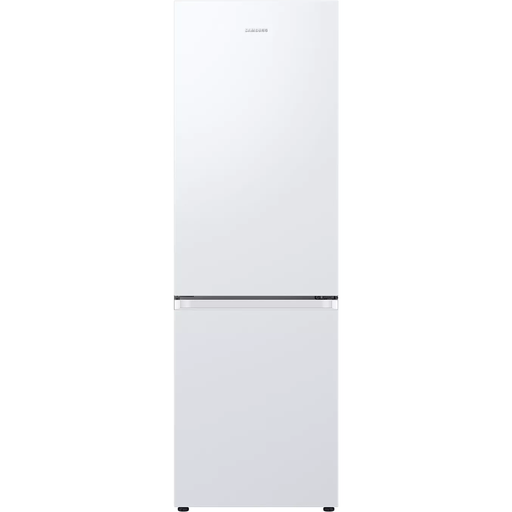 Image unavailable
Samsung RB38C600EWW 390 L E-rated
This fridge freezer is suitable for households that regularly use both fresh and frozen food.
Stated specifications: 264 kWh/year, 276 L of refrigeration capacity, 114 L of freezing capacity and 35 dB.
Check the 203 cm height, delivery access and ensure that the ambient installation temperature will not fall below 10 °C.
Joybuy
 Image unavailable
CHiQ JR263LGE 262 L E-rated Low Frost
This compact fridge freezer may suit a small household that needs both compartments.
Stated specifications: 215 kWh/year, 187 L of refrigeration capacity, 75 L of freezing capacity and 39 dB; width of 54 cm.
The Low Frost system requires manual defrosting. Its stated operating range is 16 to 38 °C, which rules out use in a cold outbuilding.
Joybuy
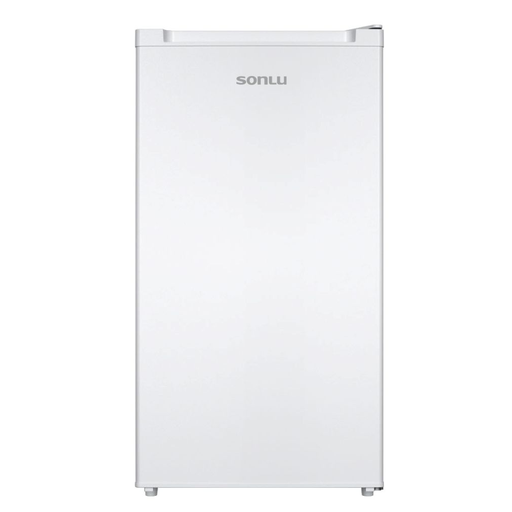 Image unavailable
Sonlu CS-100L 82 L E-rated single-door fridge
This fridge without a freezer is designed for very limited fresh-food needs, with few or no frozen foods.
Stated specifications: 82 L, 84 kWh/year and 40 dB.
It is not suitable for regularly storing frozen food or batch cooking; compare its 84 kWh/year with fridges offering a similar fresh-food capacity.
Joybuy
 Image unavailable
AUCMA 291 L E-rated convertible chest freezer
This chest freezer is suitable for storing large quantities of frozen food or bulky items.
Stated specifications: 291 L, 226 kWh/year, 38 dB, removable basket and five-level digital control.
The top-opening design requires clear space above; allow 10 cm of ventilation around the appliance and check the installation conditions before placing it in a cold garage.
Joybuy
Frequently asked questions
How should I compare the energy consumption of two fridges or freezers?
Compare kWh/year alongside fresh and frozen capacities, appliance type and noise level. The European Commission states that the A to G label is useful, but it does not replace comparing annual consumption when capacities or formats differ.
Do the kWh/year shown on the label exactly match my bill?
No. This is annual consumption measured under standardised conditions to compare models. To estimate the cost, multiply the stated kWh/year by your price per kWh including VAT, bearing in mind that actual use also depends on the surroundings, door openings, how full the appliance is and its installation.
What capacity should I choose to avoid buying an oversized fridge?
Gifam suggests less than 250 L of refrigeration capacity for one person, 250 to 330 L for two to three people and more than 330 L for four or more people. Adjust this starting point if you stock up for long periods, often have guests, cook infrequently or mainly store frozen food.
Can a freezer be placed in a garage or unheated utility room?
Only if the climate class or the model documentation confirms the expected ambient temperatures. For example, Liebherr states that its CFe 2500 Pure with FrostProtect operates down to -15 °C; this feature should not be assumed to apply to another freezer.
Does No Frost or Low Frost automatically reduce electricity bills?
No. These technologies are primarily designed to limit frost and maintenance; on their own, they do not prove that one appliance will use less energy than another. Always compare the kWh/year, capacities and rating of the exact model.


