Households cooking for several days
You prepare portions, keep leftovers and need to balance the litres allocated to chilled and frozen food, rather than simply aiming for the largest total capacity.


Start by choosing the storage split you genuinely need between fresh food, portions to freeze and long-term supplies, rather than focusing on total capacity alone. A fridge freezer is suitable when both uses are regular; a small freezer compartment is enough for limited reserves, while two appliances or an additional freezer mean checking the space, ventilation and energy consumption of each appliance.
You prepare portions, keep leftovers and need to balance the litres allocated to chilled and frozen food, rather than simply aiming for the largest total capacity.
You buy larger quantities less often : check that the salad drawers, shelves, drawers and usable capacities genuinely suit the packaging and portions you store.
Recess or appliance dimensions, door-opening direction, ventilation and noise level should take priority over increasing storage capacity.
Start by listing what needs to be chilled and frozen during a typical week, then compare the capacities, kWh/year, noise level and installation requirements of the exact model.
| Priority | What to check | Your needs |
|---|---|---|
| Fresh and frozen storage split | Compare the fridge and freezer capacities separately. Also check the drawers, salad drawers and shelves for storing boxes and large packs. | I want my prepared meals and frozen food to have their own space without reducing the room needed for fresh food for the week. |
| Ongoing energy consumption | Read the kWh/year on the energy label for appliances with a similar function and capacity. Compare this figure with the usable capacities, not just the class letter. | I am looking for capacity I will genuinely use, without running an appliance that is larger than necessary. ADEME reminds us that fridges and freezers run continuously. |
| Noise and everyday organisation | Compare airborne noise emissions in dB(A) and the noise class. Consider the storage format : drawers for an upright freezer, baskets for a chest freezer, and compartments and shelves for a fridge freezer. | In an open-plan kitchen or compact home, I want an unobtrusive appliance with convenient access to the food I use most often. |
| Installation and ventilation | Measure the width, height, depth, delivery access and door overhang. Follow the ventilation requirements and temperature conditions specified in the model’s manual. | I want to be able to deliver, level, ventilate and open the appliance in its final position without obstruction. |
An appliance may appear spacious while offering too little room for prepared portions and frozen food. The European Commission states that the label for refrigeration appliances shows the fridge and freezer capacities separately.
List the contents of a typical week, then compare the litres in both compartments and the layout of the drawers or salad drawers.
A refrigeration appliance runs continuously, and capacity or features that are rarely used can increase energy consumption. ADEME highlights that size and unnecessary features can push up your electricity bill.
Choose the most compact layout that can handle your food shop, prepared meals and a reasonable amount of spare storage, then compare the kWh/year.
Bosch’s range includes fridge freezers, fridges and freezers, with technical specifications detailing dimensions, usable capacities, noise, energy class and installation documents.
Whirlpool offers fridges with small freezer compartments, fridge freezers, upright freezers and chest freezers, making it possible to compare several configurations.
Beko offers, among other options, large-capacity fridge freezers that bring fresh food, prepared meals and frozen food together in one appliance.
Joybuy fridge freezer options for organising weekly food shops, fresh produce and portions to freeze.
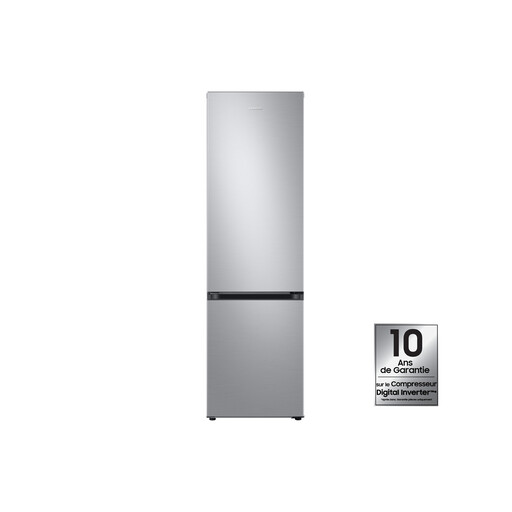 Image unavailable
For weekly food shops combining fresh and frozen food, with three freezer drawers.
276 L of fridge capacity, 114 L of freezer capacity, 169 kWh/year, 35 dB and dimensions of 59,5 × 203 × 65,8 cm.
Check the 203 cm height, delivery access and the ventilation instructions in the manual.
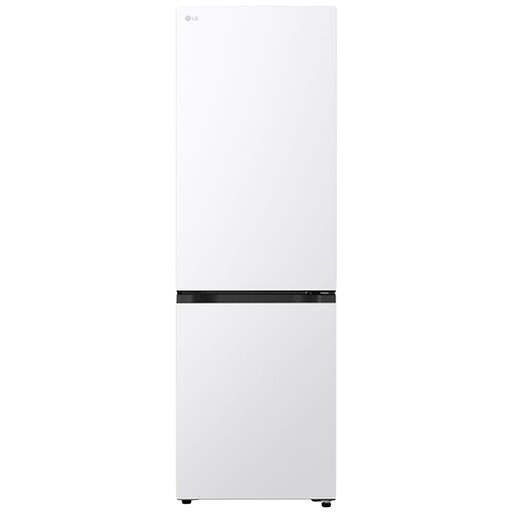 Image unavailable
For storing prepared meals and frozen food while keeping a dedicated area for fresh produce.
183 L of fridge capacity, 37 L cold compartment, 113 L of freezer capacity, 169 kWh/year and 34 dB. Dimensions : 597 × 1 860 × 674 mm.
The specification states that at least 5 cm of clearance is required at the rear, above and on the sides.
 Image unavailable
For regular food shops, with portions to freeze in three dedicated drawers.
230 L of fridge capacity, 114 L of freezer capacity, 254 kWh/year, 35 dB and dimensions of 59,5 × 185,3 × 65,8 cm.
Compare its energy consumption with fridge freezers of similar capacities and intended uses, then consult the manual for ventilation clearances.
 Image unavailable
For a household with moderate weekly food shops looking for a slimline fridge freezer.
187 L of fridge capacity, 75 L of freezer capacity, 215 kWh/year, 39 dB, a width of 54 cm and a height of 176 cm.
The Low Frost freezer requires manual defrosting approximately once or twice a year, and the model is not intended for a room below 16 °C.
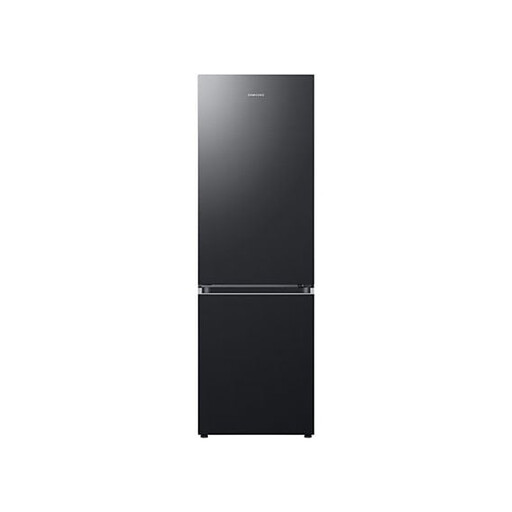 Image unavailable
For organising fresh food and prepared meals with three transparent freezer drawers.
230 L of fridge capacity, 114 L of freezer capacity, a width of 59,5 cm and a height of 185,3 cm.
Check the energy label for the kWh/year and noise level, as well as the depth and ventilation instructions before buying.
First compare the fridge and freezer capacities separately, then compare the kWh/year, noise in dB(A), dimensions and internal layout. The European Commission states that the EU label displays these capacities, annual consumption and noise emissions : the A to G class should therefore not be your only criterion.
It may be enough if you only have a small amount of frozen food and a few portions to store. The Whirlpool ARG7342FR, for example, is listed with an 18 L freezer compartment : check the exact capacity of the model and your usual number of boxes or bags before choosing.
A chest freezer is suitable when you need large-volume storage and have floor space available, while an upright freezer makes everyday access easier with its drawers. The Whirlpool models mentioned offer 308 L for the W3RHS31DW2 chest freezer and 286 L for the WHMFF6312W5E upright freezer : also compare their dimensions and noise levels.
Measure the installation space and delivery route, check door clearance, the level of the floor or unit, and the required ventilation. Bosch states that at least 200 cm² of free ventilation is needed at the rear and beneath the fridge in its guide, but the manual for your chosen model remains the definitive reference.
No : it depends on the climate class and the conditions specified for the model. The Whirlpool W3RHS31DW2 chest freezer states that it can be used down to -15 °C with Freezer Guard, but this does not mean that other appliances are suitable for a cold room.