When planning your meals, first decide how much space you need for fresh food and frozen portions, then check that leftovers are easy to see and reach. A fridge freezer suits you if you regularly need both compartments; a small freezer compartment is better for occasional freezing, while a separate freezer means you need extra storage space, room for another appliance and an appliance that runs continuously. Compare the capacity of each compartment and annual kWh consumption, not just the energy rating.
Who is this choice for?
People who prepare several meals in advance
If you keep fresh ingredients and freeze portions, consider the available space in each compartment separately. The energy label, as presented by the European Commission, shows these capacities; the layout should also work for your containers.
Households that lose track of leftovers
If opened products disappear at the back of the shelves, easy access and visibility may matter more than a larger overall capacity. ADEME recommends checking what you have before shopping and regularly organising your fridge.
People mindful of ongoing energy use
If you’re considering an additional appliance, check its annual energy consumption against the capacity you need. ADEME points out that fridges and freezers run continuously; the European Commission says the label also shows capacity and noise levels.
What should you look for?
Fridge freezer
Consider this if: you regularly keep fresh food and frozen portions in one appliance.
Bear in mind: for a similar-sized appliance, the space given to the freezer is no longer available for fresh food.
Fridge with a small freezer compartment
Consider this if: refrigeration is your main priority and you only freeze food occasionally.
Bear in mind: the compartment may feel restrictive if you regularly prepare portions to freeze.
Separate freezer
Consider this if: your usual meals and shopping require more frozen storage than you currently have.
Bear in mind: you’ll need space for a second appliance and should factor in its own annual energy consumption, as cold appliances run continuously, as ADEME reminds us.
To compare these options, start with what you buy and the containers you use, rather than the number of people in your household alone. Capacity, annual energy consumption and noise are among the details shown on the energy label described by the European Commission.
| Criteria |
What to check |
Who is this important for? |
| Space for fresh and frozen food |
Compare the net capacity of each compartment with your usual containers and portions, then check the appliance dimensions. |
When my meals include both fresh ingredients and portions to freeze, I want enough room for both without sacrificing space for chilled leftovers; around 31% of consumers rank this balance as their top priority. |
| How easy it is to see what you have |
Check how easy it is to reach the shelves, drawers and products at the back, as well as whether there’s room for your containers. |
If I forget about opened products behind newer shopping, I look for storage that makes them easier to spot; visibility is the top priority for around 31% of consumers. |
| Energy consumption and noise |
Check the annual kWh consumption, capacity and noise level on the label of each appliance you’re considering. |
With an appliance that runs continuously, I want to weigh its energy use against the space it offers; around 23% of consumers prioritise this trade-off. |
| Temperature settings and maintenance |
Check the temperature settings and defrosting type for each compartment in the product details and manual. |
When I store chilled leftovers and use the freezer often, I mainly want to control the temperature and know what maintenance is needed; around 15% of consumers make this their top criterion. |
Mistakes to avoid
-
Choosing based on total capacity
The same total capacity can leave too little room for frozen portions or fresh ingredients. The European Commission says the energy label lists the capacity of each compartment separately.
Take stock of what you need for a typical meal-planning cycle, then compare the net capacities and layout with what you actually store.
-
Comparing energy ratings alone
The letter alone doesn’t tell you how much an appliance uses over a year or how much it holds. The European energy label also shows annual kWh consumption, capacity and noise levels.
Compare these details together, and check the label for the freezer itself if you’re considering a second appliance.
-
Assuming every model from a brand has the same features
Cooling and defrosting systems vary between models: Electrolux, for example, offers a TwinTech No Frost fridge freezer and another model with a Low Frost freezer that requires manual defrosting.
Check the features of each compartment in the details and manual for the exact model, along with its installation dimensions.
-
Relying on storage features without checking the temperature
Easy-to-reach shelves help you keep track of food, but they’re no substitute for checking what you have, as ADEME recommends, or setting the right temperature. Anses advises setting your fridge below 4 °C.
Get into the habit of checking your supplies before shopping, and check the appliance’s actual temperature, following the manual and the instructions on food packaging.
Brands to consider
Bosch
The range includes fridges and fridge freezers, with layouts that vary from model to model.
- Bosch offers VitaFresh on selected models and describes a sliding shelf on the KSV33VWEP fridge.
- Check that the model you choose includes these features, and confirm its capacity and configuration: features on one model don’t necessarily apply across the range.
Liebherr
Depending on the model, the brand’s fridge freezers and fridges feature EasyFresh or NoFrost functions.
- Liebherr lists a total capacity of 359 L, a noise level of 35 dB, and EasyFresh and NoFrost functions for the CNd 5704 fridge freezer.
- These specifications apply to this model; check its dimensions and how the capacity is divided before comparing it with another appliance.
Samsung
The range includes integrated fridge freezers, with cooling configurations that vary by model.
- Samsung lists a total capacity of 298 L and two independent cooling systems for the BRB30600EWW.
- For a built-in model, check the installation space and the energy label for the exact model; Samsung’s claims about improved humidity are based in part on its own internal data.
Electrolux
The brand’s built-in fridge freezers have different cooling systems and maintenance requirements.
- Electrolux lists TwinTech No Frost, a capacity of 249 L and energy consumption of 173 kWh/year for the ENT6MD18S4.
- The ENS3LE18S has a Low Frost freezer that requires manual defrosting. Compare the exact model and installation space rather than relying on the brand name.
Fridge freezers for meal planning
These Joybuy models combine refrigeration and freezing in a single appliance. For meal planning and leftovers, compare the capacity of each compartment, the layout and the dimensions. If you’re considering a small freezer compartment or a separate freezer instead, make the same checks for that configuration.
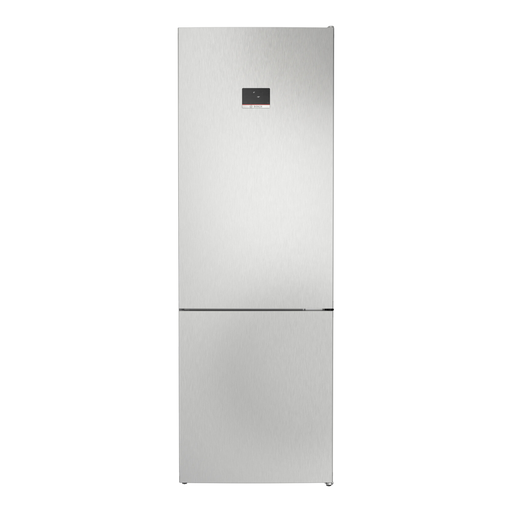 Image unavailable
Bosch KGN497LDF, 440 L fridge freezer, D-rated, grey
Worth considering if you want to store fresh food and frozen portions in one appliance.
The model name lists a total capacity of 440 L and a D energy rating; compare the capacity of each compartment with your needs.
Before installation, check the dimensions, door opening and required ventilation clearances.
View on Joybuy
 Image unavailable
Candy CFQQ5T817EPS, 467 L four-door fridge freezer, E-rated
The four-door design may suit you if you want to divide fresh shopping and frozen portions between several zones.
The model name lists a capacity of 467 L, Total No Frost, an E energy rating and a silver finish; check the net capacity of each zone before choosing.
Also check the appliance’s width and the route to its intended position.
View on Joybuy
 Image unavailable
Samsung RB33B612EBN, 344 L fridge freezer, E-rated, black
Consider this fridge freezer if you want to store fresh food and frozen portions together without adding a second appliance.
The model name lists a total capacity of 344 L and an E energy rating; check the space in each compartment and the interior layout.
Measure the space and check the ventilation clearances specified in the manual.
View on Joybuy
 Image unavailable
AEG NSC6M18FES, built-in TwinTech No Frost fridge freezer, white
This configuration is designed for those who need a fridge freezer to fit into a kitchen cabinet space.
The model name lists TwinTech No Frost and an E energy rating. Confirm the net capacity of each compartment before assessing the available space: the listed individual capacities don’t add up to the stated total.
Also check the annual energy consumption on the energy label and the cabinet dimensions in the installation instructions.
View on Joybuy
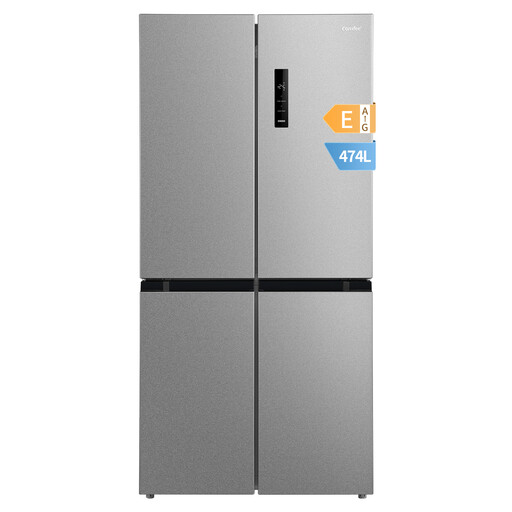 Image unavailable
COMFEE' RCF470LS2EU(E), 474 L four-door fridge, E-rated
The four-door design is worth considering if you want to separate different types of food in your everyday storage.
The model name lists a capacity of 474 L, a Vario box, a three-temperature crisper drawer and an E energy rating; check that the layout works with your containers.
Check the net capacity for fresh and frozen food, the annual kWh consumption on the energy label and the dimensions before deciding.
View on Joybuy
Frequently asked questions
How do you compare the energy consumption of two cooling appliances?
Compare the annual kWh consumption, taking into account how much fresh and frozen storage you need. According to the European Commission, the energy label also shows storage capacity and noise levels, so the A to G rating doesn’t tell you everything. This is especially important if the appliances have different capacities.
What should you check on the energy label in France?
For a domestic refrigeration appliance covered by European energy labelling, check the energy rating, annual energy consumption, capacity and noise level. The European Commission lists this information for fridges and freezers; check the label for the exact model and for any separate freezer you’re considering.
What temperature should you set your fridge to for chilled food?
Anses advises setting your fridge below 4 °C. Check the actual temperature with a thermometer, and also follow the storage instructions on food packaging and in the appliance manual.
Does an extended warranty replace the statutory guarantee?
No. A commercial warranty is separate from the statutory guarantee of conformity. In France, the Directorate-General for Competition Policy, Consumer Affairs and Fraud Control says you have two years to claim under this statutory guarantee for a new or second-hand item bought from a professional seller. Check the terms of any extended warranty separately.


