Households that prepare and store meals
If you keep leftovers or cook in advance, check how much room there is for meal containers and how the capacity is divided between fresh and frozen food, rather than focusing only on the total capacity.


Choose a fridge-freezer if you need to store fresh and frozen food in one appliance. A fridge on its own is suitable if you don’t need a freezer or already have one, while a separate freezer is a better option if you need more frozen storage. First, work out how much space you need in each compartment and check the installation requirements. Then compare the annual energy consumption in kWh of suitable models: ADEME notes that an appliance that’s too large, or adding another appliance, can increase energy use.
If you keep leftovers or cook in advance, check how much room there is for meal containers and how the capacity is divided between fresh and frozen food, rather than focusing only on the total capacity.
If you’re replacing an appliance in a fitted space or need to get it through a narrow entrance, measure the delivery route too, as well as the space needed to open the doors. Check the model’s instructions for clearance and any connection requirements, as Bosch recommends in its installation advice.
If you want to avoid buying an oversized appliance, compare the capacities you’ll actually use with the kWh per year listed for each model. ADEME points out that fridges and freezers run continuously, and that choosing an appliance that’s too large or adding extra equipment can increase energy use.
Consider it if: you need to store fresh and frozen food in one appliance.
Bear in mind: the capacity is split between two compartments, so check that the freezer section is big enough for your needs.
Consider it if: you don’t freeze food regularly or already have a freezer.
Bear in mind: on its own, it won’t meet your needs if you require frozen storage.
Consider it if: you have a fridge and store lots of prepared portions or frozen food.
Bear in mind: you’ll need space for a second appliance, and should take into account the continuous energy use of both appliances, as ADEME notes.
| What to consider | What to check | What consumers say |
|---|---|---|
| Capacity split | Compare the separate fridge and freezer capacities in litres on the EU energy label with your storage needs. | If I store fresh shopping and portions to freeze, I need enough room in both compartments; around 31% of consumers prioritise this split. |
| Kitchen installation | Measure the space and delivery route, then check the instructions for door clearance and ventilation. | In a narrow kitchen, I want to be able to get the appliance in and open its doors without any trouble; around 25% of consumers prioritise how well it fits into their kitchen. |
| Energy consumption | Once you’ve settled on a capacity, compare the kWh per year of similar models rather than looking only at their energy rating letter. | I’d rather avoid unused capacity in an appliance that runs all the time; around 25% of consumers put energy consumption at the top of their list. |
| Compartment maintenance | Check the cooling system in each compartment and the model-specific food storage guidance. | If I often store frozen food and ready meals, I want to reduce frost while keeping food protected; around 19% of consumers prioritise day-to-day maintenance. |
The energy rating letter isn’t enough to compare appliances with different capacities and uses. According to the European Commission, the label also shows kWh per year, compartment capacities and noise levels.
First work out how much space you need, then compare the annual energy consumption of appliances that meet those needs.
A fridge-freezer may seem large enough, but its freezer section might not suit the portions you want to store, or vice versa.
Check the fridge and freezer capacities separately in litres on the model’s label.
Whirlpool says the air in a No Frost fridge is drier and can dry out food that’s left uncovered.
If you choose this technology, cover any food that needs it and follow the manufacturer’s instructions.
An appliance may fit in its intended space but still be too large to get through the delivery entrance, or leave too little room for the doors and required ventilation.
Before ordering, measure the route and check the model’s instructions for clearance, door opening direction and any connection requirements.
The range includes fridges and fridge-freezers, with freestanding and built-in models available depending on the product.
Depending on the model, the fridge-freezer range includes frost-free cooling and freshness compartments.
The fridge-freezer range includes freestanding and built-in appliances, with different frost management technologies depending on the model.
The range includes single-door fridges and multi-door models, offering different configurations to suit different needs.
These models combine fridge and freezer compartments in one freestanding or built-in appliance. To choose between them, start with the space available, then check the stated capacity and the information for each compartment.
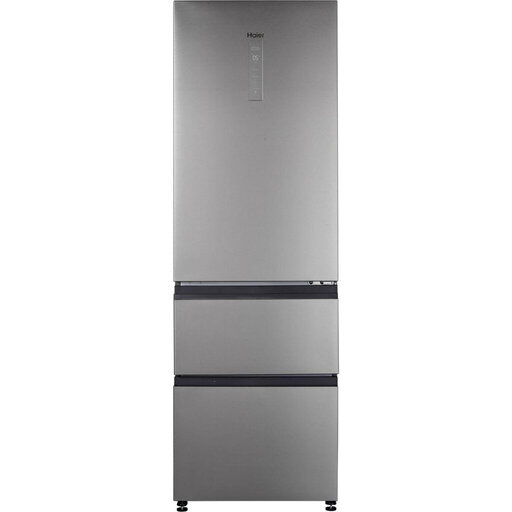 Image unavailable
Worth considering if you want to store fresh and frozen food in a three-door fridge-freezer.
The model name indicates Total No Frost and an E energy rating. Check the space needed for installation and the capacity of each compartment before deciding whether the stated 360 L is right for you.
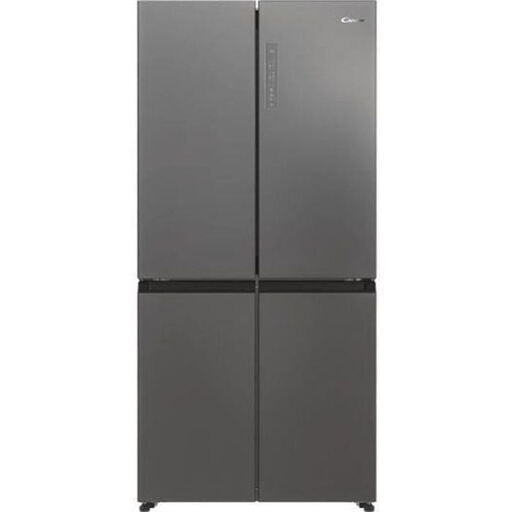 Image unavailable
This multi-door design is worth considering if you’re looking for a high-capacity appliance to store both shopping and frozen food.
The title indicates Total No Frost and an E energy rating. The doors are listed as non-reversible, so check that they’ll open properly in your kitchen and that the appliance will fit through the delivery route.
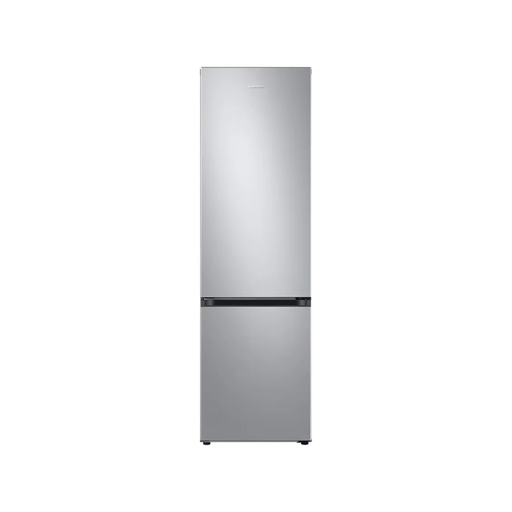 Image unavailable
This freestanding fridge-freezer is worth considering if you need space for fresh shopping and frozen food in the same appliance.
The title lists a capacity of 390 L and a D energy rating. The door is listed as reversible, but check the manual for door clearance and the space required for installation.
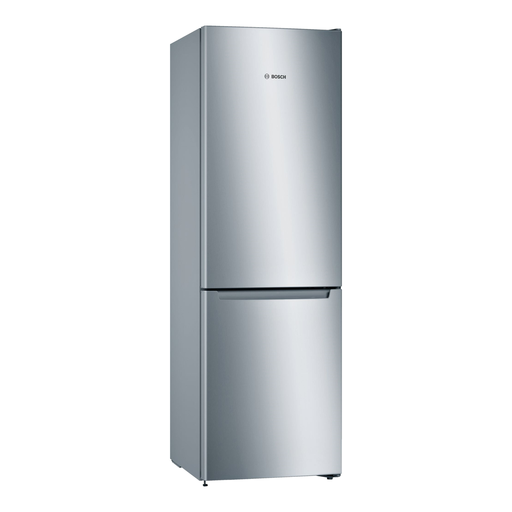 Image unavailable
Worth considering if you’re looking for a fridge-freezer with a bottom freezer and want to reduce the need for defrosting.
The title lists a capacity of 282 L and an E energy rating. NoFrost is specified for the freezer, so don’t assume it applies to the other compartment. Follow the transport and installation instructions in the manual, particularly those relating to the flammable R600a refrigerant.
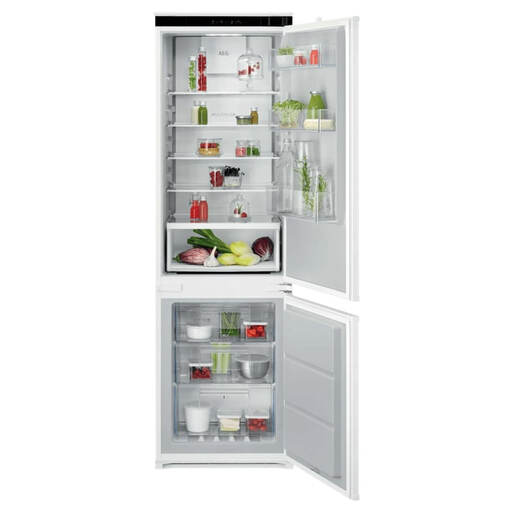 Image unavailable
This built-in model is worth considering if your kitchen has a suitable space and you need both fridge and freezer compartments.
The title lists TwinTech No Frost, a capacity of 249 L and an E energy rating. Check the dimensions of the space and the sliding hinge fitting. Also confirm the capacities on the model’s label, as the listed capacities for each compartment don’t add up exactly to the stated total.
Compare the kWh per year, fridge and freezer capacities, and noise level, after checking that the appliances will suit your kitchen. The European Commission says that the label for household fridges and freezers in scope uses an A to G scale; the letter alone doesn’t tell you how much space there is in each compartment.
Compare the annual energy consumption of models that meet the same storage and installation needs, but don’t assume this figure alone will tell you how much energy you’ll actually use. ADEME notes that these appliances run continuously and that excess capacity can increase energy use.
No. No Frost reduces the need to deal with frost, but you still need to follow food storage guidance. Whirlpool explains that the air in a No Frost fridge is drier and recommends covering food.
Anses recommends setting your fridge below 4 °C. Check the actual temperature with a suitable thermometer rather than relying only on the thermostat setting.