What should you compare before choosing?
Small freezer compartment
Best for: a small home where you shop frequently and keep only a limited supply of frozen food.
Bear in mind: this compartment cannot replace the substantial frozen-food storage capacity you may need, as UFC-Que Choisir points out.
Fridge-freezer
Best for: a household that wants separate spaces for fresh and frozen food in one appliance.
Bear in mind: the balance between the two compartments depends on the model you choose. A large total capacity does not guarantee enough space in the compartment you need.
Separate freezer
Best for: a household whose frozen-food stocks regularly exceed a fridge-freezer’s capacity and that has a suitable space for another appliance.
Bear in mind: an extra appliance takes up space and runs continuously. According to ADEME, this should be factored into your energy-use comparison.
Whatever format you are considering, start with your usual food stocks and the space available, then compare the specifications of the models.
| Priority | What to check | My needs |
|---|
| Usable capacity |
Compare the fridge and freezer capacities in litres separately. Also check the drawers and shelves against the packaging you use. |
I need to be able to find fresh food without hiding frozen items behind other shopping. If I have substantial frozen-food stocks, the size of the fridge compartment alone will not help me choose. |
| Installation |
Measure the height, width and depth, and check the required clearances. For a built-in model, check the housing dimensions and door system; for a chest freezer, make sure you can reach items at the bottom. |
In a narrow kitchen, I want to be able to open the doors and pull out the drawers once the appliance is installed. |
| Energy use and noise |
The European energy label shows the A to G rating, annual consumption in kWh, storage volumes and noise level. Compare appliances of a similar size and capacity; ADEME reminds us that refrigeration appliances run continuously. |
If I am considering a second appliance, its energy use matters just as much as the extra storage space I would gain. |
| Temperature and maintenance |
Check the temperature settings, interior layout and freezer defrosting method. Anses recommends a temperature of 0 °C to 4 °C at the coldest point in the fridge. Check this in particular when the appliance is full or opened frequently. |
I want easy access to the food I need to use first and to know what maintenance the freezer requires. A cooling feature does not replace checking the temperature in everyday use. |
| Keeping track of your food |
Check whether the drawers and shelves make it easy to see your food and take regular stock. ADEME also recommends planning your shopping and organising your fridge. |
If I forget about food or buy things I already have, I would rather rethink how I store it before deciding I need more litres of capacity. |
What can brand examples tell you?
These reference models illustrate the specifications to check; their features and dimensions do not apply to every model from the brand.
Bosch
Bosch fridge-freezers let you compare the balance of storage space and the appliance’s footprint across different models.
- Bosch lists 237 L of fridge capacity, 89 L of freezer capacity and No Frost for the freestanding KGN36VLED.
- These figures apply to the KGN36VLED. Check the dimensions and capacities of any other variant before assuming they are the same.
Electrolux
The built-in LNN3CE18S fridge-freezer gives you some useful points to check when planning to install an appliance in a cabinet.
- Electrolux lists 175 L of fridge capacity, 78 L of freezer capacity, 235 kWh/year and a 1780 mm housing height for this model.
- The housing height alone does not confirm that the appliance will fit. Check all the measurements and door fitting details in the model’s instructions.
Whirlpool
The freestanding WHK25364XBR4E is an example of a fridge-freezer where it is worth checking the freezer capacity separately.
- Whirlpool lists 210 L of fridge capacity, 106 L of freezer capacity, 37 dB and Dual No Frost for this model.
- These specifications alone cannot tell you whether the format suits your stocks. Also compare its dimensions and annual energy consumption.
Liebherr
The CBNsdc 765i is an example of a large-capacity fridge-freezer with specialist compartments.
- Liebherr lists a total capacity of 423 L, a noise level of 34 dB and BioFresh compartments for this model.
- BioFresh alone does not guarantee that your food will keep for a particular length of time. Check the appliance’s footprint and whether this layout will be useful for your shopping.
Fridge-freezers to consider on Joybuy
These models combine fridge and freezer compartments in a single appliance. If you are considering a small freezer compartment or a separate freezer instead, first compare the factors outlined above.
 Image unavailable
Candy CFQQ5T817EPS, 4-door, 467 L
If your shopping includes both fresh and frozen food, check that the split between the two compartments suits your stocks. This model is listed as Total No Frost, class E; also check that you have enough room for its four doors.
View on Joybuy
 Image unavailable
Samsung RF50C530EB1 multi-door, 495 L
If you are looking for plenty of storage in one appliance, compare its stated 495 L capacity with the space you need for each type of food. It is listed as class E. If you plan to use the water and ice dispenser, check the connection requirements for this variant.
View on Joybuy
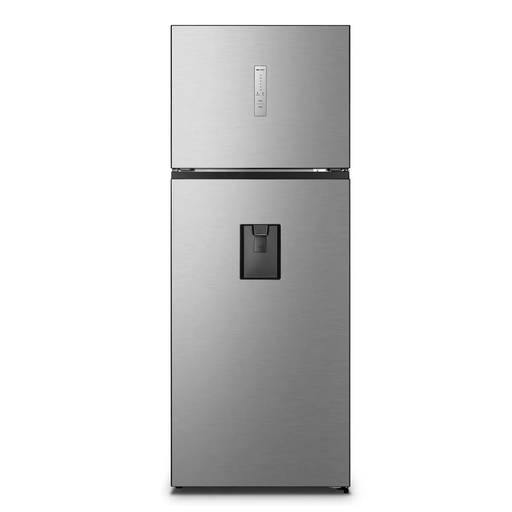 Image unavailable
Hisense FTN461WCE1, 467 L, Total No Frost
To organise your fresh and frozen food, check the usable capacity of each compartment rather than relying on the stated 467 L total. This model is listed as class E and Total No Frost; also check whether you are comfortable with the freezer compartment being at the top.
View on Joybuy
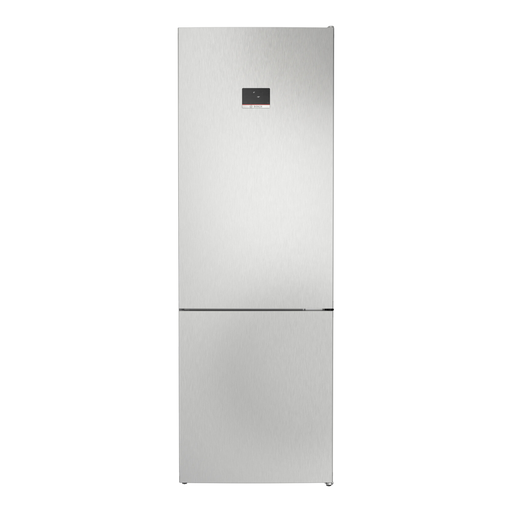 Image unavailable
Bosch KGN497LDF, 440 L, class D
If your shopping regularly includes both fresh and frozen food, compare the capacity of each compartment and check the available height in your kitchen. This model is listed at 440 L and class D. If freezer maintenance matters to you, confirm its defrosting method before buying.
View on Joybuy
 Image unavailable
CHiQ JR263LGE, 262 L, Low Frost, 54 cm
If kitchen width is a consideration, compare this fridge-freezer’s stated dimensions of 54 cm wide and 176 cm high with your available space and usual food stocks. It has a stated 70/30 split; Low Frost does not mean you can skip checking what freezer maintenance is needed.
View on Joybuy
Frequently asked questions
When should you add a separate freezer rather than choose a fridge-freezer?
Consider a separate freezer if your frozen-food stocks regularly exceed the capacity of a fridge-freezer’s freezer compartment and you have a suitable space for it. UFC-Que Choisir says upright freezers typically hold around 200 L and can reach 400 L, while chest freezers can hold up to 600 L. However, check how much space you really need and how easy it is to reach your food.
What should you look for on a fridge-freezer’s energy label?
According to the European Commission, the label shows the A to G rating, annual consumption in kWh, storage volumes and noise level, among other details. To choose a model that suits your shopping habits, look at the capacities alongside the energy consumption and compare appliances of a similar size and capacity.
What temperature should you check in your fridge?
Anses recommends keeping the coldest point in your fridge between 0 °C and 4 °C. Check the temperature in everyday use, particularly when the appliance is full, opened frequently or frosted up.
Is No Frost enough reason to choose a fridge-freezer?
No. Frost management does not tell you whether the compartments suit your shopping habits. Also compare their usable capacities, the space the appliance takes up, its energy consumption and how easy it is to find your food. Good organisation is still essential to avoid forgetting items.
What should you do with your old fridge when replacing it?
Check the collection arrangements with the retailer before delivery. Information from the ministries responsible for the ecological transition also mentions taking it to a collection point or civic amenity site, returning it to a retailer, or handing it over to certain social and solidarity economy organisations.


