Who is this choice for?
How much space you need for frozen food affects which type to consider; the running costs of an additional appliance are another factor.
Households mindful of ongoing energy use
If you want to reduce the energy use of your cooling appliances without running short on space, compare the usable capacity and kWh/year figures for each configuration. ADEME points out that fridges and freezers run continuously, and that choosing an appliance that’s too large or having more equipment than you need can increase your bills.
Households that regularly store a few frozen foods
A fridge-freezer lets you keep fresh and frozen food in one appliance. Check the capacity of each compartment separately: having enough total capacity doesn’t guarantee the space is divided in a way that suits your shopping.
Households that store lots of frozen food
If the freezer compartment in a fridge-freezer consistently isn’t big enough, a separate freezer could provide the extra capacity you need. You’ll need to make room for it, follow its installation instructions and add its kWh/year figure to that of your fridge.
How do you choose the right type?
First, work out how much space you need for fresh and frozen food, then compare the stated energy use of the options that meet both requirements.
Fridge only
Consider this if: you don’t use a freezer or already have enough freezer capacity.
Bear in mind: if you need more freezer space, adding a freezer means having a second appliance that runs continuously.
Fridge-freezer
Consider this if: you need fridge space every day and regular room for frozen food.
Bear in mind: check the freezer capacity separately from the stated total capacity.
Separate freezer
Consider this if: you regularly need more freezer space than a fridge-freezer can provide.
Bear in mind: you’ll need to make room for this appliance, and it will add to your fridge’s ongoing energy use.
| Priority |
What to check |
Your needs |
| Usable capacity |
Compare fridge and freezer capacities separately, then choose sizes to suit your household and how often you shop. UFC-Que Choisir suggests 100 to 150 L for one person as a rough starting point, plus 50 L for each additional person. |
I need enough space for my usual shopping, without choosing a large freezer compartment that I wouldn’t use much. |
| Annual energy use |
Check the A to G energy rating, kWh/year and capacities shown on the EU energy label, as described by the European Commission. If you’re considering two separate appliances, check the stated energy use of each one; compare appliances with capacities that meet the same needs. |
If I add a freezer, its energy use will be on top of my fridge’s. I want to compare options that provide the storage I need, not just their energy rating letter. |
| Installation |
Measure the height, width and depth, and allow space for the doors to open. Check whether the door is reversible and refer to the specific model’s instructions for ventilation clearances. |
The appliance needs to fit in my kitchen, have enough space around it for ventilation and allow the doors to open easily. |
| Maintenance and temperature |
Check the temperature controls and which compartments have a No Frost function. Anses recommends keeping the coldest part of the fridge between 0 °C and 4 °C; No Frost doesn’t replace comparing kWh/year figures. |
I want to be able to check the temperature of fresh food and know whether I’ll need to manually defrost the compartment I use. |
| Noise |
Check the noise level in dB on the EU energy label and consider where you plan to put the appliance. Compare the figures for the models you’re considering rather than assuming how noisy they’ll be based on their type. |
If the appliance will be near my living area, its stated noise level will be a factor in my choice. |
A few pointers on different brands
The details below relate to specific models in the ranges mentioned; they don’t describe every appliance from each brand.
Bosch
Bosch offers, among other options, freestanding fridge-freezers and single-door fridges without a freezer compartment.
- According to Bosch’s product details, the KGN33NWDA fridge-freezer has a total capacity of 279 L, split between 189 L of fridge space and 90 L of freezer space; the KGN492IAF offers 311 L, with 129 L in those compartments.
- These capacities relate to two different models. Check the kWh/year, dimensions and installation instructions for the one you’re considering.
Whirlpool
The French range includes single-door fridges and freestanding fridge-freezers.
- Whirlpool lists the single-door WHMLF 6442 FXP4 fridge at 365 L, 114 kWh/year and 35 dB; the WHK 26404 XP7E fridge-freezer is listed at 355 L and 31 dB.
- These details don’t apply to the entire range. In particular, check how much space is given to the freezer and the kWh/year figure for the model you choose.
Beko
Beko offers, among other options, upright freezers for separate freezer storage.
- Beko describes the B1RFNE314W as a No Frost freezer, a feature to consider when thinking about maintenance.
- Beko generally recommends leaving at least 5 cm of clearance at the sides and back of its fridge-freezers. However, follow the installation instructions for the model you buy rather than applying this measurement to every appliance.
Fridge-freezers available on Joybuy
These models combine fridge and freezer space in one appliance. Compare their capacities with the space you actually need for each, then check the energy label and installation instructions for the model you’re considering.
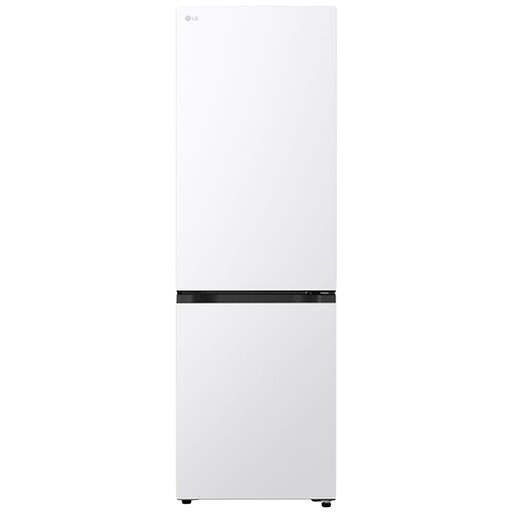 Image unavailable
LG GBBSJ1CCSW, white 333 L fridge-freezer
This fridge-freezer combines both storage areas in one appliance. Check that the split suits your fresh and frozen food.
The title lists a total capacity of 333 L and a C energy rating. Check the label for kWh/year and the instructions for the clearances needed for installation.
View on Joybuy
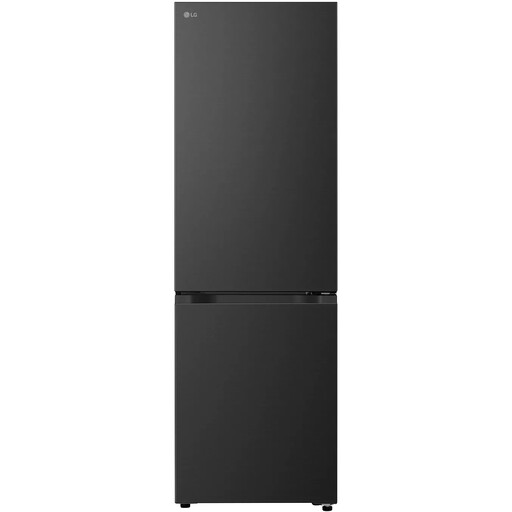 Image unavailable
LG GBBS312AEV, black 333 L No Frost fridge-freezer
If you use both compartments regularly, compare their individual capacities with your habits rather than focusing on the total capacity alone.
The title lists a capacity of 333 L, an A energy rating and No Frost. Check the label for kWh/year and allow enough room for ventilation and the doors to open.
View on Joybuy
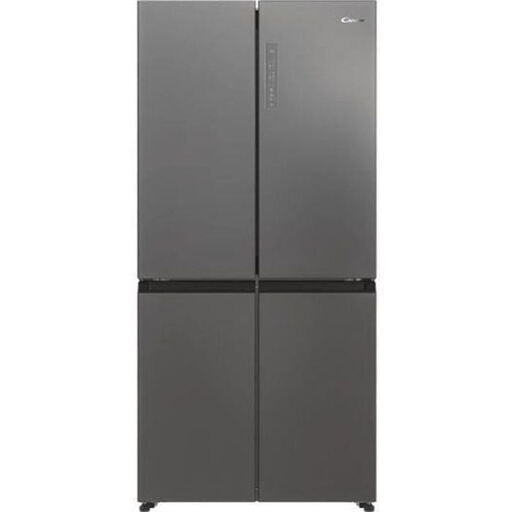 Image unavailable
Candy CFQQ5T817EPS, four-door 467 L fridge-freezer
This larger model is worth considering if you genuinely need plenty of space for fresh and frozen food.
The title lists a capacity of 467 L, an E energy rating and Total No Frost. The product details state that the doors aren’t reversible, so check that they’ll open properly in your kitchen, and check the kWh/year and clearances specified in the instructions.
View on Joybuy
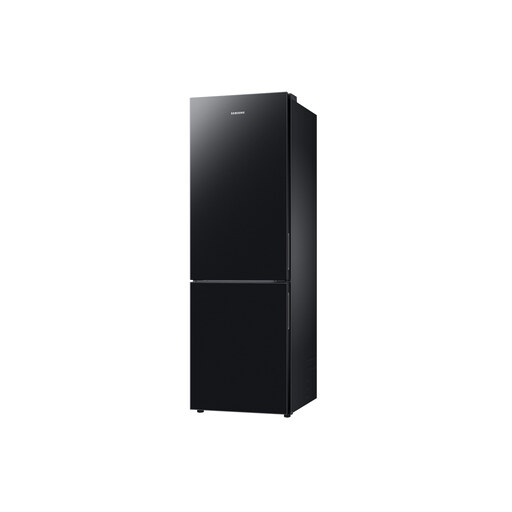 Image unavailable
Samsung RB33B612EBN, black 344 L fridge-freezer
If a fridge-freezer suits your needs, check that the freezer capacity is enough for the amount you usually store.
The title lists a capacity of 344 L and an E energy rating. Check the label for kWh/year and the instructions for door clearance and ventilation.
View on Joybuy
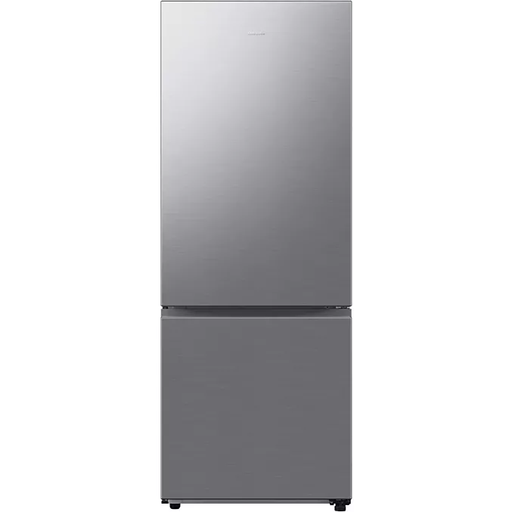 Image unavailable
Samsung RB53DG703DS9, grey 538 L fridge-freezer
This capacity is best suited to a substantial storage need and a kitchen with enough room for the appliance.
The title lists a capacity of 538 L. The energy ratings differ between the title and description, so check the rating, kWh/year and installation instructions for the exact model on the label and in the manual.
View on Joybuy
Frequently asked questions
What should you compare on an appliance’s energy label?
For a fridge or freezer, compare the kWh/year, compartment capacities and noise level as well as the A to G energy rating. The European Commission explains that this information appears on the energy label. Make sure the capacities suit your needs before comparing models by their stated energy use.
Does a fridge-freezer always use less energy than two separate appliances?
No, it depends on the models and the capacities you need. ADEME gives annual figures of 315 kWh for a fridge-freezer, 180 kWh for a fridge and 300 kWh for a freezer as general benchmarks; these category averages don’t predict how much the appliances you’re considering will use. Compare their stated kWh/year figures and, if you choose two appliances, take both figures into account.
What temperature should you aim for in your fridge?
Anses recommends keeping the coldest part between 0 °C and 4 °C. Check the temperature, especially when the kitchen is warm, the door has been opened frequently, the appliance is very full or it hasn’t been defrosted for a long time.
How much space should you leave around the appliance for ventilation?
Follow the clearances specified in the instructions for the exact model. For example, Beko recommends leaving at least 5 cm at the sides and back of its fridge-freezers. Don’t automatically apply this guidance to another model or a built-in appliance.
Does No Frost mean a model uses less energy?
No. No Frost reduces frost build-up in the relevant compartment, but it doesn’t by itself tell you how the energy use of two appliances compares. Check their stated kWh/year, capacities and installation requirements.


