Buying priorities
First choose the format according to the space genuinely available and how much frozen food you buy, then compare the specifications of the exact model.
| Priority |
What to check |
Your needs |
| Usable capacity |
Compare the total net capacity, fridge and freezer capacities separately, as well as the shelves, door balconies and salad drawer. |
I want enough room for my shopping without installing an unnecessarily large appliance. UFC-Que Choisir gives 100 to 150 litres of usable capacity as a general guideline for one person, adjusted according to shopping habits and frozen food. |
| Installation and ventilation |
Measure the height, width and depth, including skirting boards and worktops. Check the door swing and the ventilation clearances specified by the manufacturer. |
I want to open the door fully without obstructing the walkway or nearby furniture, while allowing air to circulate around the appliance. |
| Freezing |
Check the type and net capacity of the freezer compartment. Read the model’s instructions if you plan to freeze food. |
My frozen-food shopping needs to fit in a suitable compartment. According to UFC-Que Choisir, a simple internal freezer may not be suitable for regular use. |
| Temperature, noise and energy use |
Compare the energy label across similar formats and capacities, as well as noise emissions. Look for verifiable information about temperature consistency. |
In a living space, I want to keep noise to a minimum and store food in good conditions. Anses recommends a temperature between 0 °C and +4 °C at the coldest point. |
Brand guidance
When comparing brands, focus on the specifications of the individual model: usable fridge and freezer capacity, installation clearances, noise emissions, energy label and the manufacturer’s guidance on temperature and ventilation.
Joybuy options
Joybuy options for a studio flat or small kitchen, with a selection focused on compact fridges and fridge-freezers with separate compartments.
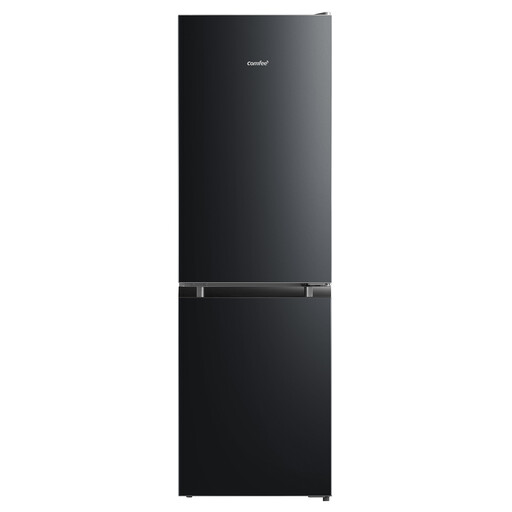 Image unavailable
Comfee' by Midea RCB230BL2EU(E) — 174 L
An option for combining fresh food and regular frozen-food storage in a small kitchen.
115 L fridge capacity and 59 L four-star freezer capacity; stated dimensions: 47 × 51,1 × 150 cm. Reversible door, adjustable feet, Low Frost, adjustable thermostat and LED lighting.
Check the instructions for ventilation clearances, door swing, noise level and annual energy consumption.
View on Joybuy
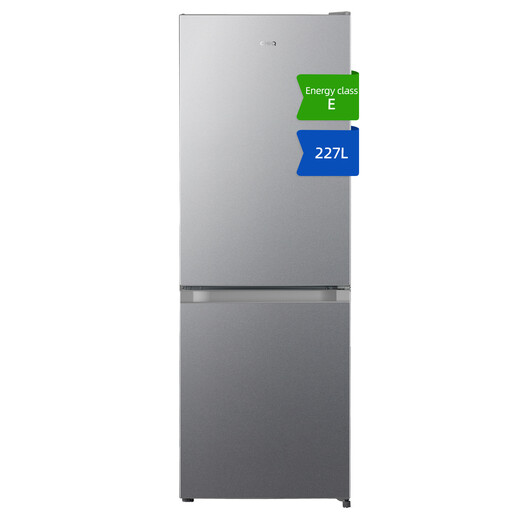 Image unavailable
CHiQ JR227LSE — 227 L fridge-freezer
An option to consider if you need separate space for fresh and frozen food.
153 L fridge capacity and 74 L four-star freezer capacity; stated width of 54 cm and depth of 55 cm. Reversible door, adjustable feet, adjustable shelves, Low Frost and a stated noise level of 39 dB.
Confirm the external height and ventilation clearances before ordering; 227 L may be excessive for one person who shops frequently.
View on Joybuy
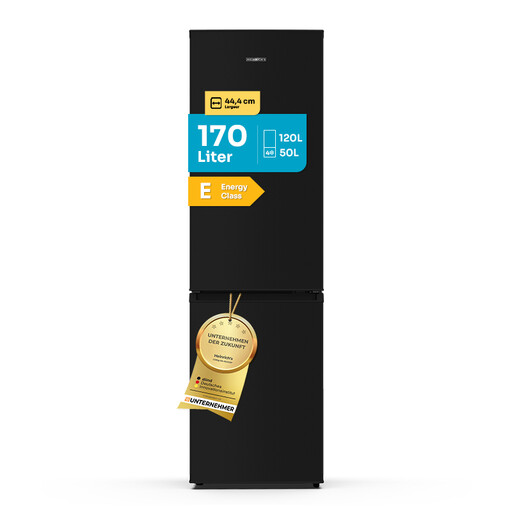 Image unavailable
Heinrich's — 170 L fridge-freezer
This configuration suits shopping for one or two people, including frozen food.
120 L fridge capacity and a separate 50 L four-star freezer; three freezer drawers, removable glass shelves, LED lighting and a stated noise level of 40 dB.
The external dimensions, door-opening direction and ventilation clearances should be confirmed. Energy class E is indicated; compare the label with similar models.
View on Joybuy
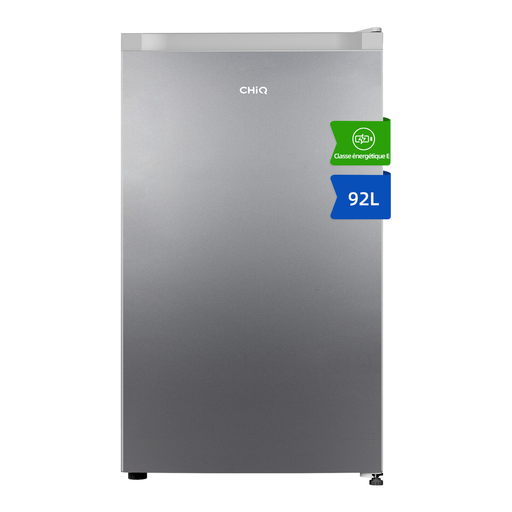 Image unavailable
CHiQ JR92DSE — 92 L single-door fridge
A choice for a very restricted studio where shopping is frequent and saving space is the priority.
92 L, stated width of 47 cm and footprint of 0,22 m²; adjustable shelves, salad drawer, seven-position mechanical control and reversible door.
Check the capacity and type of the freezer compartment, along with the full dimensions, ventilation clearances and model noise level.
View on Joybuy
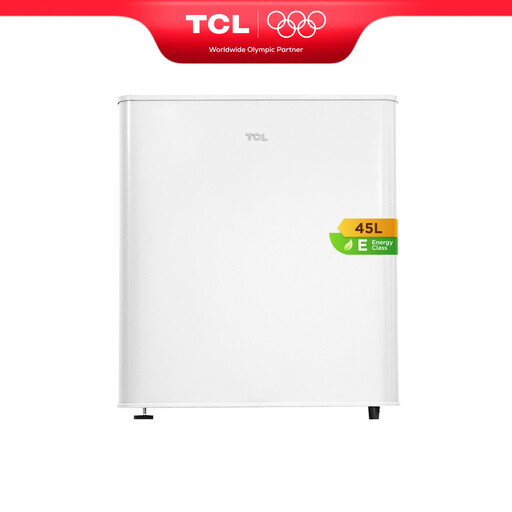 Image unavailable
TCL RF60DWE0FR — 45 L mini fridge
An additional option for a very restricted space, or for drinks and small quantities of food.
Total capacity of 45 L and stated dimensions of 44,9 × 48,5 × 51,2 cm; adjustable glass shelf, bottle balcony, adjustable feet and a stated noise level of 40 dB.
The stated 3 L compartment operating between 5 and -5 °C should not be treated as a freezer for regular frozen food. Also check ventilation, door opening and the energy label.
View on Joybuy
Frequently asked questions
What usable capacity should one person aim for in a studio flat?
UFC-Que Choisir gives a general guideline of 100 to 150 litres of usable capacity for one person, followed by 50 litres for each additional person. Reduce this if you shop very frequently, and increase it if you store more fresh food, drinks or frozen items.
Is a table-top fridge suitable for a studio flat?
Yes, provided its usable capacity, storage layout and installation space match your habits. UFC-Que Choisir presents table-top models as suitable for studio flats, while BUT states that a low-height top-mounted fridge can be placed under a worktop or between base units.
What should you measure before ordering a fridge?
Measure the installation space in height, width and depth, then check the door swing, delivery access and the clearances specified in the instructions. Electrolux also recommends allowing air to circulate around the appliance and keeping it away from a heat source.
After transport, when should you plug in the fridge?
First follow the instructions for your model. In its general guidance, Electrolux recommends waiting at least four hours before plugging it in, allowing the oil to return to the compressor.
What temperature should the fridge be kept at?
Anses states that the ideal temperature is between 0 °C and +4 °C at the coldest point. Regular checks, for example with a thermometer if the appliance does not have a suitable indicator, can help you verify the setting.


