Which criteria should you compare first?
The type of freezer compartment will help you narrow down the formats first. Then use the kWh/an figure to compare appliances that offer similar storage capacity.
Single-door fridge without a freezer
Worth considering: if you mainly store fresh food and don’t need to freeze anything in this appliance.
The trade-off: this format alone won’t meet your needs if you want to store frozen food.
Freestanding fridge-freezer
Worth considering: if you regularly use both fresh and frozen food and want to keep it all in one appliance.
The trade-off: make sure both compartments suit the amount of food you actually store. A larger capacity doesn’t automatically mean lower energy use.
Built-in fridge-freezer
Worth considering: if your kitchen requires an integrated appliance with a cabinet space and door panel, and you need both fridge and freezer storage.
The trade-off: checking the appliance dimensions alone won’t confirm that it will fit the cabinet space or work with the hinges.
| Priority |
What to check |
Depending on your needs |
| Energy use |
Compare the kWh/an figure and energy rating on the labels of models with similar storage capacity. Check the product details for the exact model if you need to confirm the figures. |
I want to keep the energy use of an appliance that runs continuously down, without assuming that the rating letter alone means it will use less. |
| Usable capacity |
Check the fridge and freezer capacity in litres separately. Choose whether you need a freezer compartment based on your habits, rather than the total capacity alone. |
Do I regularly buy frozen food, or do I mainly need space for fresh food? |
| Installation |
Check the height, width and depth, as well as the space needed to open the door. For a built-in model, also check the cabinet space dimensions and door fixing. |
The appliance needs to fit in my kitchen, and I need to be able to open the door and pull out the drawers without anything getting in the way. |
| Maintenance and food storage |
Consider features such as No Frost, a door alarm or food storage zones according to how you plan to use the appliance. Always compare the kWh/an figures of the models in question: a feature alone doesn’t prove that an appliance uses less energy. |
If defrosting or organising fresh food matters to me, I can look for the relevant feature without assuming it guarantees lower energy use. |
| Connected features |
Check that the model is compatible, what you need to connect it and which features you plan to use. For Samsung models with AI Energy, the brand says that a Wi-Fi connection and Samsung account are required, among other things, and that results vary depending on use. |
App-based monitoring is only useful to me if I plan to use it; I’ll still compare the annual energy consumption shown on the label. |
A few brands to consider
These models illustrate different formats and considerations. Their features don’t represent every product in their brands’ ranges.
Bosch
The freestanding KGN39EXCF and built-in KIS87EDD0 show two ways of dividing up fresh and frozen storage.
- Bosch says the KGN39EXCF offers 260 L of fridge capacity, 103 L of freezer capacity, a C rating and No Frost.
- For the built-in KIS87EDD0, Bosch lists 208 L of fridge capacity, 62 L of freezer capacity and 165 kWh/an. Check separately that the cabinet space and door are compatible.
Liebherr
The K1450 is an example of a single-door fridge to consider if you don’t need an integrated freezer.
- French retailer Pro & Cie lists a fridge capacity of 298 L, a D rating and 89 kWh/an for the K1450.
- These figures apply to this model. Check the energy label for the exact version you’re ordering rather than assuming they apply to other Liebherr fridges.
Samsung
The RL38C600CWW/EF is an example of a fridge-freezer where connected monitoring may be a factor in your choice.
- Samsung describes the RL38C600CWW/EF as a 390 L fridge-freezer with a C rating.
- Samsung says that AI Energy requires a Wi-Fi connection and Samsung account, among other things. The results advertised vary depending on conditions and usage habits. Also compare the kWh/an figure on the label.
Fridges to explore on Joybuy
This selection includes freestanding fridge-freezers, a built-in model and a four-door appliance. To keep energy use down, first choose models with compartments and installation requirements that suit your needs, then compare the figures on their energy labels.
 Image unavailable
Candy CFQQ5T817EPS four-door fridge-freezer, 467 L
This format may suit you if you regularly need plenty of space for fresh and frozen food. The product title lists a capacity of 467 L, Total No Frost and an E rating. Check how the compartments are divided, the kWh/an figure on the label and the space available for the appliance.
View on Joybuy
 Image unavailable
Samsung RB33B612EBN fridge-freezer, 344 L, black
This freestanding fridge-freezer meets the need for fresh and frozen food storage in one appliance. The product title lists a capacity of 344 L and an E rating. Compare the capacity of each compartment and the kWh/an figure on the label for the exact model, then check where it will go.
View on Joybuy
 Image unavailable
Hisense RB3B250SAWC built-in fridge-freezer, 252 L
Worth considering if your kitchen needs a built-in fridge-freezer with a freezer compartment. The product title lists a capacity of 252 L, No Frost, a C rating and an inverter compressor. Check the kWh/an figure on the label, as well as the cabinet space and door fixing, before you buy.
View on Joybuy
 Image unavailable
Haier HTW5618ENMG three-door fridge-freezer, 360 L
This freestanding model is suited to a household that uses both the fridge and freezer compartments and wants to explore different storage options. The product title lists a capacity of 360 L, Total No Frost, an E rating, Wi-Fi and My Zone. Choose these features to suit how you’ll use the appliance, and compare the kWh/an figure on the label.
View on Joybuy
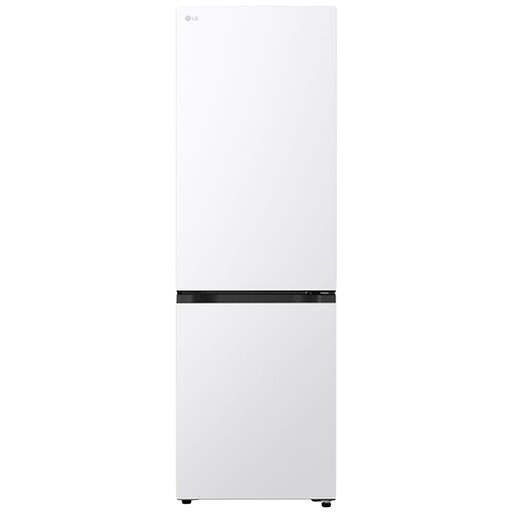 Image unavailable
LG GBBSJ1CCSW fridge-freezer, 333 L, white
Compare this fridge-freezer with other appliances that meet similar fresh and frozen food storage needs. The product title lists a capacity of 333 L and a C rating, along with NatureFRESH™, DoorCooling+™ and LinearCooling™ features. Check the capacity of each compartment, the kWh/an figure and the installation clearances.
View on Joybuy
Frequently asked questions
How do you compare a single-door fridge with a fridge-freezer?
Start by comparing what you need each appliance to do: a fridge-freezer adds freezer capacity that a single-door fridge without a freezer doesn’t offer. Check the fridge and freezer capacities in litres separately, then compare the kWh/an figures on the labels of models suited to your storage needs. A difference in energy use between these formats doesn’t, on its own, show which will use less energy for the same purpose.
Is a better energy rating enough to reduce energy use?
No. The rating letter alone isn’t enough to compare the energy use of two appliances with different capacities or compartments. Also check their annual energy consumption in kWh and choose from formats that meet your needs. How you use the appliance can then affect its energy consumption.
Does No Frost mean that a fridge uses less energy?
No. This feature alone doesn’t show that one model uses less energy than another. If you want it to reduce frost build-up and the need to defrost, still compare the kWh/an figures and usable capacities of the exact models you’re considering.
Can I check the energy label before buying online?
Yes. ADEME says that energy labels for fridges are available online as well as in shops. Use the label to check the kWh/an figure and rating of the model you’re considering, then compare these with its fridge and freezer capacities.
What should I do with my old fridge when replacing it?
Arrange for it to be taken away or dropped off at an appropriate collection or recycling facility. ADEME says that a replaced cooling appliance can be handed over to the retailer or delivery team, or taken to the designated area at a recycling centre. Check the practical arrangements before delivery.


