Households that do a big weekly shop
You want to keep your shopping fresh until your next trip, including ready meals and frozen food. Check the capacity of each compartment: a large total capacity doesn’t tell you how the space is divided.


First, choose a usable capacity that suits your household and the time between shopping trips. Then check that the appliance and its doors will fit in your kitchen. A fridge freezer is worth considering if you regularly buy frozen food; an integrated model also needs a compatible housing unit and door-fitting system. Finally, compare the capacity of each compartment, the stated noise level and the kWh/year figure, rather than looking only at the total capacity.
You want to keep your shopping fresh until your next trip, including ready meals and frozen food. Check the capacity of each compartment: a large total capacity doesn’t tell you how the space is divided.
The available width, depth or housing unit may determine your choice. Before focusing on capacity, also measure the delivery route and the space needed to open the doors.
If the appliance is near a living area, compare its stated noise level. As the appliance runs continuously, ADEME also recommends considering its size; check its annual energy consumption in kWh.
Start with how much space you need between shopping trips, then rule out sizes that won’t fit in your kitchen. Next, compare energy use and ease of use across the models that meet both requirements.
| Criterion | What to check | Who it matters to |
|---|---|---|
| Capacity and frozen food | Compare the usable capacity of the fridge and freezer separately with your shopping habits and the time between trips. | I do a big shop and want to be able to put away fresh and frozen food at the end of the week. Around 36% of consumers might put this storage capacity first. |
| Kitchen space | Measure the space, delivery route and door clearance; for an integrated model, also check the housing unit and door-fitting system. | In a kitchen with fixed dimensions, I need to be able to fit and open the appliance before looking for extra capacity. Around 29% of consumers might make this their top priority. |
| Energy consumption | Compare the kWh/year figures and energy labels of models with similar capacities and configurations. | As my fridge runs continuously, I want to keep its energy use under control without choosing a model that’s too small for my shopping. Around 21% of consumers might make this their first criterion. |
| Noise and maintenance | Check the stated noise level in dB(A) and the defrosting instructions for the model you’re considering. | If it’s near a living area, I pay attention to everyday noise and how often I’ll need to defrost it. Around 14% of consumers might put this comfort first. |
The Bosch KGN492LDF offers 311 L for fresh food and 129 L for frozen food, while the Whirlpool WH SP70 T121 offers 295 L and 99 L respectively. The total capacity alone therefore won’t tell you how much space is available for frozen food.
Think about what you usually store in each compartment, then compare their capacities separately.
The Liebherr ICSd 5102 Pure product details specify a housing unit measuring 177.2 to 178.8 cm high, 56 to 57 cm wide and 55 cm deep, as well as a sliding-door fitting system. A compatible cabinet-door height isn’t enough to confirm that the installation will work.
Measure the housing unit and check that your door-fitting system matches the model’s instructions before ordering.
Extra capacity can be useful if you shop less often, but ADEME points out that a larger appliance or one with more capacity than you need can use more energy when it runs continuously.
Once you’ve worked out the capacity you need, compare the annual energy consumption of similar-sized models.
The cooling system mainly affects freezer maintenance; it doesn’t tell you about capacity, dimensions or noise. Product details also distinguish between systems such as No Frost, SmartFrost and Low Frost.
Check the defrosting instructions for the specific model, then compare usable capacity, dimensions, dB(A) and kWh/year separately.
The freestanding RCSA270K40SN fridge freezer is a useful option to compare if space is tight on width.
The freestanding KGN492LDF and integrated KIV875SE0 fridge freezers are examples of models with different installation requirements.
The ICSd 5102 Pure is an example of an integrated model where you’ll need to check the housing unit and door-fitting system.
The integrated WH SP70 T121 and freestanding WFNF82EOXFR let you compare two different ways of dividing up the available capacity.
These fridge freezers and multi-door models can be compared by their stated capacity. Choose based on your shopping habits and available space first, then check the details of the model you’ve picked.
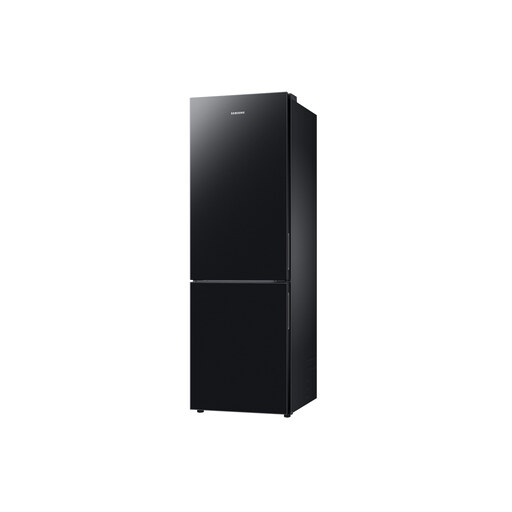 Image unavailable
Worth considering if you’re looking for a fridge freezer for fresh and frozen food. It has a stated total capacity of 344 L and an E energy rating. Check the dimensions and the space needed to open the doors.
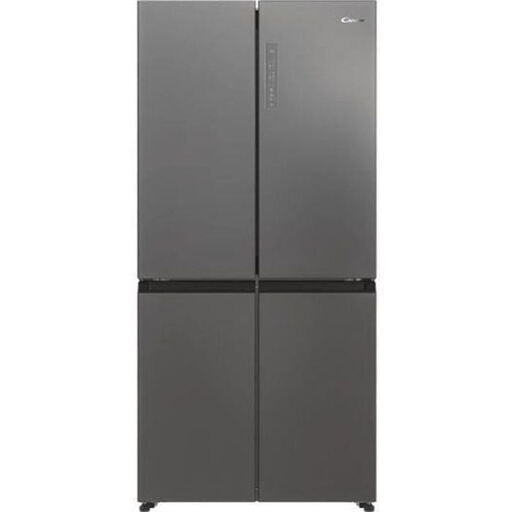 Image unavailable
Compare this model if you need plenty of space for your shopping and have room for a four-door appliance. It has a stated total capacity of 467 L, Total No Frost and an E energy rating. Check the delivery route and make sure there’s room to open the doors.
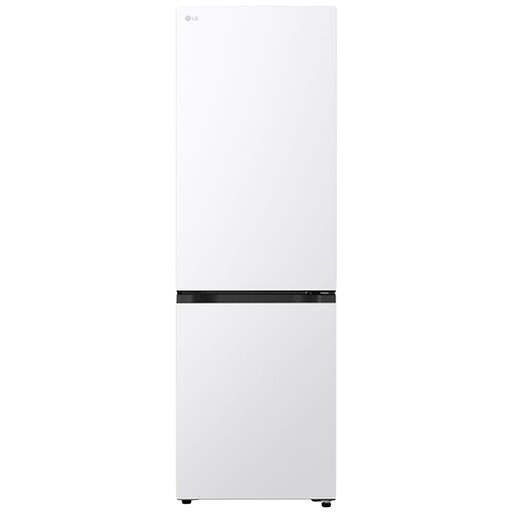 Image unavailable
Worth considering if you’re looking for a fridge freezer and want to compare energy consumption too. It has a stated total capacity of 333 L and a C energy rating. Check its dimensions and installation clearances against the space in your kitchen.
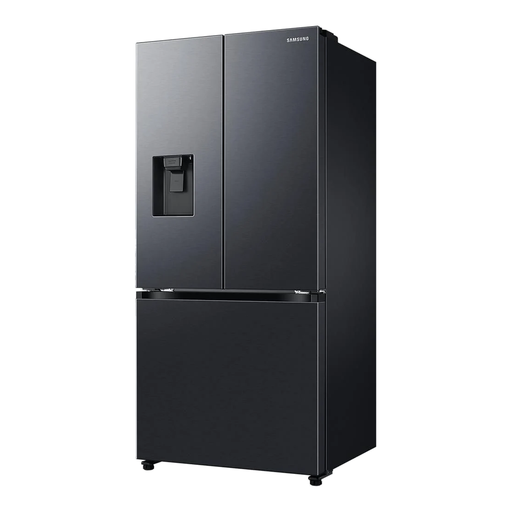 Image unavailable
Worth considering for larger shops, provided you have enough space. It has a stated total capacity of 495 L and an E energy rating. Measure the space and delivery route before settling on this size.
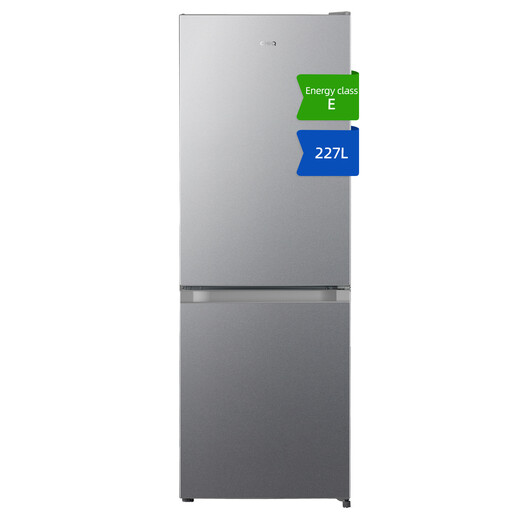 Image unavailable
Worth considering if you do smaller shops and want a separate freezer. The stated capacities are 153 L for the fridge and 74 L for the freezer. The model features Low Frost, a reversible door and an E energy rating. Check its exact dimensions before choosing a space for it, and check the kWh/year figure if energy use is important to you.
Que Choisir suggests starting with 100 to 150 L of usable capacity for one person, then adding 50 L for each additional person. Adjust this guideline to suit how often you shop, and check the space available for frozen food separately.
A fridge freezer gives you a separate freezer compartment, but the product name doesn’t guarantee that it will have enough capacity for your shopping. Check the freezer capacity as well as the fridge capacity.
Measure the height, width and depth of the housing unit, then check the door-fitting system and the clearances specified in the instructions. For a freestanding model, also check the delivery route and the space needed to open the doors.
Compare their kWh/year figures for models with similar capacities and configurations, rather than relying only on the energy label rating. The European Commission says the EPREL register lets you view energy labelling information for the appliances listed there.
Compare the stated noise level in dB(A) if the appliance is near your living space. Que Choisir describes the quietest fridges as having noise levels below 40 dBA; also make sure their capacity and size meet your needs.